Wed Jul 02 2025
Can Fireworks Trigger PTSD? 4 Symptoms and How to Prepare
Why fireworks trigger PTSD symptoms, the four symptom types to recognize, a step-by-step plan for fireworks season, and when to get help in Texas.
Published by Lyte Psychiatry · Meet our care team
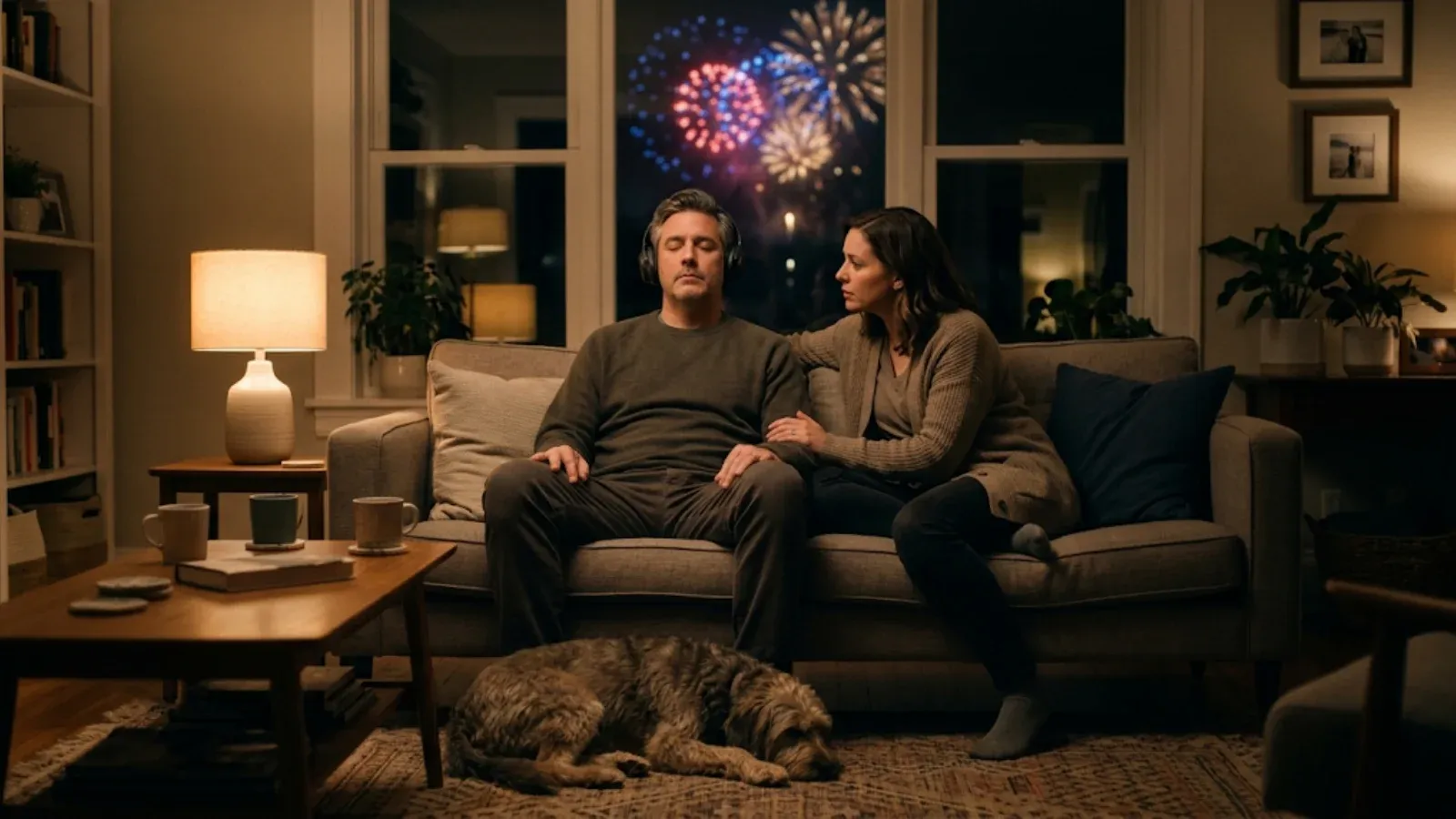
Yes, fireworks can trigger PTSD symptoms, and the link between fireworks and PTSD is well recognized. Sudden bangs, flashes, smoke and vibration resemble gunfire and explosions, and the nervous system can respond as if the danger were back. The four symptoms most often set off are flashbacks, an exaggerated startle response, avoidance, and emotional numbness or irritability. This guide explains each and how to prepare.
This article is for adults and teens with PTSD or a history of trauma who dread fireworks season, and for the family members, neighbors and friends who want to help. It covers veterans and first responders, but also survivors of shootings, crashes, fires and disasters.
Why do fireworks trigger PTSD symptoms?
Fireworks trigger PTSD symptoms because they deliver, without warning, the same sensory signals that many traumas involved: a sudden loud blast, a flash of light, a burning smell, and a thump felt in the chest. The National Center for PTSD describes PTSD as involving reliving the event, avoiding reminders, feeling on edge, and sleep and concentration problems, and fireworks hit the first and third directly.
The timing makes fireworks and PTSD a particularly hard combination. Fireworks around July 4 and New Year's often go off for days before and after, at unpredictable hours, so a person cannot simply get through one evening. The unpredictability is what turns a loud noise into a sense of being ambushed, and it is why planning ahead helps more than willpower.
Symptom 1: What do flashbacks and intrusive memories feel like?
A flashback is the sudden sense that the traumatic event is happening again, and an intrusive memory is an unwanted image, sound or feeling from the event that shows up without being invited. MedlinePlus lists re-experiencing symptoms as one of four PTSD symptom types, alongside avoidance, arousal and reactivity, and changes in thinking and mood.
With fireworks, a flashback may be brief: a bang, a second of being somewhere else, then a racing heart and confusion about where you are. Nightmares may increase during fireworks season even if daytime flashbacks do not. Example: a crash survivor hears a firework and, for a moment, smells burning rubber and feels the seatbelt. Nothing is happening, but the body does not know that yet.
Symptom 2: What is an exaggerated startle response?
An exaggerated startle response is jumping, flinching, ducking or freezing at a sudden noise far more intensely than other people do, often followed by a long period of feeling keyed up. The National Center for PTSD includes being easily startled and feeling on edge among the arousal and reactivity symptoms of PTSD.
During fireworks season, startle can stay switched on for hours. People describe scanning the windows, not being able to settle, and snapping at family. Sleep suffers because the body refuses to stand down. The National Center for PTSD notes that insomnia and nightmares are PTSD symptoms, and poor sleep in turn lowers the threshold for the next startle.
Symptom 3: Why does avoidance get worse around fireworks?
Avoidance is steering away from anything that might bring on the reaction, and around fireworks it can expand quickly: skipping the family barbecue, staying indoors for a week, drinking to blunt the evening, or leaving town without telling anyone why. Avoidance works in the moment, which is exactly why it grows.
The National Institute of Mental Health (NIMH) advises that after trauma, avoiding alcohol and drugs, keeping regular meals and sleep, and spending time with supportive people all help recovery. Avoidance that cuts you off from people and routines does the opposite. The goal is not to force yourself to stand under a fireworks display, but to keep the avoidance from taking the rest of your life with it.
Symptom 4: What does emotional numbness or irritability look like?
Numbness is feeling flat, detached or unable to enjoy anything, and irritability is a short fuse that surprises even you. Both fall under what MedlinePlus calls changes in thinking and mood. Around fireworks, people often swing between the two: shut down during the day, then explosive when a neighbor sets off a string of firecrackers at 11 p.m.
Family members frequently notice this one first and may read it as rejection. The National Center for PTSD offers guidance for families on how to help, how to care for themselves, and the PTSD Family Coach app. Naming what is happening ("fireworks season is hard for me and I may be short-tempered") protects relationships while you work on the symptoms.
Step by step: how to prepare for fireworks season
With fireworks and PTSD, preparation turns an ambush into something you have a plan for. Start a week or two before the holiday.
- Find out the schedule. Check your city's official display times. Expect unofficial fireworks several days either side.
- Decide where you will be. Home with the windows closed, a friend's house farther from the noise, or somewhere quieter altogether.
- Prepare your senses. Earplugs or noise-cancelling headphones, a playlist or white noise, curtains closed, lights on.
- Line up a person. Someone who knows the plan and can sit with you or take a call.
- Rehearse grounding. Name five things you can see, four you can hear, three you can touch. Breathe out longer than you breathe in. Practice it before you need it.
- Protect sleep. Keep your usual bedtime, limit alcohol, and have the headphones by the bed.
- Consider tools. The National Center for PTSD's PTSD Coach app is free and includes coping tools and symptom tracking, though it is not a replacement for care.
- Plan the day after. Something restful and ordinary, so the holiday does not define the week.
Our post on fall and Halloween PTSD triggers covers a similar plan for the autumn season.
Checklist: what to say to neighbors, family and yourself
Saying it out loud is often the hardest part. These lines are a starting point.
- To a neighbor: "I have a medical condition that makes sudden loud noises hard. Could you let me know when you're planning fireworks?"
- To family: "I want to be at the cookout, but I'll probably leave before the display. That's not about you."
- To a friend: "Could you be on call that evening? A text or a short call would help."
- To a child: "Some loud sounds make my body feel scared even when we're safe. I'm using my headphones so I can stay with you."
- To yourself: "That was a firework. I'm at home. It's [year]. My body is reacting to the past."
- To a clinician: "Fireworks season sets off flashbacks and I don't sleep for a week. I'd like help with that."
Lyte Psychiatry offers therapy, psychiatric evaluation and medication management in Texas, and a therapist can help you rehearse these conversations. Our guide on writing a mental health safety plan can hold the plan above so you are not building it from scratch each year.
Red flags: when PTSD symptoms need help sooner
Get help sooner if symptoms last longer than a month, are very upsetting, or disrupt daily life. The National Center for PTSD advises seeing a provider if symptoms last longer than a month, are very upsetting, or disrupt your daily life, and notes that effective treatments exist.
Do not wait for the season to pass if:
- You are having thoughts of suicide or self-harm.
- You are using alcohol or drugs to get through the evenings.
- You have not slept properly for several nights.
- Flashbacks are happening during the day and affecting driving, work or caring for children.
- Anger is frightening you or the people around you.
- Symptoms that had settled have returned strongly.
A strong reaction does not automatically mean PTSD. The National Center for PTSD explains that stress reactions after trauma are common and most people recover on their own, which is why an evaluation, rather than self-diagnosis, is the right next step when symptoms persist.
Fireworks and PTSD in Texas
Texas has a large veteran population, a long fireworks season that often includes New Year's, Juneteenth and July 4, and many areas where consumer fireworks are sold and used outside city limits. Rules on where and when fireworks can be set off vary by city and county, so checking your local ordinance tells you what to expect rather than hoping for quiet.
If you need urgent help during a holiday, call or text 988 at any hour. For ongoing care, Lyte Psychiatry offers telehealth visits to patients who are physically located in Texas at the time of the visit. Veterans may also find our guide on questions to ask when seeking PTSD care useful.
Getting support in Texas
PTSD is treatable, and fireworks season is a reasonable time to start rather than a reason to wait. Lyte Psychiatry offers therapy, psychiatric evaluation and medication management in Texas. In-person visits are available at Lyte Psychiatry's clinic in Pantego, in the Dallas–Fort Worth area. Most new patients are seen within 1–2 business days. Weekend appointments are limited. All Lyte Psychiatry services are available in Spanish.
Lyte Psychiatry is an outpatient practice. It does not provide inpatient care, crisis or after-hours coverage, medically supervised detox, or intensive outpatient or partial hospitalization programs. Availability, insurance and clinician fit require confirmation.
If you are in a mental-health crisis in the United States, call or text 988. Call 911 for immediate danger.
Educational information, not a diagnosis or individual treatment plan.
Common Questions
Frequently Asked Questions
Why do fireworks trigger PTSD symptoms?
Fireworks combine sudden loud bangs, flashes, smoke smell and vibration, which closely resemble gunfire, explosions or other sounds from a traumatic event. For someone with PTSD, the body can react to the reminder as if the danger were present again. The National Center for PTSD describes reliving the event and feeling on edge as core PTSD symptoms.
Is it only veterans who are affected by fireworks?
No. Veterans and first responders are often affected, but so are survivors of shootings, assaults, car crashes, house fires, explosions and disasters. Anyone whose trauma involved sudden loud noise, flashes or being startled can react strongly to fireworks. The reaction is about the nervous system's memory, not about military service.
What are the four main PTSD symptom types?
MedlinePlus and the National Center for PTSD describe four types: re-experiencing, such as flashbacks or nightmares; avoidance of reminders; arousal and reactivity, such as being easily startled or on edge; and changes in thinking and mood, such as numbness or guilt. Fireworks most often activate re-experiencing and arousal, then lead to avoidance.
How can I prepare for July 4 or New Year's Eve if I have PTSD?
Plan ahead: find out when local displays happen, decide whether to be home, at a quieter place or away entirely, prepare earplugs or headphones, line up a support person, and rehearse a grounding routine. Let neighbors know if you are comfortable. Having a plan reduces the sense of being ambushed, which is often the hardest part.
Does a strong reaction to fireworks mean I have PTSD?
Not necessarily. The National Center for PTSD notes that stress reactions after trauma do not automatically mean PTSD, and most people recover on their own. If reactions to reminders last longer than a month, are very upsetting, or disrupt daily life, an evaluation is worth it. A clinician can tell the difference and recommend treatment.
What treatments help with PTSD triggered by reminders?
Effective treatments exist. The National Center for PTSD describes trauma-focused therapies such as cognitive processing therapy and states that effective treatments for PTSD are available. Medication is sometimes used alongside therapy. Lyte Psychiatry offers therapy, psychiatric evaluation and medication management in Texas, in person in Pantego and by telehealth.
Does Lyte Psychiatry treat PTSD in adults and teens?
Lyte Psychiatry offers therapy, psychiatric evaluation and medication management in Texas for adults and adolescents, including PTSD care. In-person visits are available at the clinic in Pantego, in the Dallas–Fort Worth area, and telehealth is available to patients physically located in Texas at the time of the visit. All services are available in Spanish. Availability and clinician fit require confirmation.
Further Reading
NIMH — Anxiety Disorders
Diagnostic criteria and treatment options
ADAA — Anxiety Statistics
40M Americans affected — prevalence and impact data
APA — Anxiety Overview
Clinical summary from the American Psychological Association
These topic resources supplement the references linked within the article.
Related Care and Resources
Lyte Psychiatry — Texas
Anxiety Treatment — Texas
Evidence-based care for generalized anxiety, social anxiety, panic disorder, and phobias.
Find Care Near You
Lyte Psychiatry serves patients across Texas — in-person in DFW and via telehealth statewide.
Don't see your city? View all Texas locations →
Questions about cost? View insurance and payment information