Wed Feb 26 2025
5 Healthy Ways to Manage Anxiety and Cravings
A practical guide to why anxiety and cravings for food, caffeine, nicotine or alcohol go together, five healthy strategies, a step-by-step plan, and when to get help in Texas.
Published by Lyte Psychiatry · Meet our care team
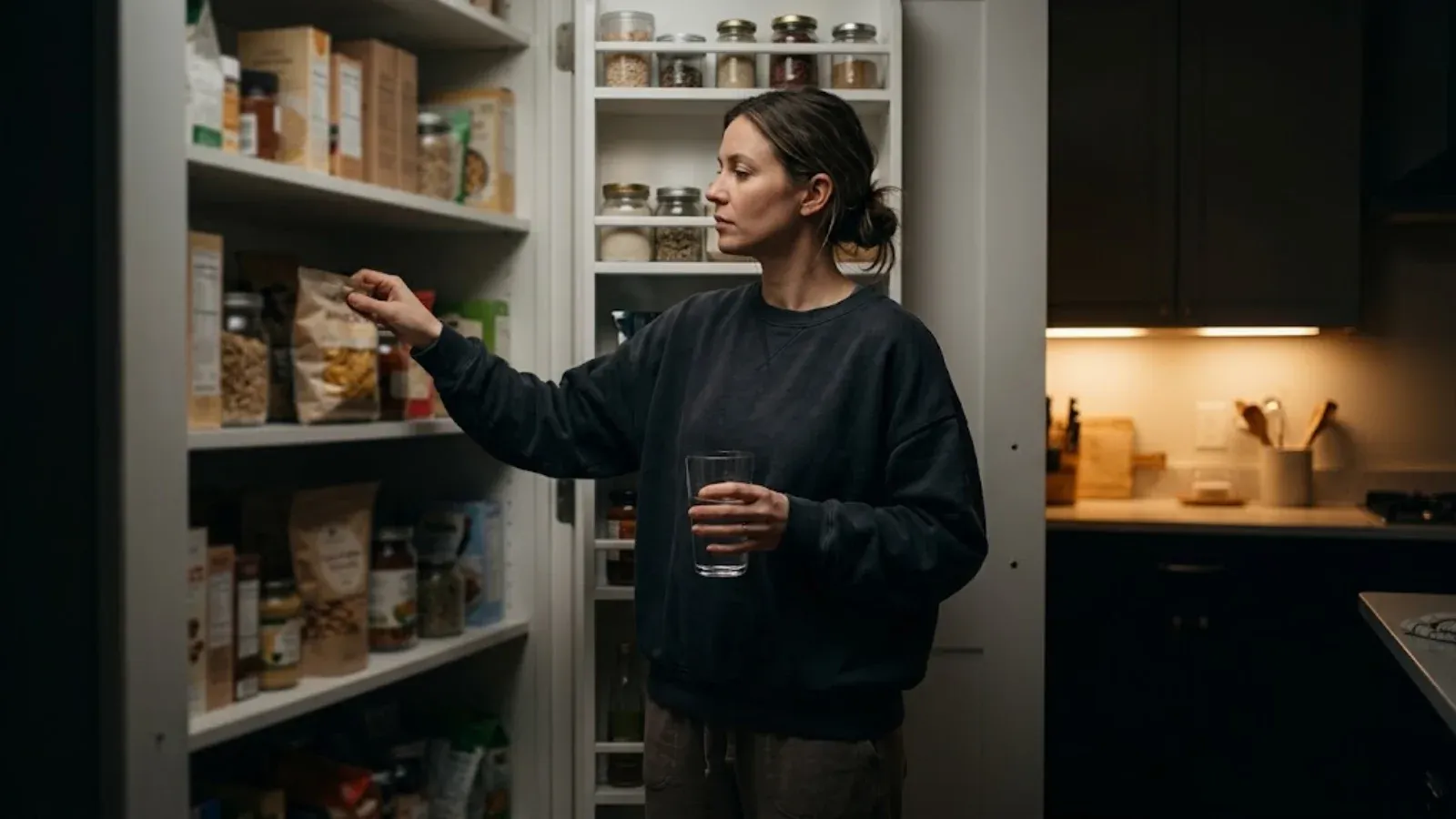
Anxiety and cravings travel together because the body's stress response looks for fast relief, and sugar, caffeine, nicotine, alcohol and other quick fixes deliver it for a few minutes. Five healthy ways to manage both are slow breathing, moving your body, eating on a schedule, delaying and distracting, and getting professional help when the pattern will not shift. This article explains each.
This article is for adults in Texas who notice that anxious days turn into days of snacking, extra coffee, a cigarette or a drink, and who want to respond differently. It also helps family members who want to understand the pattern without nagging. It covers why the link exists, what helps, a plan for the moment the urge hits, and when to get help.
Why do anxiety and cravings go together?
Anxiety and cravings go together because the stress response and the reward system are wired to work as a pair: stress makes the body uncomfortable, and anything that quickly reduces discomfort gets learned as a solution. MedlinePlus explains that stress hormones make the brain more alert, tense the muscles and increase the pulse, which is the physical state most people are trying to escape when they reach for something.
MedlinePlus describes anxiety as a feeling of fear, dread and uneasiness that can help you cope in the short term, and notes that it becomes a disorder when the fear is not temporary and can be overwhelming. In that chronic state, cravings are no longer occasional; they become a daily management strategy.
The loop runs like this: anxiety rises, a craving follows, acting on it brings brief relief, and the relief teaches the brain to repeat the sequence. Over time, the thing that relieved anxiety often starts causing it: the sugar crash, the caffeine jitters, the morning-after dread. Breaking the loop means finding relief that does not come with a rebound.
What are the five healthy ways to manage the urge?
The five healthy ways to manage anxious cravings are slow breathing and grounding, movement, eating on a schedule, delay-and-distract, and professional support. Each one targets a different link in the loop:
- Slow breathing and grounding lower the physical arousal that drives the urge.
- Movement burns off stress hormones and changes your state quickly.
- Eating on a schedule removes real hunger from the mix so you can see the craving for what it is.
- Delay and distract lets the wave pass without a fight.
- Professional support addresses the anxiety itself, so there is less to escape from.
The sections below explain each, with what public health sources say about them.
1. How does slow breathing calm a craving?
Slow breathing calms a craving by signaling the nervous system that the threat has passed, which lowers the arousal the craving is trying to fix. The National Center for Complementary and Integrative Health (NCCIH) notes that relaxation techniques are generally considered safe for healthy people, that a few people report feeling more anxious when trying them, and that severe or long-lasting symptoms should be evaluated by a health care provider.
An example to try: breathe in through the nose for a count of four, out through the mouth for a count of six, for two minutes. Then name five things you can see, four you can touch, three you can hear. The craving is often quieter by the end, not because you fought it but because the body that produced it has settled.
Practice when you are calm, not only in the middle of an urge. A skill rehearsed twice a day for a week is far easier to reach for at the moment it matters. Treat it as a reasonable tool, not a cure.
2. Why does movement help?
Movement helps because it uses up the energy the stress response has mobilized and shifts your attention away from the urge. The Centers for Disease Control and Prevention (CDC) states that physical activity helps you feel better immediately, function better and sleep better, and reduces the risk of depression and anxiety.
The dose can be small. A ten-minute walk around the block, a flight of stairs, or stretching on the floor all count. The point is to do something physical within the first minutes of noticing the craving, before the decision to give in has been made.
Movement also improves sleep, and poor sleep is one of the strongest drivers of both anxiety and urges the next day. If nights are the hard part, our article on how to calm anxiety at night covers that specifically.
3. How does eating on a schedule reduce cravings?
Eating regular meals reduces cravings by taking actual hunger off the table, so that what remains is clearly anxiety, which has a different solution. Anxiety can also push appetite the other way, so that some people skip meals all day and then eat heavily at night, which makes the evening craving feel enormous.
Practical steps:
- Eat something with protein within a couple of hours of waking, even if anxiety has killed your appetite.
- Do not go more than four or five hours without food during the day.
- Keep one or two easy, satisfying snacks ready so the choice at 4 p.m. is not between nothing and the vending machine.
- Watch caffeine timing. The CDC advises avoiding caffeine in the afternoon and evening because it disrupts sleep.
4. What is delay and distract, step by step?
Delay and distract is a simple sequence for the moment a craving hits: you commit to waiting a short, fixed time and fill that time with something planned. Here is an example of a ten-minute plan:
- Name it. "This is a craving. I am anxious, not hungry." Say it out loud if you can.
- Set a timer for ten minutes. You are not saying no forever; you are saying not yet.
- Change your location. Leave the kitchen, step outside, or go to another room.
- Do one planned thing. Drink a glass of water, text a friend, do the breathing exercise, or walk.
- Check in when the timer ends. Rate the urge from 0 to 10. Often it has dropped. If it has not, set another ten minutes.
- Write one line afterward. What triggered it, what you did, how it ended. Patterns show up within a week.
For alcohol specifically, the National Institute on Alcohol Abuse and Alcoholism's Rethinking Drinking site includes building drink-refusal skills among its tools, which is the same principle applied to social situations. Our guide to stress shopping applies it to spending.
5. When should I get professional help?
You should get professional help when the anxiety is constant, when cravings have become the main way you cope, or when self-help has not changed the pattern after a few weeks of honest effort. The National Institute of Mental Health (NIMH) notes that anxiety disorders persist, appear in many situations, can worsen over time, and interfere with work, school and relationships.
Lyte Psychiatry offers therapy, psychiatric evaluation and medication management in Texas. Therapy for anxiety often includes cognitive behavioral approaches that address both the anxious thoughts and the habits built around them. A psychiatric evaluation can also check whether depression, a sleep problem or a substance use pattern is part of the picture.
What to say when you book: "I have had anxiety most days for about [number] weeks, and I am [eating, drinking, smoking, using caffeine] to manage it. I would like an evaluation." That one sentence gives the practice what it needs. Our article on alcohol and mental health recovery goes deeper on the drinking side.
When to get help sooner: red flags
Get help sooner if you feel shaky, sweaty, nauseated or confused when you go without alcohol or another substance, if you are eating in binges and feel unable to stop, or if anxiety comes with thoughts of harming yourself. The CDC defines heavy drinking as 8 or more drinks per week for women and 15 or more for men, and notes that excessive use can lead to mental health conditions including depression and anxiety.
Other red flags:
- Panic attacks that are happening more often or stopping you from leaving the house.
- Hiding how much you eat, drink or use from people close to you.
- Needing more of the substance to get the same relief.
- Missing work or school because of the anxiety or the aftermath of coping with it.
If you are in a mental-health crisis in the United States, call or text 988. Call 911 for immediate danger.
Anxiety care in Texas: what to know
In Texas, anxiety treatment is available in person and by telehealth, and many people combine the two. Lyte Psychiatry offers telehealth visits to patients who are physically located in Texas at the time of the visit. In-person visits are available at Lyte Psychiatry's clinic in Pantego, in the Dallas–Fort Worth area. Telehealth rules vary by state, so tell your clinician if you will be traveling.
Lyte Psychiatry is an outpatient practice. It does not provide inpatient care, crisis or after-hours coverage, medically supervised detox, or intensive outpatient or partial hospitalization programs. If withdrawal from alcohol or another substance is a concern, say so when you call, so the practice can help you find the right level of care.
Getting support in Texas
If anxiety and cravings have become a daily loop, treating the anxiety is usually the fastest way to loosen the cravings. Lyte Psychiatry offers therapy, psychiatric evaluation and medication management in Texas. Most new patients are seen within 1–2 business days. Weekend appointments are limited. Availability, insurance and clinician fit require confirmation. All Lyte Psychiatry services are available in Spanish.
Learn more about anxiety care or therapy at Lyte Psychiatry.
If you are in a mental-health crisis in the United States, call or text 988. Call 911 for immediate danger.
Educational information, not a diagnosis or individual treatment plan.
Common Questions
Frequently Asked Questions
Why do I crave sugar or junk food when I am anxious?
Anxiety activates the body's stress response, and many people learn, without meaning to, that eating something sweet or salty briefly turns the volume down. The relief is real but short, and the habit strengthens each time it is repeated. Recognizing that the craving is a signal of anxiety, not hunger, is the first step toward responding differently.
Is it bad to use caffeine to get through anxious days?
Caffeine is not forbidden, but it can worsen the physical side of anxiety, such as a racing heart and jitteriness, and the Centers for Disease Control and Prevention advises avoiding it in the afternoon and evening because it disrupts sleep. Poor sleep then feeds the next day's anxiety. Tracking how you feel an hour after coffee can be revealing.
Does drinking alcohol help anxiety?
It can feel that way for an hour or two, but the Centers for Disease Control and Prevention notes that excessive alcohol use can lead to mental health conditions including depression and anxiety. Many people notice more anxiety the next morning. If alcohol has become your main way of calming down, that is worth raising with a clinician, without shame.
How long does a craving last?
Cravings rise, peak and fall like a wave, and most people find the strongest part passes within minutes if they do not act on it or fight it. The exact time varies by person and substance. Having a short, planned activity ready for that window, such as a walk or a breathing exercise, makes the wave easier to ride.
Can therapy help with anxiety and cravings?
Yes. Therapy helps you identify what triggers the urge, change the thoughts that make it feel unbearable, and build other ways to settle your nervous system. The National Institute of Mental Health describes cognitive behavioral therapy as a common approach for anxiety. Lyte Psychiatry offers therapy, psychiatric evaluation and medication management in Texas.
When are cravings a sign of something more serious?
Get evaluated if you regularly eat past fullness and feel out of control, if you cannot stop drinking or using once you start, if you feel sick or shaky when you go without a substance, or if anxiety is disrupting work, sleep or relationships. These patterns respond to treatment and usually get harder to change the longer they go on.
Does Lyte Psychiatry treat anxiety by telehealth?
Yes. Lyte Psychiatry offers telehealth visits to patients who are physically located in Texas at the time of the visit, and in-person visits at its clinic in Pantego in the Dallas–Fort Worth area. Most new patients are seen within 1–2 business days. Availability, insurance and clinician fit require confirmation. All services are available in Spanish.
Further Reading
NIMH — Anxiety Disorders
Diagnostic criteria and treatment options
ADAA — Anxiety Statistics
40M Americans affected — prevalence and impact data
APA — Anxiety Overview
Clinical summary from the American Psychological Association
These topic resources supplement the references linked within the article.
Related Care and Resources
Lyte Psychiatry — Texas
Anxiety Treatment — Texas
Evidence-based care for generalized anxiety, social anxiety, panic disorder, and phobias.
Find Care Near You
Lyte Psychiatry serves patients across Texas — in-person in DFW and via telehealth statewide.
Don't see your city? View all Texas locations →
Questions about cost? View insurance and payment information