Fri Jun 06 2025
6 Physical Signs of Stress: When Your Body Sends a Red Flag
Six physical signs of stress, why the body produces them, how to tell stress from a medical problem, and when to see a clinician in Texas.
Published by Lyte Psychiatry · Meet our care team
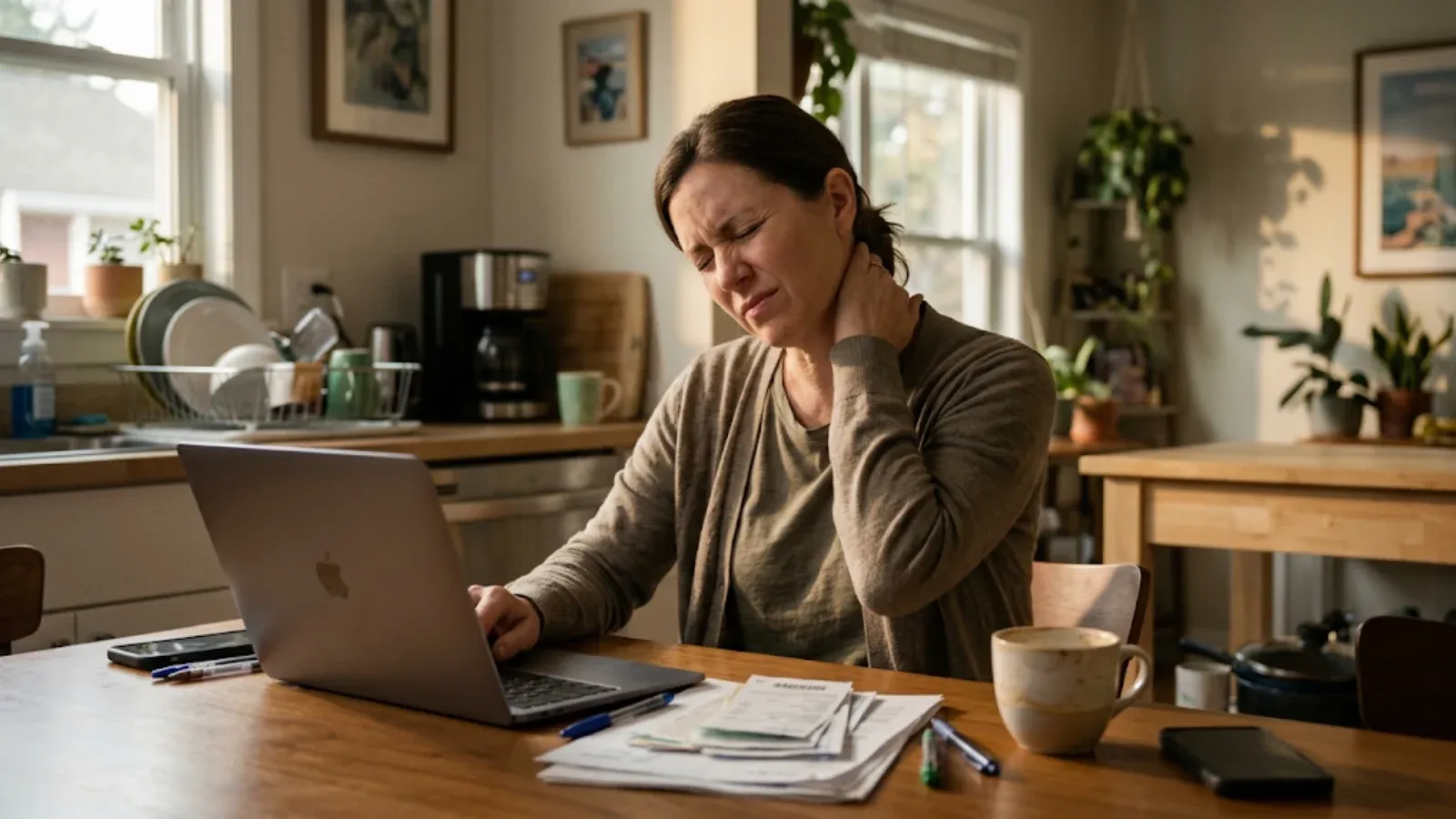
The most common physical signs of stress are frequent headaches, stomach and digestive trouble, tiredness that sleep does not fix, muscle tension and jaw clenching, getting sick more often, and a racing heart or chest tightness. These happen because stress hormones keep the body on alert. They are worth taking seriously, especially when they last more than two weeks or get worse.
This article is for adults and teens in Texas who keep noticing aches, stomach trouble, exhaustion or a pounding heart and are wondering whether stress could be the reason. It explains the six signs, why the body produces them, what to rule out, and when it is time to talk to a clinician.
Why does stress show up in the body?
Stress shows up in the body because the stress response is physical before it is emotional. MedlinePlus explains that stress hormones make your brain more alert, cause your muscles to tense and increase your pulse. That is useful for a short challenge. With chronic stress, MedlinePlus notes, the body stays alert even when there is no danger, and long-term stress is linked to high blood pressure, heart disease, diabetes, depression and anxiety, among other problems.
The National Institute of Mental Health (NIMH) defines stress as the physical or mental response to an external cause, and notes that it can be short-term or repeat over a long period. Headaches or body pain, high blood pressure and loss of sleep appear on NIMH's list of symptoms shared by stress and anxiety.
Sign 1: Frequent headaches
Frequent headaches are one of the most common physical signs of stress, and MedlinePlus lists headaches among the signs that stress may be affecting your health. Stress-related headaches often feel like a band of pressure across the forehead or the back of the head and tend to build during the day.
A headache pattern that is new, severe, wakes you from sleep, or comes with vision changes, weakness or confusion needs medical evaluation rather than a stress explanation. Tracking when headaches start and what preceded them, such as a deadline, an argument or a skipped meal, helps a clinician sort stress from other causes.
Sign 2: Stomach and digestive trouble
Stress commonly affects digestion. MedlinePlus lists having stomach problems or trouble digesting food among the ways stress can strain the body, and its encyclopedia entry includes upset stomach, diarrhea and constipation among physical signs of too much stress. People often notice nausea before a stressful event, a tight or churning stomach during one, and appetite changes afterward.
Digestive symptoms also have many medical causes, so persistent pain, blood in the stool, unexplained weight loss or vomiting should be evaluated by a medical provider first. Stress can make an existing digestive condition worse, which MedlinePlus notes applies to health conditions in general.
Sign 3: Tiredness that sleep does not fix
Fatigue despite a reasonable night in bed is a frequent sign of chronic stress, because a body on alert does not rest well. MedlinePlus lists tiredness, lack of energy or focus, forgetfulness and trouble sleeping or sleeping too much among the signs of stress. Many people describe lying awake replaying the day and then waking unrefreshed.
Because fatigue also comes with depression, thyroid problems, anemia, sleep apnea and other conditions, a clinician will usually ask about mood, snoring, weight change and medications before attributing it to stress. If low energy is paired with low mood or loss of interest, see depression or burnout?.
Sign 4: Muscle tension and jaw clenching
Muscle tension is part of the stress response itself. MedlinePlus states that stress hormones cause your muscles to tense, and it lists frequent aches and pains and a stiff jaw or neck among physical signs of stress. Jaw clenching often happens at night without awareness, so a sore jaw, worn teeth or morning headaches can be the first clue.
Simple checks help: notice whether your shoulders are up near your ears while you read this, whether your teeth are touching, and whether your hands are in fists. Relaxation techniques, which the National Center for Complementary and Integrative Health describes as generally safe for healthy people, can target this directly. A dentist can also help with night-time clenching.
Sign 5: Getting sick more often
Frequent colds and slow recovery can be a sign of chronic stress. MedlinePlus lists getting sick more often than usual, because stress weakens the body's ability to fight germs, among the signs that stress is affecting your health. People in a long stressful stretch often notice back-to-back minor infections or a cold that lingers.
Short sleep, skipped meals and increased alcohol use often come along with stress and add to the problem. The Centers for Disease Control and Prevention (CDC) recommends that adults get at least seven hours of sleep and keep the same bed and wake time, which supports both mood and physical recovery.
Sign 6: Racing heart and chest tightness
A racing heart and a tight chest are common during acute stress, because the stress response increases the pulse, as MedlinePlus explains. During a stressful moment, people also notice shallow breathing, sweating and shaky hands. These sensations are also typical of panic attacks, which NIMH describes as episodes of intense fear with physical symptoms such as a pounding heart, sweating, chest pain and difficulty breathing.
This is the sign that most needs a medical rule-out. The CDC lists chest pain, feeling weak or light-headed, discomfort in the jaw, neck, back or arm, and shortness of breath as major heart attack symptoms and advises calling 911 immediately. Do not assume it is "just stress" the first time. Once a medical cause is excluded, stress-related chest symptoms respond well to treatment. See why did I just have a panic attack?.
How to track physical stress symptoms: a step-by-step plan
Tracking symptoms for two weeks gives you and your clinician the pattern needed to tell stress from something else. Here is a simple method.
- Choose the two or three symptoms that bother you most.
- Each evening, rate each one from 0 (none) to 10 (worst) in a note on your phone.
- Add one line about the day: sleep hours, caffeine, alcohol, exercise, and the main stressor.
- Note any symptom that was new, severe or different from the pattern.
- After two weeks, look for links. For example, a hypothetical reader might find that headaches were highest on days with under six hours of sleep and more than three coffees.
- Bring the notes to your appointment. Clinicians can act on patterns far faster than on a general "I feel bad."
What to say at an appointment about stress symptoms
Say what the symptoms are, when they started, what has already been checked, and what is going on in your life. MedlinePlus recommends listing questions and noting when symptoms started and what makes them better or worse. Useful sentences include:
- "For about [number] weeks I have had headaches most days and my stomach is upset most mornings."
- "My primary care doctor checked [tests] and they were normal."
- "The main stressors are [work, caregiving, money, a relationship]."
- "I am sleeping about [number] hours and drinking [number] coffees and [number] drinks a week."
- "I have noticed my heart racing and my chest tightening when [situation]."
- "I want to know whether this is stress, anxiety or something else, and what the options are."
For more on preparing, see how to talk to your therapist or psychiatrist.
When should you get help sooner?
Get help sooner when a physical symptom is severe, new or getting worse, or when stress is pushing you toward thoughts of self-harm or heavier substance use. MedlinePlus advises getting help if severe symptoms last two weeks or more, and getting help right away if stress is causing thoughts of suicide, a feeling that you cannot cope, or using drugs or alcohol more than usual.
- Chest pain, shortness of breath, fainting or pain spreading to the arm, jaw or back: call 911.
- Panic symptoms such as dizziness, rapid breathing or a racing heartbeat that keep returning.
- Being unable to function at work or at home.
- Fears you cannot control, or intrusive memories of a traumatic event.
- Thoughts of death or suicide: call or text 988.
Stress in Texas: what to know
In Texas, help for stress-related symptoms is available in person or by video, provided you are physically in the state during a telehealth visit. The U.S. Department of Health and Human Services (HHS) telehealth site explains that providers must be licensed or legally permitted to practice in the state where the patient is located, and that rules vary by state.
Texas summers add a physical layer: the CDC notes that mental illness is a risk factor for heat-related illness and that some medications can make heat effects worse. For public options, 2-1-1 Texas lists mental health clinics and counseling, and Texas Health and Human Services publishes 24/7 crisis lines by county.
Getting support in Texas
Lyte Psychiatry offers therapy, psychiatric evaluation and medication management in Texas. In-person visits are available at Lyte Psychiatry's clinic in Pantego, in the Dallas–Fort Worth area, and telehealth visits are offered to patients who are physically located in Texas at the time of the visit. Most new patients are seen within 1–2 business days. Weekend appointments are limited. All Lyte Psychiatry services are available in Spanish. Availability, insurance and clinician fit require confirmation.
Lyte Psychiatry is an outpatient practice. It does not provide inpatient care, crisis or after-hours coverage, medically supervised detox, or intensive outpatient or partial hospitalization programs. Learn more about anxiety care and therapy, or contact the practice.
If you are in a mental-health crisis in the United States, call or text 988. Call 911 for immediate danger.
Educational information, not a diagnosis or individual treatment plan.
Common Questions
Frequently Asked Questions
Can stress really cause physical symptoms?
Yes. MedlinePlus explains that stress hormones make the brain more alert, tense the muscles and raise the pulse, and that with chronic stress the body stays on alert even when there is no danger. Over time that can show up as headaches, stomach trouble, poor sleep, tiredness and more frequent illness.
How do I know if a symptom is stress or something medical?
You often cannot tell on your own, and you should not have to. New chest pain, shortness of breath, fainting or a symptom that is getting steadily worse needs a medical evaluation first. Once medical causes are ruled out or treated, a clinician can help you address the stress component.
How long is too long to have physical stress symptoms?
MedlinePlus advises getting help if you have severe symptoms for two weeks or more, such as trouble sleeping or difficulty focusing. If symptoms are interfering with work, school or relationships before then, it is reasonable to book an appointment sooner rather than wait for the two-week mark.
Is a racing heart from stress dangerous?
A racing heart during a stressful moment is usually the body's alarm response and settles on its own. Because the same sensation can come from heart problems, the CDC advises calling 911 for chest pain, shortness of breath, light-headedness or discomfort in the jaw, neck, back or arm. When in doubt, get it checked.
Can teens have physical signs of stress too?
Yes. Teens often report headaches, stomachaches, tiredness and trouble sleeping during stressful stretches such as exams or social conflict. The same rule applies: a pediatrician or family doctor should rule out medical causes, and a mental health evaluation can help if symptoms persist or affect school and relationships.
Will I need medication for stress-related symptoms?
Not necessarily. Many people improve with therapy, sleep changes and stress-management skills alone. The National Institute of Mental Health notes that psychotherapy and medication are the two main treatments for anxiety, which is where stress sometimes leads. Whether medication fits depends on your evaluation, and that decision is made with your prescriber.
Can I see someone about stress symptoms by telehealth in Texas?
Yes. Lyte Psychiatry offers telehealth visits to patients who are physically located in Texas at the time of the visit, as well as in-person visits at its clinic in Pantego, in the Dallas–Fort Worth area. Availability, insurance and clinician fit require confirmation. All services are available in Spanish.
Further Reading
NIMH — Mental Health Topics
Evidence-based information on all major mental health conditions
SAMHSA National Helpline
Free, confidential 24/7 treatment referral service: 1-800-662-4357
CDC — Mental Health
Public health data and resources on mental health in the U.S.
These topic resources supplement the references linked within the article.
Related Care and Resources
Find Care Near You
Lyte Psychiatry serves patients across Texas — in-person in DFW and via telehealth statewide.
Don't see your city? View all Texas locations →
Questions about cost? View insurance and payment information
Ready to get help?
Lyte Psychiatry serves patients across Texas — in-person in the DFW area and virtually statewide.
Book an Appointment →