Thu Sep 11 2025
Can Anxiety Cause Loss of Appetite? Why It Happens and What Helps
Why anxiety can switch off hunger, how to tell it from other causes of appetite loss, practical ways to eat when anxious, and when to see a provider in Texas.
Published by Lyte Psychiatry · Meet our care team
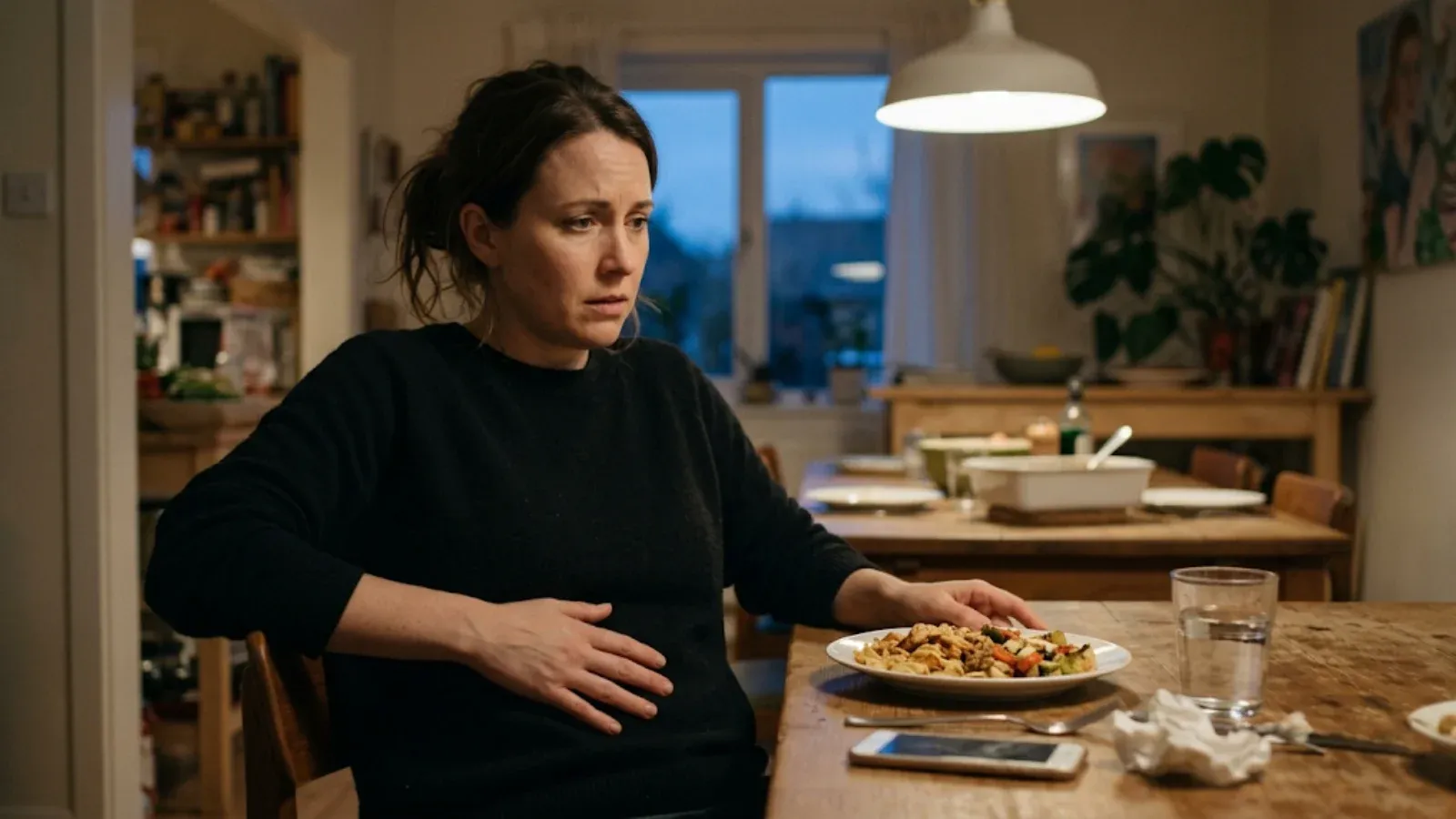
Yes, anxiety can cause loss of appetite. When the body's stress response switches on, it diverts energy away from digestion and toward alertness, so hunger signals fade, the stomach can feel tight or queasy, and food stops being appealing. The appetite usually returns as the anxiety settles, and treating the anxiety is the most reliable way to bring it back.
This article is for adults and teens in Texas who notice they cannot eat when they are anxious, and for parents or partners who are watching someone skip meals. It explains why anxiety affects hunger, what else to rule out, how to eat when you do not feel like it, what to say to a provider, and when to get help sooner.
Why does anxiety cause loss of appetite?
Anxiety causes loss of appetite because the stress response prepares the body to deal with a threat, and digesting lunch is not part of that plan. Blood flow and attention go to the muscles and the senses. The stomach slows, and the signals that normally say "eat" go quiet. For a brief scare that is harmless. For weeks of worry, it means meals get smaller and smaller.
MedlinePlus, the National Library of Medicine's consumer site, describes anxiety as fear, dread or uneasiness that becomes a disorder when the fear is not temporary and can be overwhelming. The same site lists emotions such as sadness, depression or grief among the causes of decreased appetite, and persistent anxiety belongs on that list in practice.
What does anxiety-related appetite loss feel like?
It usually feels like a closed door rather than an empty tank. People describe a knot or tightness in the stomach, nausea at the thought of food, feeling full after a few bites, and forgetting to eat because hunger simply never announces itself. The National Institute of Mental Health (NIMH) lists racing heart, sweating, trembling and trouble breathing among the symptoms of a panic attack, and many people add a churning stomach to that list from experience.
Some people get the opposite pattern and eat more under stress. Both are real responses to the same system, and a person can swing between them. For the wider set of ways stress shows up in the body, see Lyte's article on seven physical symptoms of stress.
Is it anxiety, depression, grief or something medical?
Appetite loss has many causes, and anxiety is only one, so the surrounding symptoms matter. NIMH lists changes in appetite or unplanned weight changes among the symptoms of depression, alongside low mood and loss of interest that last at least two weeks. MedlinePlus notes that grief reactions include sleep and appetite changes.
Medical causes also need a look. MedlinePlus lists certain medicines, infections, thyroid problems, digestive conditions and other illnesses among the causes of decreased appetite. A rule of thumb: if the appetite loss started with a stressful period and tracks with your worry level, anxiety is likely involved. If it has no clear trigger, comes with pain, fever or vomiting, or continues after life calms down, ask a medical provider to look.
How to eat when anxiety takes your appetite: step by step
When anxiety takes your appetite, you eat by schedule rather than by hunger, keep portions small, and make the act of eating as calm as possible.
- Set meal alarms. Every two to three hours, eat something, even a few bites. Hunger will not remind you, so the clock has to.
- Start small and bland. Toast, rice, bananas, yogurt, crackers, eggs. A small success is better than a large plate you cannot face.
- Drink your calories when needed. Smoothies, milk, soups and meal-replacement drinks are easier when solids feel impossible.
- Calm the body first. Two minutes of slow breathing with a long exhale before eating tells the stomach it is safe to work. The National Center for Complementary and Integrative Health notes that relaxation techniques are generally considered safe for healthy people.
- Eat with someone, or with something. Company, a podcast or a window view takes attention off the stomach.
- Avoid filling up on caffeine. Coffee on an empty stomach can increase both nausea and anxiety.
- Keep a simple log. What you ate, when, and your anxiety level. Two weeks of notes is useful at an appointment.
What to say to a provider about anxiety and appetite
The most useful thing to tell a provider is when the appetite change started, what else changed at the same time, and whether your weight has moved. These are example phrases, offered only as examples.
- "Since the layoff in August I have not been hungry. I eat maybe one small meal a day."
- "I feel sick when I try to eat in the morning before work, but I am fine on weekends."
- "I have lost about eight pounds without trying. I am worried and I would like to know what is going on."
- "I am not sad exactly, but I am not interested in food or much else."
- "My teenager has stopped eating breakfast and dinner and says she feels sick. She has a lot going on at school."
Bring your food log, a list of medicines and supplements, and any weight numbers you have. If you find yourself searching symptoms late at night and feeling worse, the Lyte article on health anxiety and symptom searching may help.
How is anxiety that affects appetite treated?
Anxiety that affects appetite is treated by treating the anxiety, and appetite usually follows. NIMH explains that cognitive behavioral therapy helps people question anxious thoughts and change self-defeating behaviors, and lists restlessness, trouble concentrating and being on edge among the symptoms CBT targets in generalized anxiety.
When anxiety is severe or has lasted a long time, a prescriber may discuss medication as part of the plan; some medications affect appetite themselves, so report any change at follow-up visits. Lyte Psychiatry offers therapy, psychiatric evaluation and medication management in Texas. If anxiety has also brought stomach pain, the companion article on what anxiety stomach pain feels like covers that side.
Does skipping meals make anxiety worse?
Skipping meals tends to make anxiety worse, which creates a loop: anxiety kills the appetite, the empty stomach adds shakiness and irritability, and those sensations read as more anxiety. Many people notice that their worst anxious hours are the ones furthest from their last meal. Breaking the loop does not require a full plate, just regular small intake so the body is never running on empty.
Example, offered only as an example: a student with a presentation at 2 p.m. feels too sick to eat lunch, gives the talk shaky and lightheaded, and concludes the presentation caused the shakiness. Eating a small snack at noon the next time, even without appetite, usually makes the afternoon noticeably easier. Over a few weeks, that practice also teaches the body that food during stress is safe, which helps hunger return on its own.
When to get help sooner: red flags
Get help sooner when loss of appetite comes with any of the following, because they point to something that needs more than self-management.
- Losing more than 10 pounds without trying. MedlinePlus advises contacting your provider at that point, and seeking help if decreased appetite occurs with other signs of depression.
- Appetite loss lasting more than two weeks after the stressful situation has eased.
- Pain, fever, vomiting, trouble swallowing, or blood in the stool.
- Restricting food on purpose, fear of gaining weight, or hiding eating habits, which may point to an eating disorder.
- Low mood, hopelessness, or thoughts of not wanting to be here.
- Dizziness, fainting, or feeling weak when standing.
MedlinePlus also advises contacting a provider if severe stress symptoms last two weeks or more, and seeking immediate help for suicidal thoughts or increased substance use.
Anxiety and appetite in Texas: getting both sides checked
In Texas, the practical path is usually two visits: a medical provider for weight and lab work, and a mental health provider for the anxiety. Telehealth makes the second easier. Lyte Psychiatry offers telehealth visits to patients who are physically located in Texas at the time of the visit, and in-person visits are available at Lyte Psychiatry's clinic in Pantego, in the Dallas–Fort Worth area.
Lyte Psychiatry is an outpatient practice and does not provide medical workups, inpatient care or eating disorder programs, but its clinicians can coordinate with a primary care provider and refer when a higher level of care is needed. Coverage for video and in-person visits varies by plan, so confirm your benefits before booking.
Getting support in Texas
Lyte Psychiatry offers therapy, psychiatric evaluation and medication management in Texas. Most new patients are seen within 1–2 business days. Weekend appointments are limited. All Lyte Psychiatry services are available in Spanish.
Lyte Psychiatry does not provide inpatient care, crisis or after-hours coverage, medically supervised detox, or intensive outpatient or partial hospitalization programs. Availability, insurance and clinician fit require confirmation. Learn about anxiety care, coordinated therapy and psychiatry, or contact the practice.
If you are in a mental-health crisis in the United States, call or text 988. Call 911 for immediate danger.
Educational information, not a diagnosis or individual treatment plan.
Common Questions
Frequently Asked Questions
Can anxiety cause loss of appetite?
Yes. Anxiety activates the body's stress response, which shifts resources away from digestion and toward alertness. Hunger signals quiet down, the stomach may feel tight or queasy, and food loses its appeal. MedlinePlus lists emotions such as sadness, depression and grief among the causes of decreased appetite, and anxiety commonly works the same way.
Why do I feel sick instead of hungry when I am anxious?
The stress response can produce nausea, a knotted stomach and a sense of fullness even when you have not eaten. This is the same stress response that produces a racing heart and trembling during panic, pointed at the digestive system. The feeling usually eases as the anxiety eases, which is why treating the anxiety often restores the appetite.
How long does anxiety-related appetite loss last?
It often lasts as long as the stressful period does, from a few hours around a specific event to several weeks during a prolonged crisis. If appetite has not returned within two weeks of life calming down, or if you are losing weight without trying, see a provider so that anxiety, depression and medical causes can each be considered.
How do I eat when I have no appetite from anxiety?
Eat by the clock rather than by hunger, in small amounts. A few bites of something bland every two to three hours, smoothies or soups when solids feel like too much, and a calm minute of slow breathing before eating all help. Avoid skipping breakfast, since an empty stomach can make anxiety symptoms feel stronger.
When should I worry about loss of appetite?
MedlinePlus advises contacting your provider if you lose more than 10 pounds without trying, and seeking help if decreased appetite comes with other signs of depression. Also see a provider if appetite loss lasts more than two weeks, comes with pain, fever, vomiting or blood in the stool, or if you are restricting food on purpose.
Can treating anxiety bring my appetite back?
Often, yes. As anxiety is treated, the stress response quiets and hunger signals return. Treatment usually includes therapy such as cognitive behavioral therapy and sometimes medication. If appetite does not return with treatment, your provider may look for depression, a medical cause or a medication side effect. Report any ongoing weight change at each visit.
Does Lyte Psychiatry treat anxiety that affects eating?
Lyte Psychiatry offers therapy, psychiatric evaluation and medication management in Texas, in person at its clinic in Pantego in the Dallas–Fort Worth area and by telehealth for patients physically located in Texas at the time of the visit. All services are available in Spanish. It is an outpatient practice, so a medical workup for weight loss happens with a primary care or medical provider.
Further Reading
NIMH — Anxiety Disorders
Diagnostic criteria and treatment options
ADAA — Anxiety Statistics
40M Americans affected — prevalence and impact data
APA — Anxiety Overview
Clinical summary from the American Psychological Association
These topic resources supplement the references linked within the article.
Related Care and Resources
Lyte Psychiatry — Texas
Anxiety Treatment — Texas
Evidence-based care for generalized anxiety, social anxiety, panic disorder, and phobias.
Find Care Near You
Lyte Psychiatry serves patients across Texas — in-person in DFW and via telehealth statewide.
Don't see your city? View all Texas locations →
Questions about cost? View insurance and payment information