Mon Aug 18 2025
Chronic Stress in Children and Teens: Signs, Causes and Help
How chronic stress affects children and teens, the signs parents often miss, a step-by-step home plan, what to say, and when to get help in Texas.
Published by Lyte Psychiatry · Meet our care team
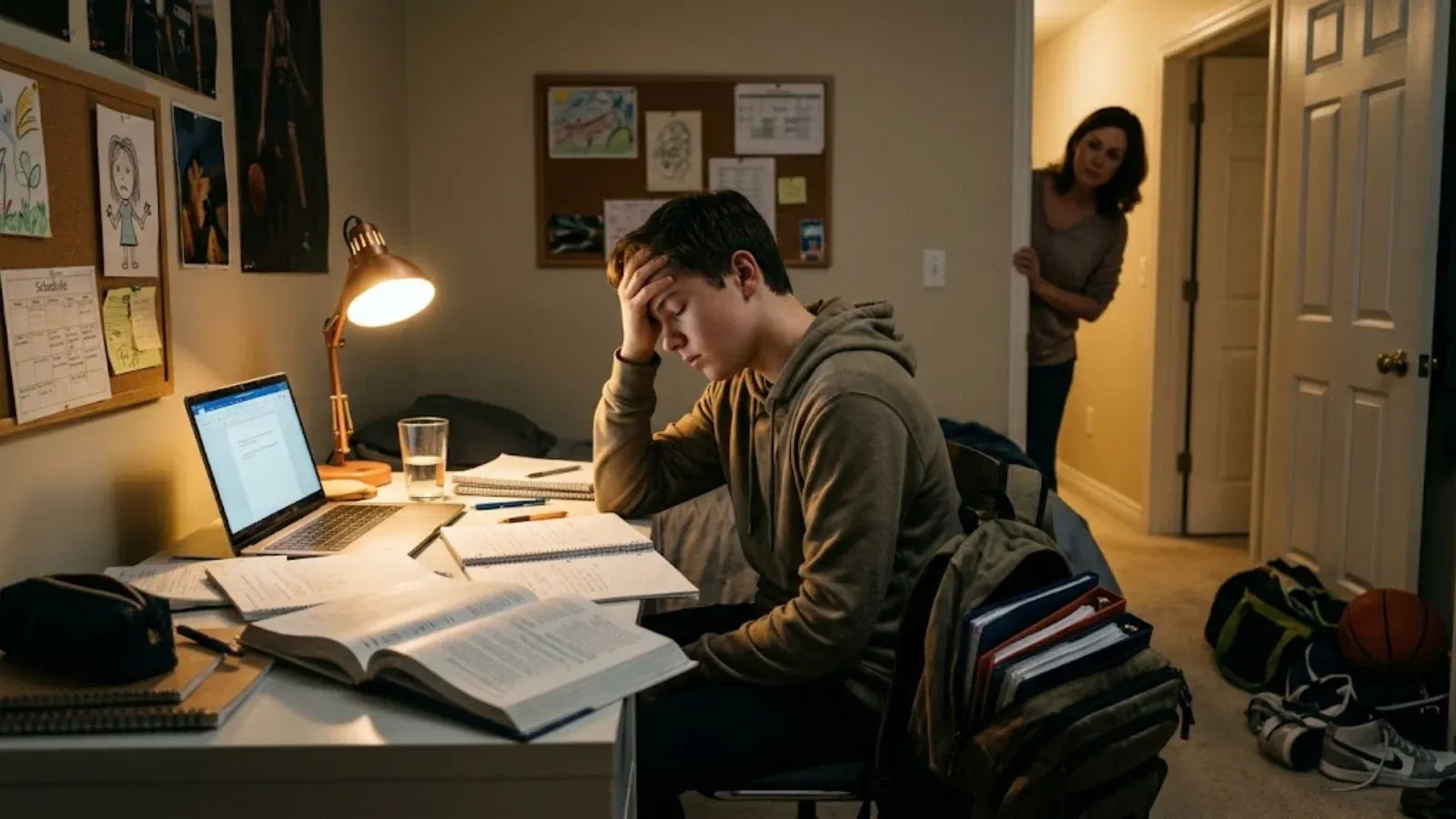
Chronic stress in children and teens shows up differently than it does in adults: more often as stomachaches, sleep trouble, irritability, falling grades or withdrawal than as a clear statement of "I'm stressed." Left alone for months, it can wear down sleep, mood, learning and family relationships. This guide explains what to look for, what helps at home, and when an evaluation is the right next step.
This article is for parents, grandparents and caregivers of school-age children and teenagers, and for teachers and coaches who want to recognize stress early. It is general information, not a substitute for a clinician who knows your child.
What is chronic stress in children and teens?
Chronic stress is ongoing pressure without enough recovery, as opposed to the short, normal stress of a test or a game. The National Institute of Mental Health (NIMH) "I'm So Stressed Out" fact sheet distinguishes stress, which is a response to an outside pressure and typically eases when the pressure does, from anxiety, which persists even without a clear cause.
Children experience the same stress response adults do. MedlinePlus explains that stress hormones make the brain more alert, tense the muscles and increase the pulse. In short bursts that is useful. When it runs for weeks because of a bully, a parent's illness, constant academic pressure or an overloaded schedule, the body never gets the signal to stand down.
The key word is recovery. A busy child who sleeps well, laughs with friends and has unstructured time is usually fine. A child who is always braced is not.
What causes chronic stress in kids and teens?
The most common sources of chronic stress in young people are school pressure, social problems, family strain, overscheduling and exposure to frightening events or news. The American Academy of Pediatrics (HealthyChildren.org) notes that a child who feels afraid is afraid regardless of whether adults think the fear is reasonable, and recommends limiting media exposure, asking about concerns, modeling coping and keeping routines.
Common sources, by age:
- Younger children: changes at home (a move, a new sibling, separation), conflict between parents, a sick family member, bullying, or a classroom that feels unsafe.
- Older children and teens: grades and testing, college pressure, sports and activity overload, friendship and romantic conflict, social media comparison, body image, discrimination, money worries at home, and caregiving for siblings or relatives.
Often there is no single cause. Example: a 15-year-old is handling honors classes, a part-time job and a parent's recent layoff. None of these alone would overwhelm her, but together they leave no recovery time.
How does chronic stress affect a child's body and sleep?
Chronic stress affects the body first, which is why physical complaints are often the earliest sign parents notice. The NIMH lists unexplained stomachaches and headaches among the signs in younger children that may signal a mental health concern worth discussing with a provider.
Physical and sleep-related signs to watch for:
- Frequent headaches or stomachaches, especially on school mornings.
- Trouble falling asleep, waking in the night, or wanting to sleep far more than usual.
- Changes in appetite in either direction.
- Fatigue that rest does not fix.
- Nail-biting, hair-pulling, teeth-grinding or other tension habits.
Caffeine makes sleep problems worse. The American Academy of Sleep Medicine advises parents to limit children's caffeine and notes that many teens and young adults use caffeine for an energy boost, which can hide a sleep debt that stress is already deepening.
How does chronic stress affect mood, behavior and school?
Chronic stress affects mood and behavior by shrinking a child's capacity to tolerate frustration, so small problems produce big reactions. The NIMH lists frequent tantrums and persistent fearfulness in younger children, and withdrawal and loss of interest in previously enjoyed activities in older children, among the signs that warrant attention.
In practice, parents and teachers often see:
- Irritability, snapping, or crying over things that did not used to matter.
- Pulling away from friends, family dinners or activities.
- Falling grades, missed assignments, or a sudden dislike of school.
- Trouble concentrating or finishing tasks that used to be easy.
- Clinginess or regression in younger children, such as bedwetting or baby talk.
- Risk-taking, defiance or secrecy in teens.
Many of these signs overlap with depression and anxiety, which can develop on top of chronic stress. If you are unsure whether you are seeing a phase or something more, see is my teen going through a phase or depressed.
Step by step: a two-week plan at home
A two-week home plan reduces the load, restores recovery time and gives you information about whether professional help is needed. The NIMH lists sleep, exercise and connection as basics of caring for mental health and advises seeing a provider if distressing symptoms last two weeks or longer, which makes two weeks a reasonable checkpoint.
- Days 1–2: observe and listen. Note when symptoms show up (mornings, Sunday nights, after practice). Ask open questions and listen more than you advise.
- Days 3–4: subtract one thing. Pause one optional activity, cut evening screen time, or drop a chore for two weeks. Say why: "You seem run down, and I want to give you some room."
- Days 5–7: protect sleep. Set a consistent bedtime and wake time, move phones out of the bedroom, and stop caffeine after lunch.
- Week 2: add recovery. Build in daily movement, one unstructured hour, and one low-pressure family activity. Keep routines predictable.
- Day 14: review. Are physical complaints, sleep and mood better, the same or worse? If the same or worse, book an evaluation.
During the plan, keep your own stress in check. Children borrow calm from adults, and they borrow panic too.
What to say to a stressed child or teen
What you say matters less than how you listen, but a few phrases make it easier to open a door without pushing. These are examples to adapt, not scripts.
- "I've noticed you've had a lot of stomachaches lately. I'm wondering if things feel like a lot right now."
- "You don't have to explain it perfectly. Just tell me what the hardest part of the day is."
- "That sounds really heavy. I'm not going to try to fix it in the next five minutes."
- "What's one thing we could take off your plate this week?"
- "If you ever feel so bad you think about hurting yourself, I want you to tell me. I won't be angry."
- To a teen who refuses to talk: "Okay. I'm here when you're ready, and I'm going to keep checking in."
Avoid "you have nothing to be stressed about" and "when I was your age." Both close the conversation. If you want help starting it, see how teen mental health affects academic performance for the school side of the picture.
When should you get help sooner?
You should get help sooner when symptoms have lasted weeks, are causing real distress, or are interfering with school, home or friendships, and immediately when safety is in question. The NIMH advises seeking help right away if a child's behavior is unsafe or the child talks about hurting themselves or someone else.
Red flags that should not wait for a two-week plan:
- Any talk of suicide, self-harm, or not wanting to be alive. Call or text 988 now; call 911 for immediate danger.
- Cutting, burning or other self-injury.
- Refusing school for more than a few days.
- Significant weight loss, restricting food or purging.
- Alcohol or drug use.
- Panic attacks, or fear so intense the child cannot do ordinary things.
- A sudden, dramatic change in personality or behavior.
The NIMH also notes that a comprehensive evaluation usually includes a parent interview, information from school and, when appropriate, time with the child. Not sure whether to start with the pediatrician or a mental health clinician? See pediatrician, therapist or psychiatric evaluation for child anxiety.
Child and teen stress care in Texas
In Texas, families can get help for chronic stress in children and teens through pediatricians, school counselors, community mental health centers and private practices, in person or by telehealth. Lyte Psychiatry offers telehealth visits to patients who are physically located in Texas at the time of the visit, which can make therapy workable around school and activity schedules.
Texas public schools generally have counselors who can be a first point of contact and may be able to coordinate classroom support, and the NIMH notes that a child's health care providers can help families communicate with the school and ask about accommodations. Rules about school accommodations and parental consent vary by state and district, so ask your school what applies.
Getting support in Texas
Lyte Psychiatry offers therapy, psychiatric evaluation and medication management in Texas. In-person visits are available at Lyte Psychiatry's clinic in Pantego, in the Dallas–Fort Worth area, and telehealth visits are available to patients physically located in Texas at the time of the visit. Most new patients are seen within 1–2 business days. Weekend appointments are limited. All Lyte Psychiatry services are available in Spanish. Whether a particular child's age and needs are a fit, along with availability and insurance, requires confirmation.
Lyte Psychiatry is an outpatient practice. It does not provide inpatient care, crisis or after-hours coverage, medically supervised detox, or intensive outpatient or partial hospitalization programs.
- Learn about therapy at Lyte Psychiatry.
- Read about anxiety care.
- If sleep is the biggest problem, see the teen sleep deprivation family plan.
- Ready to book? Contact Lyte Psychiatry.
If you are in a mental-health crisis in the United States, call or text 988. Call 911 for immediate danger.
Educational information, not a diagnosis or individual treatment plan.
Common Questions
Frequently Asked Questions
What is chronic stress in children and teens?
Chronic stress is the state of being under pressure for weeks or months without enough recovery, rather than a single hard day. The National Institute of Mental Health describes stress as the body's response to a demand, which is normal in short bursts. In children and teens it often comes from ongoing school pressure, family conflict, bullying, overloaded schedules or worry about a parent.
What are the signs of chronic stress in a child?
Younger children often show stress through the body and behavior: stomachaches, headaches, trouble sleeping, clinginess, tantrums or regression such as bedwetting. Teens more often show irritability, withdrawal, falling grades, changes in sleep or appetite, and loss of interest in activities. Any pattern lasting weeks, causing distress or interfering with school or friendships deserves attention.
How is stress different from anxiety in kids?
The NIMH explains that stress is usually a response to an outside pressure and tends to ease when the pressure does, while anxiety is persistent worry that continues even without a clear cause. A child whose symptoms persist after the stressful situation ends, or who avoids ordinary activities out of fear, may be dealing with anxiety rather than stress alone.
Can chronic stress cause physical symptoms in children?
Yes. Stress hormones keep the body alert, tense the muscles and raise the pulse, and in children that often shows up as headaches, stomachaches, fatigue or trouble sleeping. A pediatrician should check any persistent physical complaint, both to rule out a medical cause and to open a conversation about what is going on in the child's life.
When should a stressed teen see a therapist?
The NIMH advises seeking help when behavior or emotions last for weeks or longer, cause distress, or interfere with school, home or friendships, and seeking help immediately if a child talks about hurting themselves or someone else. A good first step is the pediatrician, who can refer to a mental health professional, or contacting a practice directly.
What happens at a mental health evaluation for a child or teen?
According to the NIMH, a comprehensive evaluation usually includes a parent interview covering developmental history, relationships, medical history and prior treatment; information from school; and, when appropriate, an interview and observation of the child. Parents can ask whether the treatments offered are research-supported and how progress will be measured.
Does Lyte Psychiatry see children and teens in Texas?
Lyte Psychiatry offers therapy, psychiatric evaluation and medication management in Texas, with in-person visits in Pantego, in the Dallas–Fort Worth area, and telehealth for patients physically located in Texas at the time of the visit. Whether a particular child's age and needs are a fit requires confirmation when you contact the practice. All services are available in Spanish.
Further Reading
NIMH — Anxiety Disorders
Diagnostic criteria and treatment options
ADAA — Anxiety Statistics
40M Americans affected — prevalence and impact data
APA — Anxiety Overview
Clinical summary from the American Psychological Association
These topic resources supplement the references linked within the article.
Related Care and Resources
Specialized Care
Lyte Psychiatry — Texas
Anxiety Treatment — Texas
Evidence-based care for generalized anxiety, social anxiety, panic disorder, and phobias.
Find Care Near You
Lyte Psychiatry serves patients across Texas — in-person in DFW and via telehealth statewide.
Don't see your city? View all Texas locations →
Questions about cost? View insurance and payment information