Mon Jun 19 2023
Stage Fright: 5 Strategies to Reduce Performance Anxiety
Why stage fright happens, five practical strategies to reduce performance anxiety before and during a performance, and when it is time to get professional help in Texas.
Published by Lyte Psychiatry · Meet our care team
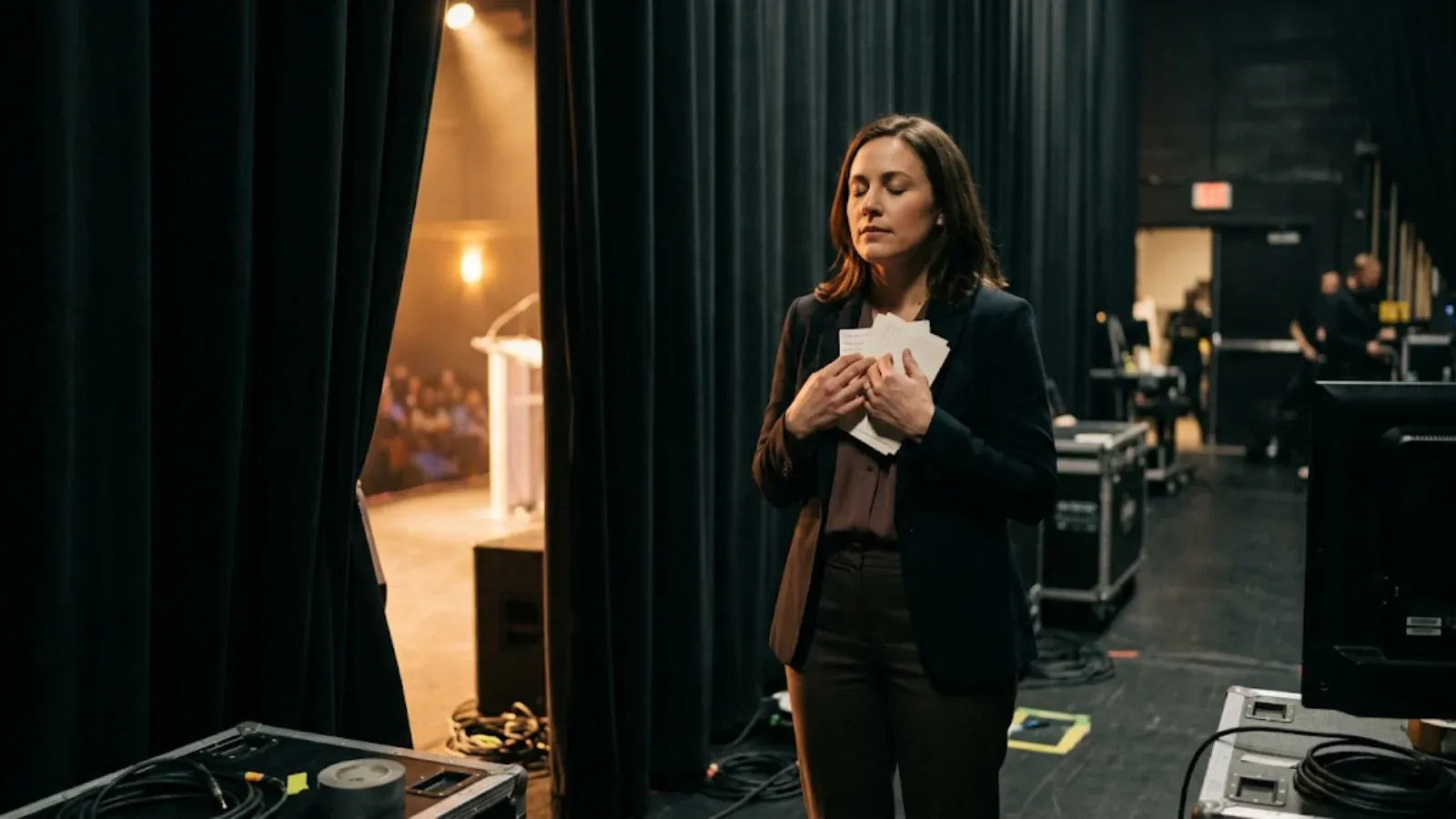
Performance anxiety, often called stage fright, is the body's stress response showing up when you are about to be watched and judged. It is common, it is not a weakness, and it responds well to five strategies: prepare to a solid level, rehearse under performance conditions, retrain your breathing and body, change what you say to yourself, and get professional help when nerves start limiting your life.
This article is for musicians, speakers, actors, athletes, students and professionals in Texas who dread presentations, auditions or performances, and for parents of teens who freeze on stage or at competitions. It explains why stage fright happens, what to do before and during a performance, and when it is time to talk to a clinician.
What is performance anxiety?
Performance anxiety is intense fear and physical arousal in situations where you may be scrutinized, evaluated or judged by others. The National Institute of Mental Health (NIMH) describes social anxiety disorder as a common type of anxiety disorder, and notes that for some people anxiety arises only during performance situations, such as giving a speech or playing an instrument on stage.
Ordinary nerves before a big moment are normal and even useful. The line between nerves and a problem is function. NIMH advises seeking professional help when anxiety starts to cause problems in everyday life, such as turning down opportunities, dropping classes, or avoiding work tasks that involve speaking.
Why does stage fright cause shaking, blushing and a racing heart?
Stage fright produces physical symptoms because the stress response treats evaluation like danger. NIMH lists blushing, sweating, trembling and a rapid heart rate among the physical signs of social anxiety. MedlinePlus explains that stress hormones make the brain more alert, cause muscles to tense and increase the pulse.
Two things make this worse on stage. First, attention turns inward, so every sensation feels amplified and visible, even though audiences notice far less than performers assume. Second, the fear of the symptoms ("what if my hands shake and everyone sees?") adds a second layer of anxiety on top of the first. Good strategies work on both layers.
Strategy 1: Prepare to a solid level, then stop
Prepare until you know the material well, then stop rehearsing for certainty. Over-preparation can raise the stakes and signal to your brain that the event is a threat. A reasonable target is being able to deliver the piece or talk from start to finish three times with minor stumbles, not flawlessly.
Preparation also means logistics: know the room, the equipment, the running order and where you will stand. Removing small unknowns leaves more capacity for the performance itself. If you are a student, see college exam anxiety: a 7-day plan for a related approach to high-stakes preparation.
Strategy 2: Rehearse under performance conditions
The most reliable way to reduce performance anxiety is graded exposure: practicing the feared situation in steps that get progressively closer to the real thing. NIMH describes exposure therapy as a cognitive behavioral therapy (CBT) method that focuses on progressively confronting the fears underlying an anxiety disorder.
Here is a step-by-step ladder you can build yourself:
- Perform the piece alone, standing, aloud, start to finish, without stopping to fix mistakes.
- Record yourself on video and watch it back once, noting only what went well.
- Perform for one trusted person. Ask them to say nothing until you finish.
- Perform for two or three people, with a timer running, in the clothes you will wear.
- Perform in the actual room or a similar one, at the same time of day if possible.
- Perform in a low-stakes real setting, such as an open mic, a team meeting or a small class.
- Repeat each step until your anxiety drops noticeably before moving up. Do not skip steps on a good day.
Example: a hypothetical cellist with an audition in six weeks might spend the first two weeks on steps one and two, the next two on steps three and four, and the final two on steps five and six.
Strategy 3: Retrain your breathing and body
Changing what your body is doing changes what your mind concludes. Slow breathing with a long exhale, loosening the shoulders, jaw and hands, and standing with feet planted all send a "not in danger" signal. The National Center for Complementary and Integrative Health describes relaxation techniques as generally safe for healthy people, while noting that a few people occasionally report increased anxiety when trying them, so practice in calm moments first.
A simple pre-performance routine takes about three minutes:
- Breathe out slowly for a count of five, let the inhale happen naturally, and repeat ten times.
- Roll your shoulders back and down. Unclench your jaw. Open and close your hands twice.
- Feel both feet on the floor and look at one fixed point across the room.
- Take one normal breath and begin.
Sleep matters too. The Centers for Disease Control and Prevention (CDC) advises adults to get at least seven hours and to avoid afternoon and evening caffeine, which also reduces next-day jitteriness.
Strategy 4: Change what you say to yourself
The thoughts that run before a performance drive much of the fear, and they can be rewritten. NIMH describes CBT as the gold standard psychotherapy for social anxiety disorder, and a core CBT skill is identifying and challenging unhelpful thoughts. NIMH's stress guidance similarly recommends identifying and challenging negative and unhelpful thoughts.
Useful replacements, said to yourself before and during a performance:
- Instead of "my heart is racing, I am going to fall apart," try "my heart is racing because I care. It is energy."
- Instead of "everyone will see my hands shake," try "audiences notice far less than performers do. I will keep going."
- Instead of "if I make a mistake it is a disaster," try "one slip is normal in live performance. Recovering well is the skill."
- Instead of "I have to be perfect," try "my job is to deliver the piece and connect, not to be flawless."
- Instead of "I need to escape," try "staying through this is how it gets easier next time."
Perfectionism feeds stage fright. If this pattern sounds familiar, see 5 ways to cope with social anxiety.
Strategy 5: Get professional help when nerves limit your life
Professional help is worth seeking when stage fright is costing you opportunities, grades, income or sleep. NIMH states that treatment for social anxiety disorder typically involves psychotherapy, medication or both, and advises talking to a health care provider such as a primary care doctor, psychiatrist, psychologist or clinical social worker.
Therapy for stage fright is usually structured, with exposure practice between sessions. NIMH notes that health care providers may prescribe medication for social anxiety disorder and that beta-blockers can help control some of the physical symptoms. This article is general information, not a medical recommendation. Do not start, stop or change any medication without talking to your prescriber. Lyte Psychiatry offers therapy, psychiatric evaluation and medication management in Texas, so both options can be discussed in one evaluation.
What to say to a clinician about stage fright
Tell the clinician which situations trigger the fear, what the physical symptoms are, what you have avoided, and what is coming up. Useful sentences include:
- "My anxiety is mostly about performing or presenting. Day to day I am fine socially." (Or: "It also affects everyday social situations.")
- "The physical symptoms are [shaking, sweating, racing heart, blank mind, dry mouth]."
- "I have turned down or dropped [opportunities] because of it."
- "I have a [performance, presentation, audition] on [date]."
- "I would like to know whether therapy, medication or both make sense for me."
- "I use [caffeine, alcohol, cannabis, other] before or after performances."
For more on preparing for a first visit, see what to say in your first therapy session.
When should you get help sooner?
Get help sooner when anxiety is spreading beyond performance into everyday life, when you are using substances to cope, or when low mood has joined the fear. Red flags include:
- Avoiding school, work or social situations, not just performances.
- Drinking or using sedatives to get through performances or presentations.
- Panic attacks that come without a clear trigger or wake you at night.
- Persistent low mood, loss of interest or hopelessness alongside the anxiety.
- Thoughts of self-harm or suicide. Call or text 988.
- A teen who is refusing to attend school, practice or competitions. See when your teen refuses school.
Performance anxiety in Texas: what to know
In Texas, help for stage fright is available in person or by video, provided you are physically in the state during a telehealth visit. The U.S. Department of Health and Human Services (HHS) telehealth site explains that providers must be licensed or legally permitted to practice in the state where the patient is located, and that rules vary by state.
Texas has a large population of student performers, marching bands, athletes and professionals who present for a living, and the strategies above apply to all of them. For public options, 2-1-1 Texas lists mental health clinics and counseling services.
Getting support in Texas
Lyte Psychiatry offers therapy, psychiatric evaluation and medication management in Texas. In-person visits are available at Lyte Psychiatry's clinic in Pantego, in the Dallas–Fort Worth area, and telehealth visits are offered to patients who are physically located in Texas at the time of the visit. Most new patients are seen within 1–2 business days. Weekend appointments are limited. All Lyte Psychiatry services are available in Spanish. Availability, insurance and clinician fit require confirmation.
Lyte Psychiatry is an outpatient practice. It does not provide inpatient care, crisis or after-hours coverage, medically supervised detox, or intensive outpatient or partial hospitalization programs. Learn more about anxiety care or contact the practice.
If you are in a mental-health crisis in the United States, call or text 988. Call 911 for immediate danger.
Educational information, not a diagnosis or individual treatment plan.
Common Questions
Frequently Asked Questions
Is stage fright the same as social anxiety disorder?
Not always. Most people feel some nerves before performing, and that is normal. The National Institute of Mental Health notes that for some people with social anxiety disorder, anxiety arises only during performance situations such as giving a speech or playing an instrument on stage. It becomes a disorder when it causes problems in everyday life.
Why do I shake and blush when I perform?
Shaking, blushing, sweating and a rapid heart rate are the body's stress response firing in a situation that feels evaluative. The National Institute of Mental Health lists blushing, sweating, trembling and a rapid heart rate among the physical signs of social anxiety. They are uncomfortable, usually far less visible than they feel, and they fade with practice.
Does practicing more cure stage fright?
Preparation helps, but over-practicing to feel certain can backfire by raising the stakes. What works better is preparing to a solid level and then practicing the performance conditions themselves: standing, speaking aloud, in front of a person, with a timer. That is a form of exposure, which is a core method in cognitive behavioral therapy.
What is the fastest way to calm down right before going on?
Lengthen your exhale for about a minute, drop your shoulders, loosen your jaw and hands, and tell yourself that a fast heartbeat is energy, not a sign of failure. Avoid last-minute cramming or reassurance-seeking. These steps do not remove nerves, but they usually bring them down to a level you can perform with.
Are there medications for performance anxiety?
Yes. The National Institute of Mental Health states that health care providers may prescribe medication for social anxiety disorder and that beta-blockers can help control some of the physical symptoms. This article is general information, not a medical recommendation. Whether any medication is appropriate for you is a decision to make with your prescriber.
Can therapy help with performance anxiety?
Yes. The National Institute of Mental Health calls cognitive behavioral therapy the gold standard psychotherapy for social anxiety disorder and describes exposure therapy as a CBT method that progressively confronts the feared situations. Therapy for performance anxiety is usually structured and time-limited, with practice assignments between sessions.
Can I get help for stage fright by telehealth in Texas?
Yes. Lyte Psychiatry offers therapy, psychiatric evaluation and medication management by telehealth to patients who are physically located in Texas at the time of the visit, and in person at its clinic in Pantego, in the Dallas–Fort Worth area. Availability, insurance and clinician fit require confirmation. All services are available in Spanish.
Further Reading
NIMH — Anxiety Disorders
Diagnostic criteria and treatment options
ADAA — Anxiety Statistics
40M Americans affected — prevalence and impact data
APA — Anxiety Overview
Clinical summary from the American Psychological Association
These topic resources supplement the references linked within the article.
Your next steps for anxiety care
Choose the question that fits where you are now. Self-help tools support reflection and preparation; they do not diagnose a condition or replace care.
Who could I meet?
- Toyin Awe, PMHNP-BCPsychiatric Mental Health Nurse Practitioner
- NaTascha Jones, LPCLicensed Professional Counselor
The clinic confirms clinician fit, availability and insurance participation before scheduling.
Meet all Lyte clinicians · Understand provider roles
What will it cost, and how do I book?
Check insurance and benefits · View self-pay prices
Request an appointmentLyte Psychiatry — Texas
Anxiety Treatment — Texas
Evidence-based care for generalized anxiety, social anxiety, panic disorder, and phobias.
Find Care Near You
Lyte Psychiatry serves patients across Texas — in-person in DFW and via telehealth statewide.
Don't see your city? View all Texas locations →
Questions about cost? View insurance and payment information