Fri Oct 16 2026
Fall Anxiety and Depression: Seasonal, Stress or Both?
Why anxiety and low mood often rise together in fall, how to tell stress from seasonal depression, and a simple plan for this week.
Published by Lyte Psychiatry · Meet our care team
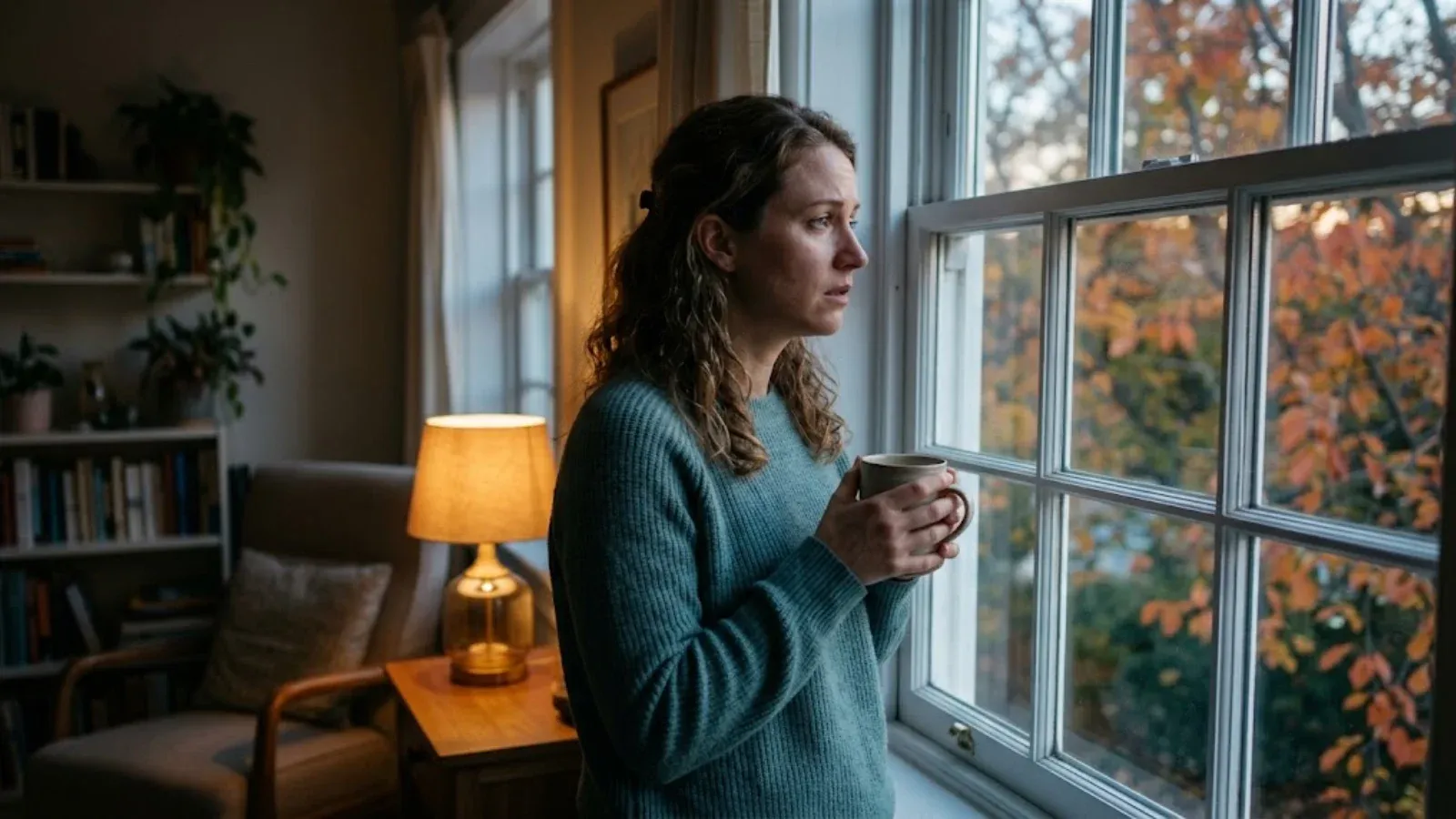
Fall anxiety and depression often travel together. As days get shorter, schedules tighten and the year-end pressure starts, many people notice more worry, lower energy and a flatter mood at the same time. That mix can be seasonal stress, a seasonal pattern of depression, an anxiety problem, or more than one. The difference shows up in how long it lasts and how much it gets in the way.
This article is for adults who feel more on edge and more down in October and November and want to know what is going on, what to try this week, and when to talk with a professional. It can also help anyone supporting a partner, parent or friend.
This article is general information, not a medical recommendation. Do not start, stop or change any medication without talking to your prescriber.
Why do I feel anxious and down when the days get shorter?
Feeling anxious and down as the days get shorter usually comes from several things stacking up at once: less daylight, a shifting sleep schedule, more demands and fewer easy ways to recharge. None of these alone means something is wrong. Together, they can tip a person who was coping fine in summer into a tired, tense, low stretch.
The National Institute of Mental Health (NIMH) says that in most cases of seasonal affective disorder, symptoms start in late fall or early winter and go away during spring and summer. That timing is one reason this time of year feels heavier for some people.
Fall also brings its own stressors: deadlines pick up and the holidays come into view. Anxiety tends to grow when the to-do list grows, and depression tends to grow when rest, sunlight and connection shrink. In fall, both can happen at the same time.
Is it seasonal depression, stress, or something else?
The quickest way to tell seasonal depression, stress and an anxiety problem apart is to ask what is driving the feeling and whether it lets up. Stress is usually tied to a clear outside cause and eases when that cause passes. Depression and anxiety disorders tend to stick around and spread into many parts of life.
NIMH describes stress as generally a response to an external cause, such as a big test or an argument, while anxiety is generally internal, meaning it is your reaction to stress. NIMH describes seasonal affective disorder as a type of depression with a recurrent seasonal pattern.
- Mostly stress: you can name the pressure (a project, a move, a family event), and you feel better on days it lets up.
- Possible seasonal depression: low mood, low energy, oversleeping or craving carbohydrates that show up around the same time each year and lift in spring.
- Possible anxiety problem: worry or tension that seems always present, causes you to avoid things, or does not match the size of the problem.
- Something else: new fatigue or low mood can also come from medical causes, so a checkup is part of sorting it out.
The American Psychiatric Association (APA) notes that seasonal affective disorder can be misdiagnosed as conditions such as hypothyroidism or viral infections, which is one reason a professional evaluation matters. For a deeper look at causes, see why fall and winter can affect mood.
How can anxiety and depression show up together in fall?
Anxiety and depression can show up together in fall as a cycle: worry drains energy, low energy makes tasks pile up, and the growing pile feeds more worry. Many people feel "tired but wired."
NIMH lists a "persistent sad, anxious, or empty mood" among the symptoms of depression, and it names anxiety disorder and panic disorder among conditions that can occur alongside seasonal affective disorder. Anxious feelings are a common part of the picture.
Common ways the overlap looks in daily life include:
- Lying awake worrying, then sleeping in and still waking up tired.
- Dreading plans you would normally enjoy, then canceling and feeling guilty.
- Snacking more in the evening and moving less once it gets dark.
- Feeling irritable or short-tempered with people you love.
- Putting off small tasks until they feel huge.
Example (hypothetical): someone notices that each October they start canceling weekend plans, sleep later, and feel a knot of worry every Sunday night about the week ahead. By January the worry has eased but the low mood has not. That pattern is worth describing to a clinician, because it touches both anxiety and a possible seasonal pattern.
What are the signs it is more than a rough patch?
It is more than a rough patch when symptoms last most of the day, nearly every day, for two weeks or longer, or when they start to interfere with work, school, relationships or self-care. Duration and impact matter more than any single symptom.
NIMH describes depression symptoms as lasting most of the day, nearly every day, for at least two weeks. The APA describes seasonal affective disorder as more than the "winter blues" because it interferes with daily functioning.
Signs to take seriously include:
- Losing interest or pleasure in things you usually like.
- Sleeping much more or much less than usual.
- Trouble concentrating or making simple decisions.
- Worry that feels constant or that keeps you from doing things.
- Pulling away from people and wanting to "hibernate."
- Feeling hopeless, worthless or like a burden.
For a two-week plan, read seasonal affective disorder as days get shorter.
What can I do about fall anxiety and depression this week?
The most useful things to do about fall anxiety and depression this week are small, steady changes to light, sleep, movement and connection, plus a simple record of how you feel. These steps do not replace care, but they can help and give you clearer information to share.
- Get outside in daylight early. Aim for a short walk or time near a window in the morning, before the day gets busy.
- Keep your sleep times steady. Go to bed and wake up at about the same time, including weekends.
- Move your body most days. The Centers for Disease Control and Prevention (CDC) says physical activity can reduce the risk of depression and anxiety and can help you feel better right away.
- Shrink the to-do list. Pick one or two must-do tasks a day and let the rest wait.
- Plan one connection. Put a call, coffee or walk with someone on the calendar before you can talk yourself out of it.
- Watch caffeine and alcohol. NIMH suggests avoiding excess caffeine when stressed, and alcohol can make sleep and mood harder to read.
- Track for 14 days. Rate mood, worry and energy from 0 to 10 each evening, and note sleep and daylight time.
If your worry is mostly about work and you feel used up rather than sad, depression or burnout explains how to tell those apart.
What should I say to a clinician? A checklist
When you talk with a clinician, describe what you feel, when it started, how often it happens and what it is getting in the way of. Specific details help a clinician sort seasonal depression from stress or an anxiety disorder faster than general statements.
NIMH says that if stress or anxiety symptoms won't go away, it may be time to talk to a professional. Bring this checklist:
- "My mood and worry changed around [month], and it has lasted [number] weeks."
- "This also happened last fall or winter" (or "this is new").
- "I am sleeping [more or less], and my appetite has [changed or not changed]."
- "The worry is mostly about [topics], and it [does or doesn't] let up on good days."
- "It is affecting [work, school, family, friendships]."
- Any medicines or supplements you take, recent illnesses, and family history of depression, anxiety or bipolar disorder.
- Your 14-day mood log, if you kept one.
Ask what the clinician thinks is going on, what the options are, and how you will both know whether things are improving. NIMH lists psychotherapy, light therapy, antidepressant medication and vitamin D as treatments used for seasonal affective disorder, alone or together. Talk with a clinician before buying a light box, since the APA notes that light boxes should filter out ultraviolet light.
When should I get help sooner?
Get help sooner, within days rather than weeks, if symptoms are getting worse quickly, you cannot keep up with basic tasks, or you have any thoughts of death or self-harm. You do not need to wait for two full weeks of symptoms in those situations.
The 988 Suicide & Crisis Lifeline is free, confidential and available 24/7 by call, text or chat. Reach out sooner if you notice:
- Thoughts that you would be better off dead, or planning ways to hurt yourself.
- Panic attacks that are new or happening often.
- Not eating, not sleeping, or not getting out of bed for days.
- Drinking or using substances more to cope.
- Unusually high energy, little need for sleep, or racing thoughts after a low period.
A written plan can help on hard days. See the mental health safety plan template to prepare one before you need it.
Does living in Texas change the picture?
Living in Texas does change the picture somewhat, because classic winter seasonal depression is less common in southern states, but it does not rule it out. Fall changes in light, sleep and stress still affect many Texans.
NIMH reports that people in Alaska or New England are more likely to develop SAD than people in Texas or Florida. That means a Texan who feels anxious and low every fall should also look closely at stress, sleep and anxiety, not only at daylight.
The clock change matters here too. As of October 2026, the National Institute of Standards and Technology (NIST) lists the end of daylight saving time as 2:00 a.m. on Sunday, November 1, 2026, when clocks go back one hour. The American Academy of Sleep Medicine (AASM) suggests keeping your normal bedtime around the change. For more, read how to prepare for the clock change.
After a hot Texas summer, cooler fall mornings are a good time for the daylight walks in the plan above.
Getting support in Texas
Lyte Psychiatry offers therapy, psychiatric evaluation and medication management in Texas. If fall anxiety and low mood are lasting, an evaluation can help sort out whether you are dealing with stress, anxiety, seasonal depression or a mix.
- In-person visits are available at Lyte Psychiatry's clinic in Pantego, in the Dallas–Fort Worth area.
- Lyte Psychiatry offers telehealth visits to patients who are physically located in Texas at the time of the visit.
- Most new patients are seen within 1–2 business days. Weekend appointments are limited.
- All Lyte Psychiatry services are available in Spanish.
- Availability, insurance and clinician fit require confirmation.
Learn more about anxiety care and depression care. Lyte Psychiatry is an outpatient practice. It does not provide inpatient care, crisis or after-hours coverage, medically supervised detox, or intensive outpatient or partial hospitalization programs.
If you are in a mental-health crisis in the United States, call or text 988. Call 911 for immediate danger.
Educational information, not a diagnosis or individual treatment plan.
Common Questions
Frequently Asked Questions
Why do I get anxious and depressed every fall?
Fall can stack up several pressures at once: less daylight, shifting sleep, busier schedules and holiday planning. For some people this is short-lived stress. For others it follows a seasonal pattern of depression, which NIMH says usually starts in late fall or early winter and lifts in spring. Anxiety can occur alongside it. A clinician can help you sort out which applies.
Can seasonal depression cause anxiety?
Anxiety often appears alongside seasonal depression. NIMH lists a persistent sad, anxious or empty mood among depression symptoms and names anxiety disorder and panic disorder as conditions that can occur with seasonal affective disorder. Feeling worried and low at the same time does not mean your symptoms are unusual. It is a common combination worth describing to a professional.
How do I know if it is stress or seasonal depression?
Stress is usually tied to a clear outside cause and eases when that cause passes. Seasonal depression shows up around the same time each year, lasts for weeks to months, and often brings low energy, oversleeping, carbohydrate cravings and social withdrawal. If symptoms last most days for two weeks or more, or affect daily life, talk with a health care provider.
How long should I wait before getting help for low mood in the fall?
If low mood, loss of interest or constant worry lasts most of the day, nearly every day, for two weeks or longer, it is a good time to talk with a provider. Do not wait if symptoms worsen quickly, you cannot manage basic tasks, or you have thoughts of self-harm. In a crisis in the United States, call or text 988.
Is seasonal depression less common in Texas?
NIMH reports that people in Alaska or New England are more likely to develop seasonal affective disorder than people in Texas or Florida. Less common does not mean it never happens. Texans can still feel the effects of shorter days, the end of daylight saving time and year-end stress, so fall symptoms that last or disrupt life deserve attention.
What helps fall anxiety and low mood at home?
Small, steady habits help many people: morning daylight, consistent sleep and wake times, movement most days, a shorter to-do list, a planned social connection and less caffeine and alcohol. Tracking mood, worry and energy for 14 days also gives you useful information. These steps support care but do not replace an evaluation when symptoms persist.
Can I get help for anxiety and depression by telehealth in Texas?
Lyte Psychiatry offers telehealth visits to patients who are physically located in Texas at the time of the visit, as well as in-person visits at its clinic in Pantego in the Dallas–Fort Worth area. All Lyte Psychiatry services are available in Spanish. Availability, insurance and clinician fit require confirmation when you contact the practice.
Further Reading
NIMH — Depression Overview
Prevalence, symptoms, and evidence-based treatments
CDC — Mental Health Data & Statistics
National survey data on depressive disorders
APA — Depression Fact Sheet
Clinical guidance from the American Psychological Association
These topic resources supplement the references linked within the article.
Your next steps for anxiety care
Choose the question that fits where you are now. Self-help tools support reflection and preparation; they do not diagnose a condition or replace care.
Who could I meet?
- Toyin Awe, PMHNP-BCPsychiatric Mental Health Nurse Practitioner
- NaTascha Jones, LPCLicensed Professional Counselor
The clinic confirms clinician fit, availability and insurance participation before scheduling.
Meet all Lyte clinicians · Understand provider roles
What will it cost, and how do I book?
Check insurance and benefits · View self-pay prices
Request an appointmentLyte Psychiatry — Texas
Anxiety Treatment — Texas
Evidence-based care for generalized anxiety, social anxiety, panic disorder, and phobias.
Find Care Near You
Lyte Psychiatry serves patients across Texas — in-person in DFW and via telehealth statewide.
Don't see your city? View all Texas locations →
Questions about cost? View insurance and payment information