Thu Jul 30 2026
Health Anxiety: When Googling Symptoms Becomes the Symptom
The 2am symptom search that always ends badly has a name and a fix. How the reassurance loop works and the CBT approach that retrains it.
Published by Lyte Psychiatry · Meet our care team
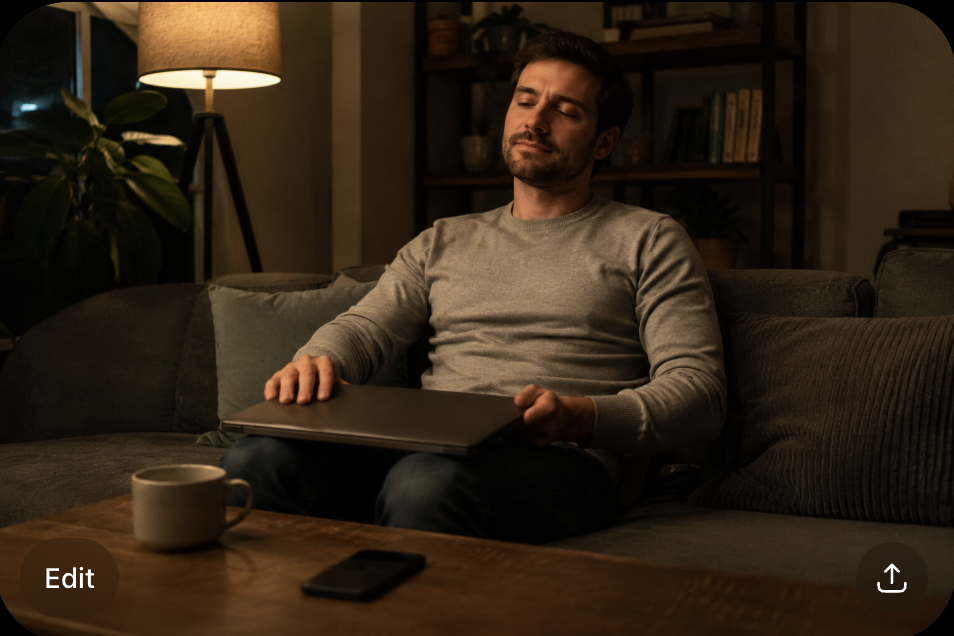
It starts with a symptom, a twinge, a mole, a heartbeat you suddenly notice. Twenty minutes of searching later you've met the worst-case scenario, and the relief of "probably nothing" lasts exactly until bedtime. If your search history is a medical drama, this is for you.
Health anxiety is common, it has a recognizable engine, and it responds extremely well to the right treatment. It is also almost never fixed by one more search.
The engine: reassurance that expires
Health anxiety runs on a loop: notice a sensation, interpret it as danger, seek reassurance (Google, forums, a mirror, a loved one, an urgent care visit), feel relief, and then feel the relief evaporate, which demands a bigger dose next time. Each cycle teaches your brain that the sensation was a real alarm answered, so the alarm gets more sensitive. That is why the searching is not neutral information-gathering; it is the fuel line, as the American Psychological Association's anxiety resources describe.
What it feels like from inside
Body-scanning that finds something every time. Symptoms that migrate: chest one month, head the next. Appointments that reassure for 48 hours. A quiet shame about "being dramatic" alongside genuine terror. And often, real physical sensations, because anxiety produces them: racing heart, chest tightness, dizziness, tingling. The sensations are real. The interpretation is the illness.
The treatment that works
CBT adapted for health anxiety is the best-evidenced approach, and it does something counterintuitive: instead of arguing about whether you're sick, it retrains the checking and reassurance loop itself: delaying searches, sitting with uncertainty in graded steps, and letting the alarm system recalibrate. Our therapists use exactly this playbook. When health anxiety rides on top of a broader anxiety disorder or OCD, which it often does, medication such as an SSRI meaningfully lowers the volume, and combining both works best for many, a decision we map in therapy vs. medication.
But what if it IS something?
Reasonable question, and treatment doesn't ask you to skip real medical care. It asks you to route it properly: one primary care doctor who knows the pattern, scheduled checkups instead of symptom-triggered ones, and psychiatric care for the alarm system. We coordinate with your PCP so "get it checked" and "stop checking" stop being contradictory instructions. Start with the free GAD-7 screen to put a number on the baseline.
The practical details: most new patients are seen within 1 to 2 business days, in person in the DFW area or by video anywhere in Texas and New Mexico. We're in network with BlueCross BlueShield, UnitedHealthcare, Cigna, Aetna, Humana, and Tricare, and most insured patients pay a $0 to $30 copay.
If tonight's plan was another symptom search, run this experiment instead: book the appointment that actually helps. Book online or call (469) 733-0848.
Frequently asked questions
What is health anxiety?
A pattern of interpreting normal or benign body sensations as signs of serious illness, maintained by checking and reassurance-seeking that provides shorter and shorter relief.
Is health anxiety the same as hypochondria?
"Hypochondria" is the outdated term. Clinicians now describe illness anxiety disorder or somatic symptom disorder, both treatable with CBT and, when needed, medication.
Why does googling symptoms make anxiety worse?
Search results skew catastrophic, and each reassurance hit trains the alarm to fire again. Cutting the checking loop is a core part of treatment, not a personality demand.
Can medication help health anxiety?
SSRIs help many people, especially when health anxiety overlaps with generalized anxiety or OCD. Evaluation determines whether therapy alone or combined care fits better.
The sensations feel completely real. Am I imagining them?
No. Anxiety produces genuine physical sensations. Treatment targets the interpretation loop, not your honesty.
If you're having thoughts of harming yourself, call or text 988 (Suicide & Crisis Lifeline), available 24/7.
Medically reviewed by, Lyte Psychiatry. This article is educational and doesn't replace individual medical advice.
Further Reading
NIMH — Anxiety Disorders
Diagnostic criteria and treatment options
ADAA — Anxiety Statistics
40M Americans affected — prevalence and impact data
APA — Anxiety Overview
Clinical summary from the American Psychological Association
These topic resources supplement the references linked within the article.
Related Care and Resources
Lyte Psychiatry — Texas
Anxiety Treatment — Texas
Evidence-based care for generalized anxiety, social anxiety, panic disorder, and phobias.
Find Care Near You
Lyte Psychiatry serves patients across Texas — in-person in DFW and via telehealth statewide.
Don't see your city? View all Texas locations →
Questions about cost? View insurance and payment information