Fri Jul 17 2026
How to Calm Anxiety at Night: A Step-by-Step Wind-Down Plan
A practical bedtime plan to calm nighttime anxiety: an earlier worry list, a wind-down routine, slow breathing, what to do when you can't sleep, and red flags.
Published by Lyte Psychiatry · Meet our care team
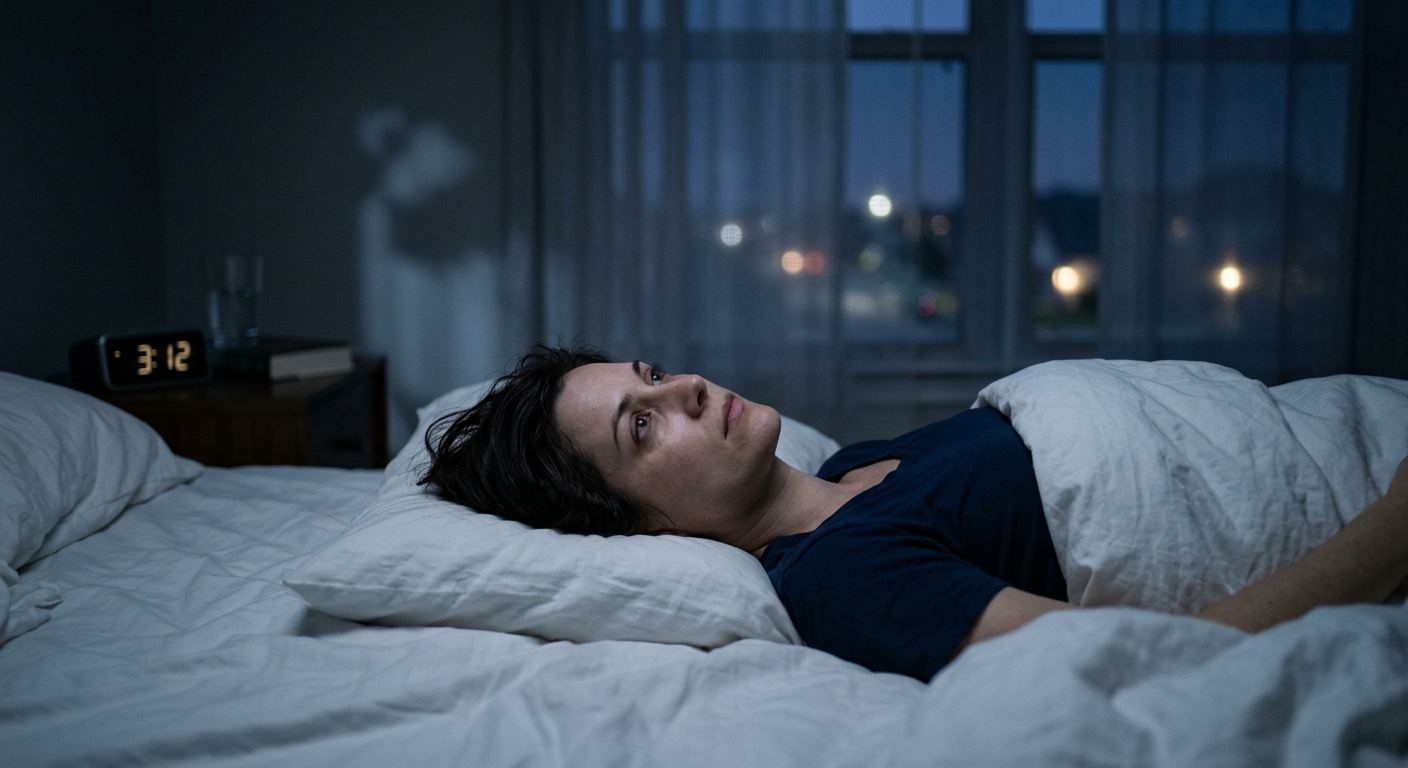
To calm anxiety at night, give your worries a time and place before bed, wind down for 20 to 30 minutes in low light, use slow breathing with a long exhale, and get up briefly if you cannot sleep after about 20 minutes. Consistent sleep and wake times and less afternoon caffeine make each of these steps work better.
This guide is for adults and older teens who lie awake with racing thoughts, wake with a pounding heart, or dread bedtime because they expect to worry. It focuses on what to do tonight and over the next few weeks. If you want to understand the causes first, read why anxiety feels worse at night.
Why does anxiety feel stronger at bedtime?
Anxiety often feels stronger at bedtime because the quiet leaves room for thoughts you held off during the day. The American Academy of Sleep Medicine (AASM) explains that your brain may finally have space to process thoughts and emotions put aside earlier, and that focusing on unfinished tasks, worries or "what if" thinking can keep it alert.
Fatigue makes the problem worse. When you are tired, it is harder to put a worry in perspective, so a small concern can feel urgent. Then worry about not sleeping becomes its own source of stress, and the cycle continues.
How do you calm anxiety at night? Step by step
The most reliable way to calm anxiety at night is a short routine you repeat every evening, so your body learns the signal for rest. The AASM suggests spending the last 20 to 30 minutes before bed in quieter activities to prepare your brain for sleep.
- Park your worries early. In the early evening, spend 10 minutes writing down what is on your mind, with one small next step for each item.
- Dim the lights. Lower lights and put away work about an hour before bed.
- Power down screens. Turn off phones, tablets and the TV at least 30 minutes before sleep.
- Do something calm. Read something light, stretch gently, take a warm shower or listen to quiet music.
- Breathe slowly in bed. Breathe in through your nose and out slowly through your mouth, making the exhale longer.
- Use a neutral focus. Notice the weight of the blanket, the sound of a fan or your breath, and return to it when thoughts wander.
- Get up if you are stuck. If you are still awake after about 20 minutes, go to another room and do something calm in dim light until you feel sleepy.
What should you write on a worry list?
A good worry list is short, specific and ends with a next step, not a solution. The AASM recommends writing thoughts down earlier in the evening so they do not need to be reviewed during the night.
Try this simple format for each item:
- The worry: "I haven't answered my sister's message."
- What I can do: "Call her at lunch tomorrow."
- What is not in my control: "How she feels about the delay."
Close the notebook and leave it outside the bedroom. If a worry returns in bed, remind yourself, "It is on the list. I will deal with it tomorrow."
Which relaxation techniques help at night?
Slow breathing, progressive muscle relaxation and guided imagery are common choices for nighttime anxiety. The National Center for Complementary and Integrative Health (NCCIH) says relaxation techniques are generally considered safe for healthy people, although a few people report feeling more anxious during them and should see a provider if symptoms are severe or long-lasting.
- Slow breathing: breathe in for a count of four and out for a count of six, for a few minutes.
- Muscle relaxation: tense one muscle group, such as your hands, for a few seconds, then let go, moving up the body.
- Imagery: picture a calm, familiar place in detail: its colors, sounds and temperature.
Practice during the day too. Skills that are familiar are easier to use when you feel tense at 2 a.m.
What daytime habits make nights easier?
Daytime habits shape how calm you feel at night. MedlinePlus recommends going to bed and waking up at the same time each day, avoiding naps after 3 p.m., avoiding caffeine in the afternoon and evening, and getting sunlight during the day.
The Centers for Disease Control and Prevention (CDC) adds advice to avoid large meals and alcohol before bed. Physical activity earlier in the day can also help many people feel more ready for sleep.
Example: someone who drinks iced coffee at 4 p.m. and scrolls news in bed might move their last coffee to lunch and charge their phone in the kitchen. Small shifts like these often take a week or two to show their effect.
What if you wake up at night with anxiety?
If you wake up anxious, keep the lights low, avoid checking your phone and return to your slow breathing and neutral focus. MedlinePlus notes that insomnia can be caused by stress, medical conditions, medicines, other sleep disorders, and caffeine, tobacco or alcohol, so frequent waking is worth mentioning to a provider.
If you wake with a racing heart, shaking or a sense of doom, you may be having a nighttime panic attack. Our guide on how to stop a panic attack walks through what to do. For early-morning waking with a busy mind, see why you wake at 3 a.m. with racing thoughts.
What can you say to yourself when you can't sleep?
When you cannot sleep, calm and accepting words work better than pressure to fall asleep. The AASM suggests gently shifting attention to something neutral, such as slow breathing or physical sensations, rather than wrestling with thoughts.
Try one of these phrases, silently or in a whisper:
- "Resting is still useful, even if I don't fall asleep right away."
- "This worry can wait until morning. It's on my list."
- "Nighttime makes things feel bigger than they are."
- "I've gotten through tired days before. I can handle tomorrow."
- "Back to the breath. In slowly, out longer."
Avoid doing math about how many hours are left until your alarm. Turning the clock away from the bed can help, since checking the time often adds pressure.
How can a partner or parent help with nighttime anxiety?
A partner or parent can help most by keeping things calm and predictable rather than trying to solve every worry at bedtime. The CDC's sleep guidance on consistent bedtimes and screen-free time applies to whole households, and shared routines are easier to keep.
- Agree on a household "screens down" time in the evening.
- Offer to talk through worries earlier, not at lights-out.
- For a teen, keep the conversation brief and supportive, then let them use their wind-down routine.
- Notice patterns, such as worse nights before school or work deadlines, and mention them at appointments.
When should you get help sooner? Red flags
Get help sooner if nighttime anxiety is frequent, lasting or affecting your days. The AASM describes chronic insomnia as trouble sleeping at least three times a week for at least three months, and recommends cognitive behavioral therapy for insomnia (CBT-I) for chronic insomnia in adults.
- You wake up gasping, choking or with chest pain. Seek urgent care.
- Worry or panic keeps you awake several nights a week.
- You rely on alcohol or other substances to fall asleep.
- Daytime anxiety, low mood or exhaustion is getting worse.
- You have thoughts of suicide. Call or text 988 now.
CBT-I can be delivered in person, by video or online. Learn more in treating insomnia without sleeping pills.
Does Texas heat affect nighttime anxiety?
Hot nights can make it harder to sleep and easier to feel restless. The AASM notes that body temperature drops as you prepare for sleep and warm air can disrupt that process, which matters during long Texas summers.
A fan, light bedding, a cool shower before bed and keeping blinds closed during the day can help. Lyte Psychiatry offers telehealth visits to patients who are physically located in Texas at the time of the visit, so you can attend a visit from home without a drive in the heat.
Getting support in Texas
If you have tried to calm anxiety at night on your own and it is still running your evenings, treatment for anxiety and sleep can help.
Lyte Psychiatry offers therapy, psychiatric evaluation and medication management in Texas. In-person visits are available at Lyte Psychiatry's clinic in Pantego, in the Dallas–Fort Worth area. Lyte Psychiatry offers telehealth visits to patients who are physically located in Texas at the time of the visit. All Lyte Psychiatry services are available in Spanish.
Most new patients are seen within 1–2 business days. Weekend appointments are limited. Availability, insurance and clinician fit require confirmation. Learn about anxiety care or telehealth in Texas.
Lyte Psychiatry is an outpatient practice. It does not provide inpatient care, crisis or after-hours coverage, medically supervised detox, or intensive outpatient or partial hospitalization programs.
If you are in a mental-health crisis in the United States, call or text 988. Call 911 for immediate danger.
Educational information, not a diagnosis or individual treatment plan.
Common Questions
Frequently Asked Questions
Why does anxiety get worse at night?
At night there are fewer distractions, so thoughts set aside during the day have room to surface. The American Academy of Sleep Medicine notes that worry about unfinished tasks or what-if thinking can keep the brain alert. Tiredness also makes it harder to put worries in perspective, so they can feel bigger than they would at noon.
What is the fastest way to calm down at bedtime?
Many people find slow breathing with a longer exhale helps within a few minutes. Breathe in gently through your nose and out slowly through your mouth, letting your shoulders drop. Pair it with a neutral focus, such as the feeling of the pillow or the sound of a fan, instead of trying to force sleep.
Should I get out of bed if I can't sleep?
MedlinePlus suggests getting out of bed if you cannot fall asleep after about 20 minutes and doing something calm in dim light until you feel sleepy. This keeps the bed linked with sleep rather than with worry. Avoid bright screens, work and checking the clock while you are up.
Does writing down worries help me sleep?
It can. The American Academy of Sleep Medicine suggests writing thoughts down earlier in the evening so they do not need to be reviewed during the night. A short list of worries, each with one possible next step, tells your brain the issue is parked until tomorrow.
When is nighttime anxiety a sign of insomnia?
The American Academy of Sleep Medicine describes chronic insomnia as trouble sleeping at least three nights a week for at least three months. If anxiety keeps you awake that often, or you are struggling during the day, talk with a health care professional. Cognitive behavioral therapy for insomnia (CBT-I) is a recommended treatment for adults.
Can caffeine or alcohol make nighttime anxiety worse?
Yes, for many people. MedlinePlus lists caffeine, tobacco and alcohol among things that can contribute to insomnia, and the CDC advises avoiding caffeine in the afternoon and evening and avoiding alcohol before bed. If you notice a pattern, try cutting back and tracking how you sleep for two weeks.
Further Reading
NIMH — Anxiety Disorders
Diagnostic criteria and treatment options
ADAA — Anxiety Statistics
40M Americans affected — prevalence and impact data
APA — Anxiety Overview
Clinical summary from the American Psychological Association
These topic resources supplement the references linked within the article.
Related Care and Resources
Lyte Psychiatry — Texas
Anxiety Treatment — Texas
Evidence-based care for generalized anxiety, social anxiety, panic disorder, and phobias.
Find Care Near You
Lyte Psychiatry serves patients across Texas — in-person in DFW and via telehealth statewide.
Don't see your city? View all Texas locations →
Questions about cost? View insurance and payment information