Fri Oct 23 2026
Panic Attack While Driving: A Plan for Holiday Road Trips
What to do if panic hits behind the wheel, how to plan a long holiday drive to family, how to rebuild confidence, and which symptoms need emergency care.
Published by Lyte Psychiatry · Meet our care team
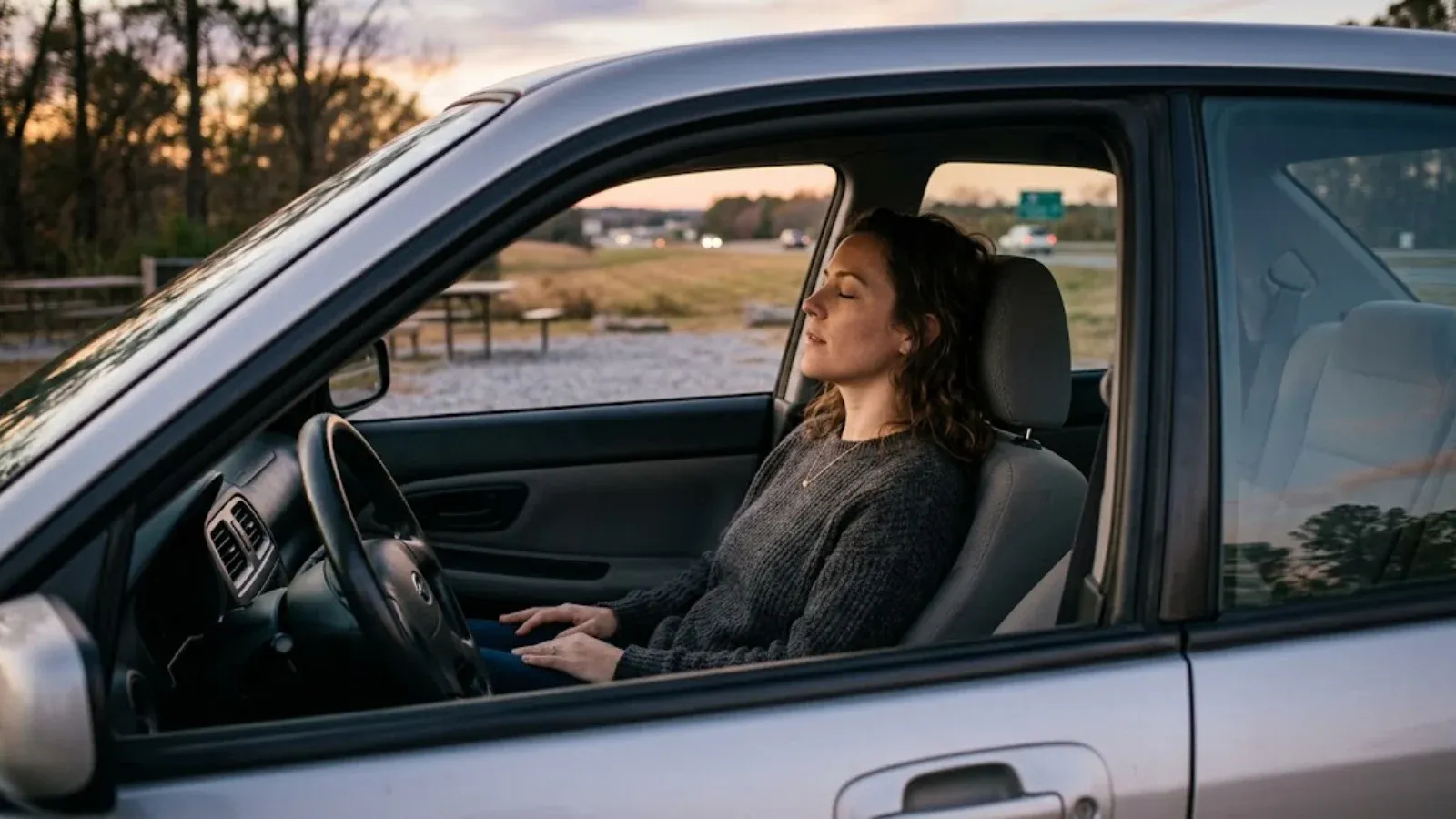
If you have a panic attack while driving, keep your eyes on the road, signal, slow down and move toward the first safe place to stop. Once parked, breathe out slowly and let the wave pass before you drive again. Around the holidays, long drives to family can make it worse because of heavy traffic, fatigue and fewer easy exits.
This guide is for you if you are driving to family this season, if a panic attack while driving has already happened once, or if you now avoid highways. It covers what to do in the moment, a pre-trip plan, words a passenger can use, gradual practice to rebuild confidence, and the symptoms that need emergency care instead of coping skills.
What should you do if you have a panic attack while driving?
Your first job is to get the car to a safe stop, not to stop the panic. The National Institute of Mental Health (NIMH) lists a pounding or racing heart, trouble breathing, chest pain and a feeling of being out of control among panic symptoms, so the attack can feel like an emergency even when the car is still under your control.
- Name it. Say out loud, "This feels like panic. I can get to a safe spot."
- Hands and eyes. Both hands on the wheel, eyes on the car ahead.
- Signal and slow down. Ease into the right lane when it is safe and match the speed of traffic.
- Pick the stop. Head for the next exit, rest area, gas station or parking lot. Use a shoulder only when it is safe and allowed. Traffic rules vary by state, so follow posted signs.
- Park and secure. Put the car in park, turn on hazard lights and unbuckle only once you are fully stopped.
- Slow your breathing. Breathe out longer than you breathe in.
- Wait it out. Drive again only when your hands are steady and your thinking is clear. If you are not sure, call someone to come and help.
For breathing that a provider has already linked to anxiety or panic, MedlinePlus describes pursed-lip breathing: pucker your lips as if blowing out a candle, then breathe out slowly. It is easy to do once you are parked.
What if you can't pull over right away?
If there is no safe place to stop, keep driving steadily to the next one. On a bridge, in a work zone or in heavy traffic, braking hard or swerving can be more dangerous than continuing carefully.
- Stay in your lane and leave extra space in front of you.
- Breathe out slowly through pursed lips while you drive.
- Turn down loud audio and cool the car a little.
- Talk yourself to the exit: "Next exit. Then I stop."
Panic attacks are time-limited. The NIMH panic disorder guide says a panic attack can last from a few minutes to an hour or sometimes longer, so the goal is to reach a safe stop, not to make the feeling vanish while you drive. If you feel faint, your vision changes or you cannot control the car, stop as soon as you safely can.
Is it a panic attack or a medical emergency?
You cannot always tell in the moment, so treat new or unusual symptoms as a possible emergency. The Centers for Disease Control and Prevention (CDC) lists chest pain or discomfort, feeling weak, light-headed or faint, pain in the jaw, neck, back, arms or shoulders, and shortness of breath as major heart attack symptoms, and says to call 911 immediately.
Call 911 or get emergency care if:
- This is your first-ever episode of chest pain, pressure or racing heart.
- Symptoms feel different from panic attacks a clinician has already evaluated.
- Chest pain spreads to your arm, jaw, neck or back, or you faint or nearly faint.
- Breathing trouble is severe or does not ease once you are stopped and resting.
- You have heart risk factors, or you simply are not sure.
MedlinePlus notes that rapid breathing for the first time may be a medical emergency. Being told "it was panic" after a checkup is a good outcome, not a wasted trip. Our guide to panic attack or medical emergency walks through this decision in more detail.
Why do panic attacks happen while driving?
Driving combines several things panic dislikes: feeling trapped, needing constant attention, few places to stop and a sense of responsibility for everyone in the car. Highways, bridges, tunnels, night driving and long stretches between exits are common triggers.
Body sensations often start the loop. Caffeine, poor sleep, a skipped meal, a warm car or a stressful day can raise your heart rate, your brain reads that as danger, and fear adds more symptoms. MedlinePlus explains that people with panic disorder often worry about having another attack and may avoid places where attacks happened before. That is why one bad drive can turn into avoiding a whole route.
Our article on why panic attacks happen explains the body side of this cycle, and if fear started after a crash, see anxiety after a car accident.
How do I plan a holiday road trip if I get panic attacks?
Plan the drive in three parts: the days before, the day of and the day after. The CDC's National Institute for Occupational Safety and Health (NIOSH) lists drifting from your lane, reacting more slowly and forgetting the last few miles as effects of fatigue on driving, and advises pulling over to rest when you feel fatigued. Tired bodies also feel panic more easily, so rest is part of the plan.
The days before
- Look at the route and mark exits, rest areas and gas stations roughly every hour.
- Plan to leave when traffic is lighter, and allow extra time so you never feel rushed.
- Agree with any co-driver on when you will switch.
- Practice your calming steps once in a parked car.
The day of: a calm-car checklist
- A full night of sleep, a real meal and water.
- Phone charged, mounted and set to navigation before you move.
- A card on the visor: signal, slow, safe stop, park, hazards, breathe.
- Something cold to drink and something textured to hold once parked.
- The name of one person you can call after you stop.
- Planned breaks, even if you feel fine.
The day after
Write down where any panic started, what helped and what you got through. Notes like these show progress and give a clinician useful detail. For airport and packing stress, see our holiday travel anxiety plan.
What can a passenger say to help?
A calm, simple script helps more than advice. MedlinePlus suggests that a calm friend or family member speaking in a soft, relaxed tone can help someone whose fast breathing comes from anxiety or panic.
What to say (example scripts):
- "You're doing fine. Let's look for the next safe place to stop."
- "I'll watch for the exit. You watch the road."
- "Breathe out slowly with me."
- "Once we're parked, I can drive the next stretch if you want."
Avoid "just calm down," grabbing the wheel or arguing about whether the fear makes sense. Our road trip anxiety plan for drivers and passengers has more on sharing the drive.
How do you get back to driving after a panic attack?
Most people do best returning to driving gradually rather than avoiding it or forcing a long trip right away. The NIMH overview of psychotherapies describes exposure therapy as spending brief periods in a supportive environment learning to tolerate the distress caused by certain situations, continued until the fear goes down over time.
A sample practice ladder (an example, which a therapist can tailor):
- Sit in the parked car with the engine running for a few minutes.
- Drive around an empty parking lot or a quiet block.
- Take a short, familiar route with a trusted passenger, then alone.
- Add busier roads at quieter times of day.
- Drive one exit on the highway, then two.
- Lengthen trips step by step until a holiday-length drive feels possible.
Stay at each step until it feels manageable before moving up. Some anxiety is expected; the aim is to learn you can handle it. Practice only when you feel able to drive safely.
When should you get help for driving panic?
Get help if fear is shrinking your life: turning down work, missing appointments, relying on others for every trip, or planning around certain roads. The NIMH says a fear or avoidance of places where panic attacks have occurred is a sign of panic disorder, and that a provider may do a physical exam to make sure an unrelated physical problem is not causing symptoms.
Before an appointment, track the dates, road types, sleep, caffeine and main symptoms of each episode, plus any attacks outside the car. MedlinePlus says treatment for panic disorder usually includes talk therapy such as cognitive behavioral therapy, medicine, or both.
What should Texas drivers keep in mind?
Texas drives to family can be long. A trip across the Dallas–Fort Worth area and out along I-35 or I-20 may mean heavy traffic near the cities and longer gaps between towns farther out, so planning stops ahead matters more here.
- Plan fuel and rest stops in advance on rural stretches.
- Save a list of exits with services on the route before you leave.
- Driving laws vary by state, so check the rules for each state you drive through.
Lyte Psychiatry offers telehealth visits to patients who are physically located in Texas at the time of the visit. Never join a visit while driving. Our answer on telehealth from your car explains the parked-car option.
Getting support in Texas
Lyte Psychiatry offers therapy, psychiatric evaluation and medication management in Texas. In-person visits are available at Lyte Psychiatry's clinic in Pantego, in the Dallas–Fort Worth area, and telehealth can help if driving to appointments is hard right now. Most new patients are seen within 1–2 business days. Weekend appointments are limited. All Lyte Psychiatry services are available in Spanish.
Learn about anxiety and panic care or telepsychiatry in Texas. Availability, insurance and clinician fit require confirmation. Lyte Psychiatry is an outpatient practice. It does not provide inpatient care, crisis or after-hours coverage, medically supervised detox, or intensive outpatient or partial hospitalization programs.
Holiday closures are common, so save 988 and 911 before a long drive. The 988 Suicide & Crisis Lifeline is free, confidential and available 24/7 by call, text or chat.
If you are in a mental-health crisis in the United States, call or text 988. Call 911 for immediate danger.
Educational information, not a diagnosis or individual treatment plan.
Common Questions
Frequently Asked Questions
What should I do if I have a panic attack while driving?
Keep your hands on the wheel and eyes on the road, signal, slow to match traffic and head for the next safe place to stop, such as an exit, rest area or parking lot. Once parked, turn on hazard lights and breathe out slowly. Drive again only when your hands are steady and your thinking feels clear.
Is it safe to keep driving during a panic attack?
Sometimes continuing carefully to the next exit is safer than stopping suddenly on a bridge, in a work zone or in heavy traffic. Stay in your lane, leave extra space and breathe out slowly. If you feel faint, your vision changes or you cannot control the car, stop as soon as you safely can.
How do I know if it is panic or a heart attack?
You often cannot tell in the moment. Chest pain, shortness of breath and feeling faint can happen in both. Call 911 if it is your first episode, if symptoms differ from panic a clinician has already evaluated, if pain spreads to your arm, jaw or back, or if you are not sure.
How long does a panic attack last?
The National Institute of Mental Health says a panic attack can last from a few minutes to an hour or sometimes longer. That is why the goal while driving is to reach a safe stop, not to force the feeling away. Attacks that last a long time or feel unusual deserve a medical check.
Why do I panic on the highway but not on side streets?
Highways can feel like a trap: higher speeds, fewer places to stop and more traffic around you. If your body is already tired, warm or full of caffeine, those cues can tip it into panic. Many people then start avoiding the route, which tends to keep the fear going.
How can I prepare for a long holiday drive if I get panic attacks?
Mark exits and rest stops along the route, leave at a quieter time, sleep well, eat and plan breaks even if you feel fine. Keep a card with your pull-over steps on the visor, set navigation before you move and agree with a co-driver on when you will switch seats.
Should I stop driving completely after a panic attack?
Avoiding driving often brings short-term relief but can make fear grow. Many people do better with a gradual practice plan, starting with short, easy drives and building up. If attacks keep happening, or you are unsure whether it is safe to drive, talk with a clinician before longer trips.
Can I have a telehealth visit from my car in Texas?
Lyte Psychiatry offers telehealth to patients physically located in Texas at the time of the visit. A visit from a parked car in a private spot can work, but never join a visit while driving. Availability, insurance and clinician fit require confirmation when you book.
Further Reading
NIMH — Anxiety Disorders
Diagnostic criteria and treatment options
ADAA — Anxiety Statistics
40M Americans affected — prevalence and impact data
APA — Anxiety Overview
Clinical summary from the American Psychological Association
These topic resources supplement the references linked within the article.
Your next steps for anxiety care
Choose the question that fits where you are now. Self-help tools support reflection and preparation; they do not diagnose a condition or replace care.
Who could I meet?
- Toyin Awe, PMHNP-BCPsychiatric Mental Health Nurse Practitioner
- NaTascha Jones, LPCLicensed Professional Counselor
The clinic confirms clinician fit, availability and insurance participation before scheduling.
Meet all Lyte clinicians · Understand provider roles
What will it cost, and how do I book?
Check insurance and benefits · View self-pay prices
Request an appointmentLyte Psychiatry — Texas
Anxiety Treatment — Texas
Evidence-based care for generalized anxiety, social anxiety, panic disorder, and phobias.
Find Care Near You
Lyte Psychiatry serves patients across Texas — in-person in DFW and via telehealth statewide.
Don't see your city? View all Texas locations →
Questions about cost? View insurance and payment information