Fri Jun 13 2025
5 Grounding Techniques for Social Anxiety That Work in Public
Five discreet grounding techniques for social anxiety, a step-by-step plan for events, scripts for awkward moments, and when to get help in Texas.
Published by Lyte Psychiatry · Meet our care team
Written by the Lyte Psychiatry clinical team. Clinically reviewed by Ana G., LPC, and medically reviewed by Dr. Akinwande Akintola, MD, supervising physician. Last reviewed: November 4, 2026.
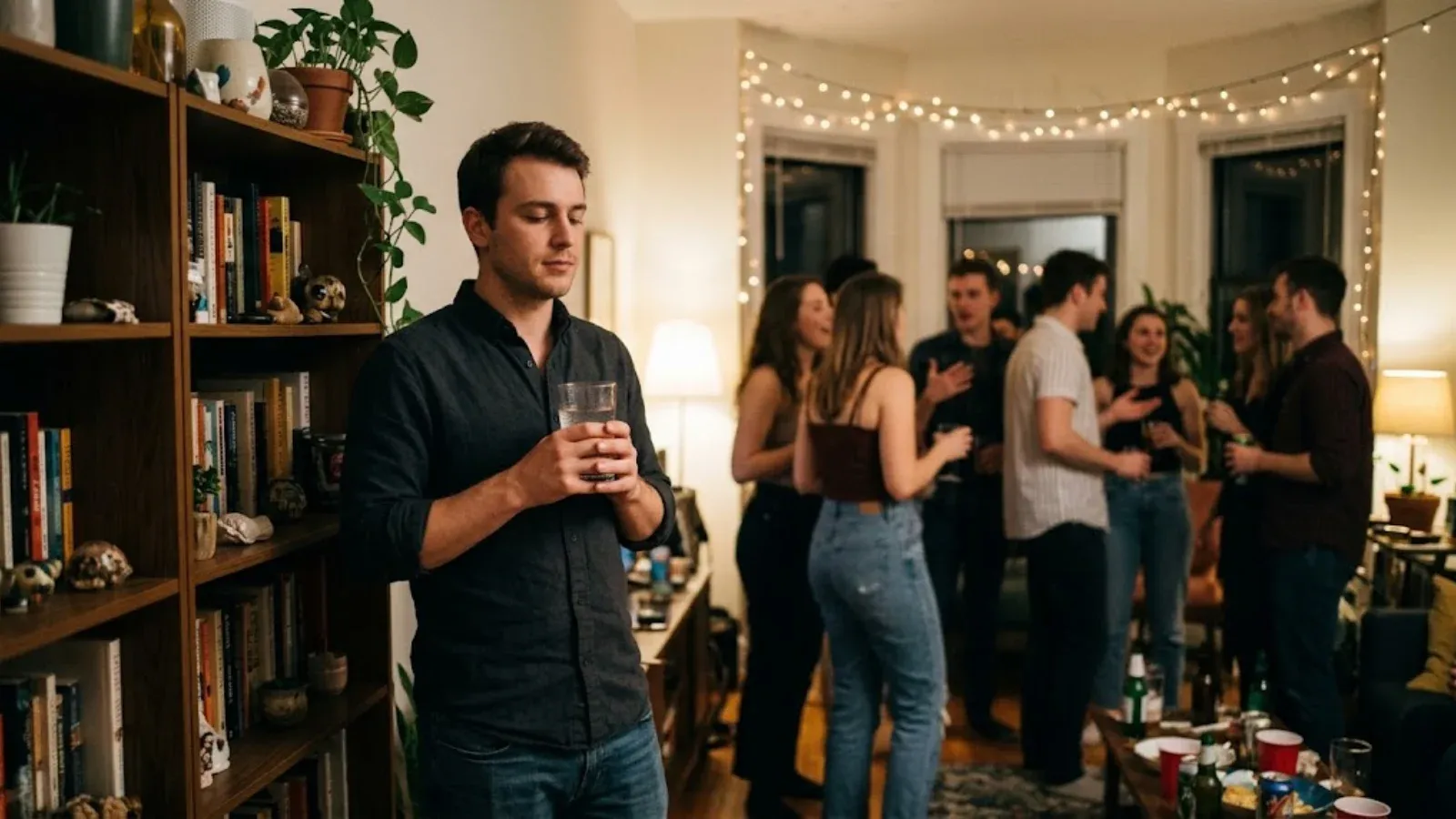
Grounding techniques for social anxiety are small, discreet exercises that steady you mid-conversation, at a party or in a meeting without anyone noticing. They shift attention from "what are they thinking of me" to what your senses and body are doing right now. This guide covers five techniques, a plan for events, what to say in awkward moments, and when to get help in Texas.
This article is for adults and teens who dread introductions, group settings, speaking up in class or at work, or eating in front of others, and for parents and partners who want practical ways to help.
What is social anxiety, and why does grounding help?
Social anxiety is an intense, lasting fear of being watched and judged by others, and grounding helps because it redirects the attention that fear keeps pointed inward. The National Institute of Mental Health (NIMH) describes social anxiety disorder as more than shyness, lists physical signs such as blushing, sweating, trembling and a rapid heart rate, and notes that some people have it only in performance situations such as speaking in public.
In a social situation, anxiety tends to do two things at once: it floods the body with alarm signals, and it turns your attention onto yourself. You monitor your face, your voice, your hands. The more you monitor, the more awkward you feel, and the cycle tightens.
Grounding techniques for social anxiety break the second half of that cycle. They give your attention somewhere else to go, usually outward, so there is less bandwidth left for self-monitoring. It does not make you confident. It makes the moment survivable, which is what allows confidence to grow with practice.
Technique 1: the silent 5-4-3-2-1 scan
The 5-4-3-2-1 scan works in a social setting because you can do it with your eyes open while someone else is talking. MedlinePlus explains that anxiety becomes a disorder when fear is not temporary and can be overwhelming; the scan is designed for the overwhelming minute, not the long-term pattern.
- Notice five things you can see in the room: a lamp, a pattern on a sleeve, a window.
- Notice four things you can feel: the floor, your chair, the glass in your hand, the temperature.
- Notice three things you can hear beyond the voice in front of you.
- Notice two things you can smell.
- Notice one thing you can taste, or take a sip of your drink.
In conversation, you will not finish all five steps, and that is fine. Even two steps shift attention outward.
Technique 2: the long exhale
The long exhale is the most portable grounding technique because nobody can see you doing it. The National Center for Complementary and Integrative Health (NCCIH) says relaxation techniques are generally considered safe for healthy people, while noting that some people occasionally report increased anxiety and that severe or long-lasting symptoms should be discussed with a provider.
How to do it discreetly:
- Breathe in through your nose for a count of about four.
- Let the breath out slowly through slightly parted lips for a count of six or more, as if cooling a hot drink without the sound.
- Repeat three or four times, then return to normal breathing.
Box breathing, with equal counts for inhale, hold, exhale and hold, is a fine alternative if the holds do not make you feel short of breath. If any breathing pattern makes you more aware of your chest or dizzy, drop it and use a sensory technique instead.
Technique 3: anchor to an object
Anchoring to an object means carrying something small and textured and exploring it with your fingers when anxiety rises. This works well because hands are often the part of the body that feels most restless in social settings.
Good anchors are a smooth stone, a ring you can turn, a keychain, a coin, the seam of a pocket, or a cold glass. Describe it silently in detail: "cold, smooth, heavier on one side, a tiny chip near the edge." The description is what pulls attention; simply fidgeting does not.
Example: a man dreads the weekly team meeting. He keeps a flat stone in his pocket, and when it is almost his turn to give an update, he traces its edge and names three things about it. By the time he speaks, his hands are steadier and his voice follows.
Technique 4: name the feeling, then widen the lens
Naming the feeling means silently labeling what is happening ("this is social anxiety, and my heart is racing") and then deliberately widening your attention to the whole room. The NIMH notes that anxiety disorders persist, appear in many situations and can interfere with work, school and relationships, so this technique is meant to get you through a moment, not to talk you out of a diagnosis.
- Label it plainly: "Anxiety. Hot face. Tight throat."
- Add one true, neutral statement: "This is uncomfortable, not dangerous."
- Widen the lens. Instead of your face, notice the whole scene: how many people are here, who is laughing, what the music is, where the exits are.
- Pick one person or small group and give them your full attention. Ask a question and listen for the answer.
Curiosity about other people is one of the most reliable antidotes to self-focus. You cannot fully monitor yourself and genuinely listen at the same time.
Technique 5: count backward by sevens
Counting backward by sevens works because it is just hard enough to occupy the thinking part of your mind without being visible to anyone. Start at 100 and subtract seven each time: 93, 86, 79, 72. If sevens are too hard in the moment, use threes, or name a category such as cities or dog breeds.
This technique is best for the waiting periods that often feel worse than the event itself: standing in line to check in, sitting in a lobby, waiting for your name to be called. It is less useful during active conversation, where listening is the better anchor.
Lyte Psychiatry offers therapy, psychiatric evaluation and medication management in Texas, and a therapist can help you figure out which of these five techniques fits your situations best.
Step by step: a grounding plan for a social event
A grounding plan for an event spreads grounding techniques for social anxiety across before, during and after, so you are not improvising when the anxiety hits. Lyte Psychiatry offers telehealth visits to patients who are physically located in Texas at the time of the visit, and practicing a plan like this with a therapist by video is a common starting point.
- The day before. Practice the long exhale and the 5-4-3-2-1 scan twice, when calm. Decide on an object anchor and put it in your pocket or bag.
- An hour before. Eat something, limit caffeine, and write one line about what you actually want from the event, such as "talk to two people."
- On arrival. Do one long exhale at the door. Widen the lens: count people, find the quietest corner, locate the restroom.
- During. Use the object anchor during lulls and the feeling-label when self-focus spikes. Ask questions; listen.
- If it peaks. Take a short break: restroom, a step outside, refilling a drink. Count backward by sevens while you walk. Return within five minutes rather than leaving, if you safely can.
- Afterward. Write two sentences about what went better than feared. Do not replay the awkward moments more than once.
Staying five more minutes after a peak teaches your brain that the peak passes.
What to say when anxiety shows
Having a few short lines ready removes one of the biggest fears in social anxiety: being caught without words. These are examples to adapt, not scripts.
- When you blank: "Sorry, I lost my train of thought. What were you saying about your trip?"
- When you need a break: "I'm going to grab some water. I'll be right back."
- When someone notices you are quiet: "I'm a slow warm-up. I'm enjoying listening."
- When you want to join a group: "Mind if I join? I heard the word 'barbecue' and had to come over."
- When you want to leave: "I've got an early morning. It was really good to see you."
- To a trusted friend before the event: "If you see me stuck by the wall, come rescue me with a question."
Short, warm and ordinary beats clever every time.
When should you get help sooner?
You should get help sooner when grounding is holding your life together rather than getting you through an occasional spike. The NIMH "I'm So Stressed Out" fact sheet advises seeking help when symptoms interfere with life, lead to avoidance or are always present, and names therapy and medication as the main treatments for anxiety.
Red flags that mean an evaluation should not wait:
- You have turned down jobs, classes, dates or events because of fear of being judged.
- You drink alcohol or use other substances to get through social situations.
- You spend hours rehearsing before, or days replaying after, ordinary conversations.
- A teen is refusing school, skipping meals in public, or withdrawing from friends.
- Panic attacks are happening in or before social settings.
- You have thoughts of death, self-harm or not wanting to be here. Call or text 988 now.
If you are not sure what kind of help you need, this guide to choosing a psychiatrist or therapist first can help. Parents of a teen who is avoiding school may find this guide for when a teen refuses school useful.
Social anxiety care in Texas
In Texas, social anxiety can be treated in person or by telehealth, and many people with social anxiety find that starting by video lowers the barrier to a first visit. Federal guidance from telehealth.hhs.gov explains that providers must be licensed or legally permitted to practice in the state where the patient is located, and that rules vary by jurisdiction, which is why Texas telehealth visits require you to be in Texas at the time.
College students in Texas often have a campus counseling center as a first stop, and large metro areas such as Dallas–Fort Worth have both private practices and community mental health options. Holiday season tends to concentrate social demands; see coping with social anxiety at holiday gatherings for a season-specific plan.
Getting support in Texas
Lyte Psychiatry offers therapy, psychiatric evaluation and medication management in Texas. In-person visits are available at Lyte Psychiatry's clinic in Pantego, in the Dallas–Fort Worth area, and telehealth visits are available to patients physically located in Texas at the time of the visit. Most new patients are seen within 1–2 business days. Weekend appointments are limited. All Lyte Psychiatry services are available in Spanish.
Lyte Psychiatry is an outpatient practice. It does not provide inpatient care, crisis or after-hours coverage, medically supervised detox, or intensive outpatient or partial hospitalization programs. Availability, insurance and clinician fit require confirmation.
- Learn about anxiety care at Lyte Psychiatry.
- Read about telehealth visits across Texas.
- For more strategies, see five ways to cope with social anxiety.
- Ready to book? Contact Lyte Psychiatry.
If you are in a mental-health crisis in the United States, call or text 988. Call 911 for immediate danger.
Educational information, not a diagnosis or individual treatment plan.
Common Questions
Frequently Asked Questions
What is the best grounding technique for social anxiety?
The best technique is the one you can do without anyone noticing and without leaving the conversation. For most people that is a slow, quiet exhale paired with pressing their feet into the floor. Sensory techniques such as noticing textures or sounds come next. Practice two or three on calm days so at least one is automatic when you need it.
Can grounding stop blushing, sweating or shaking?
Not directly. The National Institute of Mental Health lists blushing, sweating, trembling and a rapid heart rate as common physical signs of social anxiety. Grounding lowers the surge that drives them, which often reduces them somewhat, but trying to stop a blush usually makes you more self-conscious. Aim to stay in the conversation, not to look perfectly calm.
How is social anxiety different from shyness?
Shyness is a personality trait that usually fades once you warm up. Social anxiety disorder, as NIMH describes it, is an intense, persistent fear of being watched and judged that can interfere with work, school and daily activities. If you avoid events, rehearse conversations for hours, or replay them for days afterward, an evaluation is worthwhile.
Do grounding techniques work for teens with social anxiety?
Yes. Teens often prefer physical techniques such as a cold drink, a textured object in a pocket, or silently counting, because they are easy to hide. Parents help most by practicing alongside their teen at home and by not forcing exercises during a stressful moment. A teen who is skipping school or activities because of fear should be evaluated.
What if grounding makes me more aware of my anxiety?
That happens, especially with breath-focused techniques, and it does not mean you are doing it wrong. The National Center for Complementary and Integrative Health notes that some people occasionally report increased anxiety with relaxation techniques. Switch to an outward-facing technique, such as listening for three distinct sounds, which moves attention away from your body.
Is social anxiety treatable?
Yes. NIMH describes cognitive behavioral therapy (CBT) as a leading treatment for social anxiety disorder, often including gradual exposure to feared situations. Some people also benefit from medication prescribed by a psychiatric clinician. Grounding is a tool you use while treatment addresses the underlying pattern; many people find they need it less as therapy progresses.
Can I get treatment for social anxiety online in Texas?
Yes. Lyte Psychiatry offers telehealth visits to patients who are physically located in Texas at the time of the visit, as well as in-person visits at its clinic in Pantego, in the Dallas–Fort Worth area. Many people with social anxiety find that starting by video feels easier. Availability, insurance and clinician fit require confirmation. All services are available in Spanish.
Further Reading
NIMH — Anxiety Disorders
Diagnostic criteria and treatment options
ADAA — Anxiety Statistics
40M Americans affected — prevalence and impact data
APA — Anxiety Overview
Clinical summary from the American Psychological Association
These topic resources supplement the references linked within the article.
Your next steps for anxiety care
Choose the question that fits where you are now. Self-help tools support reflection and preparation; they do not diagnose a condition or replace care.
Who could I meet?
- Toyin Awe, PMHNP-BCPsychiatric Mental Health Nurse Practitioner
- NaTascha Jones, LPCLicensed Professional Counselor
The clinic confirms clinician fit, availability and insurance participation before scheduling.
Meet all Lyte clinicians · Understand provider roles
What will it cost, and how do I book?
Check insurance and benefits · View self-pay prices
Request an appointmentLyte Psychiatry — Texas
Anxiety Treatment — Texas
Evidence-based care for generalized anxiety, social anxiety, panic disorder, and phobias.
Find Care Near You
Lyte Psychiatry serves patients across Texas — in-person in DFW and via telehealth statewide.
Don't see your city? View all Texas locations →
Questions about cost? View insurance and payment information