Sat Oct 24 2026
Child Scared of Halloween? Normal Fear or Something More
How to tell normal Halloween fears from signs of an anxiety disorder, with a before, during and after trick-or-treat plan, parent scripts and red flags.
Published by Lyte Psychiatry · Meet our care team
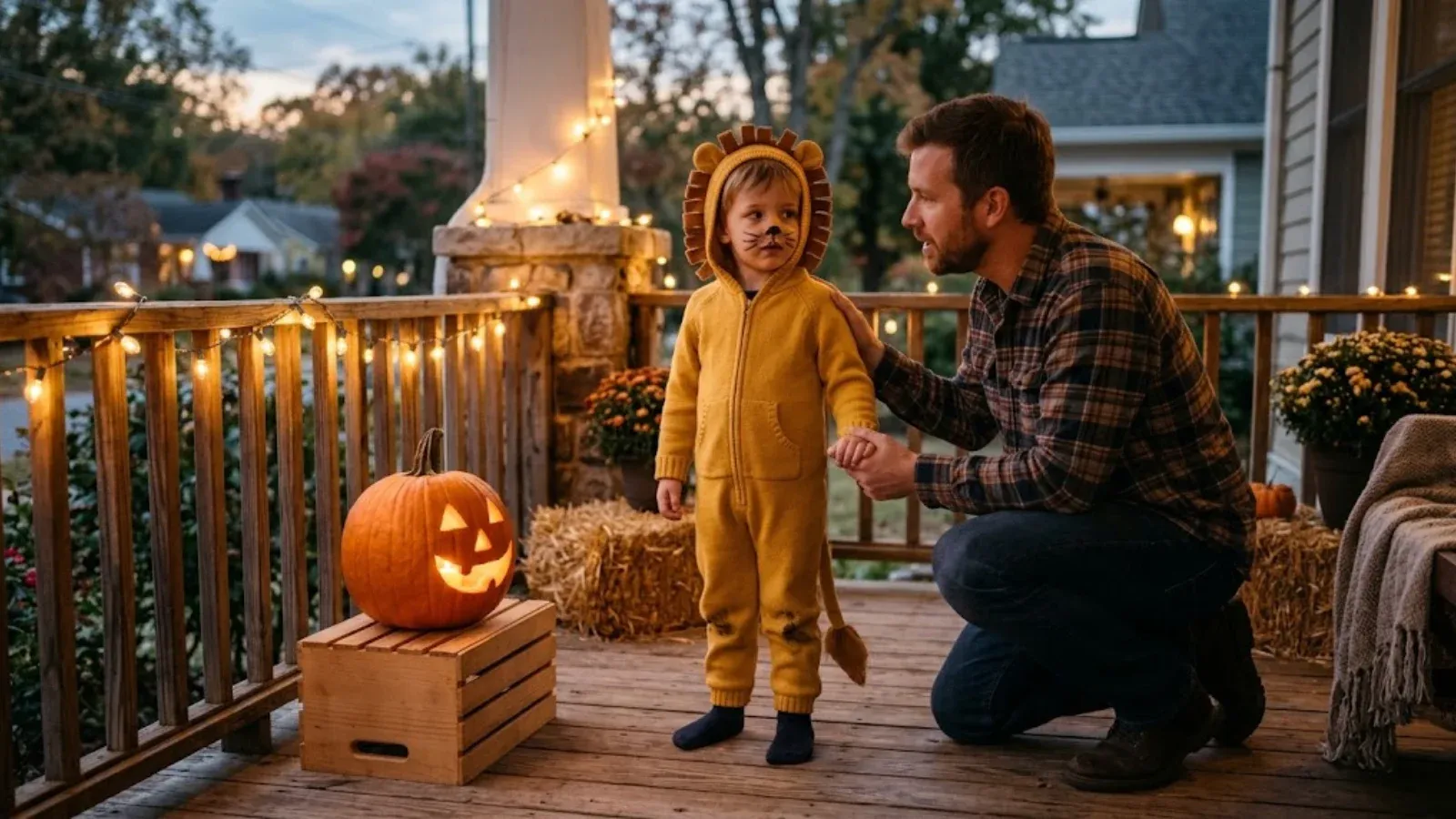
Halloween anxiety in kids is usually a normal developmental fear: masks, dark streets, loud animatronics and strangers at the door can feel truly threatening to a child who is still sorting pretend from real. It points to something more when the fear is intense, lasts for weeks, spreads beyond Halloween, or keeps a child from everyday life such as school, sleep or friends.
This article is for parents and caregivers whose child cries at a decoration, refuses a costume or begs to skip trick-or-treating. It explains what is typical, gives a before, during and after plan for the night, offers words to use, and lists the signs that mean it is time to call your pediatrician or a child mental health professional.
Is it normal for kids to be scared of Halloween?
Yes. Being scared of Halloween is common and, for most children, it is a passing reaction to a holiday built around being scary. A child who hides from a masked neighbor or will not walk past a talking skeleton is usually reacting the way their age and experience would predict.
The American Academy of Pediatrics' HealthyChildren.org says occasional fears are common as children grow and face new experiences, and it names fear of being alone in the dark as a common childhood fear. Halloween stacks several of these at once: darkness, unfamiliar faces, noise and crowds.
Fear also has a job. It is how children learn caution. The goal is not a fearless child but one who can feel scared, get support and recover.
Why does Halloween scare some children more than others?
Some children are scared more easily because of their age, temperament and past experiences, and because Halloween removes the cues they usually use to feel safe. Faces are hidden, familiar streets look different after dark, and adults are acting in strange ways.
Younger children are still learning that a costume does not change the person inside it. HealthyChildren.org's guidance for toddlers advises talking through what is going to happen and explaining that Halloween is just for fun and the scary stuff is all pretend.
Other things that can raise the volume:
- A cautious or sensitive temperament. Some children take longer to warm up to anything new.
- Social demands. Knocking on doors and talking to strangers can be hard for a shy or socially anxious child.
- Sensory load. Itchy costumes, flashing lights and crowds can overwhelm some children.
- A scary memory. A jump-scare from last fall or a frightening video can linger.
- Existing anxiety. A child who already worries a lot may find the season harder.
Normal fear or anxiety disorder: how can you tell?
The difference is usually in how long the fear lasts, how big it is compared with the situation, and how much it gets in the way of daily life. Typical Halloween anxiety in kids is tied to the holiday and fades once the decorations come down. An anxiety problem tends to persist, spread and shrink a child's world.
HealthyChildren.org explains that fears can sometimes become so extreme, persistent and focused that they develop into phobias, which can significantly interfere with a child's usual activities. The National Institute of Mental Health (NIMH) advises seeking help when troubling behaviors last weeks or longer and cause distress.
More likely a typical fear:
- Fear appears around specific triggers, like masks or a haunted yard.
- Your child can be comforted, and calms within minutes.
- They still enjoy parts of the season, like candy or a friendly costume.
- The worry fades within days after Halloween.
More likely worth a closer look:
- Panic, screaming or shutdowns that are far bigger than the trigger.
- Fear that starts weeks ahead and dominates conversation.
- New avoidance outside Halloween: the dark, bedtime, school, stores or separating from you.
- Sleep problems, nightmares, stomachaches or headaches that continue after the holiday.
The Centers for Disease Control and Prevention (CDC) lists separation anxiety, phobias, social anxiety, generalized anxiety and panic disorder among anxiety disorders in children, and notes that anxiety can also show up as irritability or anger, trouble sleeping, and physical symptoms such as stomachaches or headaches.
How do I help an anxious child trick-or-treat?
Help an anxious child trick-or-treat by previewing the night, shrinking the plan to a manageable size, and giving them control over pace and exit. Small, supported steps build confidence; forcing or completely avoiding the night tends not to. HealthyChildren.org's tips on managing anxiety put it simply: the goal is to cope, not avoid.
Before (the days leading up):
- Ask what exactly feels scary: masks, the dark, the doorbell, talking to strangers or getting lost.
- Walk the route in daylight so decorations are familiar and you can show how props work.
- Let your child pick a costume they feel safe in, and have them practice wearing it at home.
- Rehearse a doorstep: knock, say "trick or treat" together, say thank you, walk away.
- Agree on a goal (for example, three friendly houses) and a break signal, such as a hand squeeze.
During (the night itself):
- Go early, while it is lighter, and keep to familiar, well-lit streets.
- Let your child skip any house, and say the first few greetings with them.
- Check in quietly: "Still fun, or want a break?"
- Honor the break signal right away, every time.
- End on a good moment, even if it is earlier than planned.
After (that night and the next few days):
- Name one brave thing they did, however small.
- Keep bedtime calm, with no scary stories or videos.
- Talk about any scary moment once, briefly, then move on.
- Watch whether fears fade over the next week or two, and make a note if they do not.
For a fuller week-by-week version, see Lyte Psychiatry's parent plan for costumes, crowds and scary decorations.
What should I say to a child who is scared of Halloween?
Say something that names the feeling, makes it OK, and points to a next step. HealthyChildren.org advises parents to talk with their child about their anxieties and be sympathetic, and not to belittle their fears or pressure them into being brave.
Example scripts you can adapt:
- Naming it: "That mask looked really scary. Your body got a big jolt. That makes sense."
- Pretend vs. real: "That's a grown-up wearing a costume. Want to watch them take the mask off?"
- Offering choice: "We can skip that house or wave from the sidewalk. You pick."
- Brave, not forced: "You don't have to like it. Let's try one house together, then decide."
- Exit with dignity: "We did three houses. That's our plan. Let's go sort candy."
- For an older child: "It sounds like it's less the decorations and more the crowds. What would make it easier?"
For coping skills you can practice all year, see coping skills for anxious children.
What should parents avoid saying or doing?
Avoid dismissing the fear, shaming it, or arranging life so your child never meets it. Phrases like "There's nothing to be scared of" or "Don't be a baby" can make a child feel misunderstood and less likely to tell you next time.
Also try not to swing the other way. Skipping one Halloween is fine; HealthyChildren.org says that if a little one does not want to participate, let that be OK. But if every scary-looking thing becomes something the family avoids for months, the fear can grow. HealthyChildren.org describes gradual exposure, called desensitization, as a way children become less sensitive to a fear each time they face it with support.
What are the red flags that need help sooner?
Seek help sooner if fear is severe, spreading, or comes with signs of danger. These are not Halloween-sized reactions:
- Panic attacks, fainting, or physical symptoms that frighten you or your child.
- Fear or nightmares that continue for weeks after the holiday.
- Refusing school, sleep or separation from a parent.
- Repeated rituals or reassurance-seeking your child cannot stop.
- A frightening event that keeps replaying in play, talk or dreams.
- Talk of wanting to die, self-harm, or not wanting to be here.
The 988 Suicide & Crisis Lifeline is free, confidential and available 24/7 by call, text or chat. If a child is in immediate danger, call 911.
When should you see a pediatrician or child mental health professional?
See your child's pediatrician when fear lasts weeks, keeps getting worse, or interferes with school, sleep, friendships or family life. The pediatrician is a good first stop because they can check for physical causes and compare changes with your child's usual baseline.
The NIMH child and adolescent mental health page lists often seeming fearful or worried among signs in younger children, and suggests asking your pediatrician or family doctor if you are unsure where to start. HealthyChildren.org says a child whose anxieties persist and interfere with day-to-day life might benefit from seeing a child psychiatrist or psychologist, and that behavior therapy is the first line of treatment for phobias.
Lyte Psychiatry's guide to choosing between a pediatrician, therapist or psychiatric evaluation walks through which door to knock on first. If social situations are the main trigger, see social anxiety in children.
What should Texas families know?
Texas families dealing with Halloween anxiety in kids have local options both for the night itself and for help afterward. Many Texas churches, schools and neighborhoods host daytime fall festivals or trunk-or-treats, which can be a lower-key way for an anxious child to practice.
Texas Health and Human Services (HHS) lists 24/7 crisis lines run by local mental health authorities in each county; as of October 2026 these include MHMR of Tarrant County at 800-866-2465 and North Texas Behavioral Health Authority at 866-260-8000.
School counselors can also tell you whether a fear is showing up in class. Rules on who can consent to a minor's mental health care vary by state and situation, so ask any practice how it handles consent for children.
Getting support in Texas
If Halloween anxiety in kids turns out to be part of a bigger pattern, an evaluation can help sort out what is going on. Lyte Psychiatry offers therapy, psychiatric evaluation and medication management in Texas. Whether Lyte sees children, and which age range, requires confirmation, so call before booking.
- In-person visits are available at Lyte Psychiatry's clinic in Pantego, in the Dallas–Fort Worth area.
- Lyte Psychiatry offers telehealth visits to patients who are physically located in Texas at the time of the visit.
- All Lyte Psychiatry services are available in Spanish.
- Availability, insurance and clinician fit require confirmation.
Learn more about anxiety care. Lyte Psychiatry is an outpatient practice. It does not provide inpatient care, crisis or after-hours coverage, medically supervised detox, or intensive outpatient or partial hospitalization programs, so use 988 or 911 on Halloween night or any night you need urgent help.
If you are in a mental-health crisis in the United States, call or text 988. Call 911 for immediate danger.
Educational information, not a diagnosis or individual treatment plan.
Common Questions
Frequently Asked Questions
Is it normal for kids to be scared of Halloween?
Yes. Masks, darkness, loud decorations and strangers at the door are common triggers, and many children react with fear, especially when they are still learning the difference between pretend and real. A typical Halloween fear is tied to specific triggers, eases with comfort, and fades within days after the holiday.
When is a child's fear an anxiety disorder?
Fear may point to an anxiety disorder when it is far bigger than the situation, lasts weeks or longer, spreads beyond Halloween, or interferes with school, sleep, friendships or family life. Only a qualified clinician can diagnose an anxiety disorder, so start with your pediatrician if you notice these patterns.
How do I help an anxious child trick-or-treat?
Preview the route in daylight, let your child choose a costume they feel safe in, and rehearse a doorstep greeting. Set a small goal and a break signal, go early on familiar streets, let them skip any house, and end on a good moment. Afterward, praise one brave step and keep bedtime calm.
Should I let my child skip Halloween if they are scared?
Skipping one Halloween is fine, and alternatives like handing out candy or a daytime fall festival can still feel festive. The concern is a pattern where many feared things are avoided for months, because avoidance can let fear grow. Gradual, supported practice usually helps more than avoiding everything or forcing participation.
What should I not say to a scared child?
Avoid dismissing or shaming the fear with phrases like "there's nothing to be scared of" or "don't be a baby." Avoid pressuring them to be brave on the spot. Instead, name the feeling, say it makes sense, and offer a choice, such as skipping a house or trying one together, then let them decide.
Can Halloween fears cause nightmares in kids?
Yes, a scary costume, video or decoration can lead to a few bad dreams, and that usually settles within days. Keep bedtime calm and skip scary stories at night. If nightmares or fear of the dark continue for weeks, or your child starts refusing to sleep alone, talk with your pediatrician.
When should I call the pediatrician about my child's fears?
Call when fear lasts weeks, keeps getting worse, or gets in the way of school, sleep, friendships or family life, or when your child has panic, repeated rituals or new physical complaints. The pediatrician can check for physical causes and refer you to a child mental health professional if needed. For danger, call 911.
Does Lyte Psychiatry see children for anxiety?
Whether Lyte Psychiatry sees children, and which age range, requires confirmation, so contact the practice before booking. Lyte offers therapy, psychiatric evaluation and medication management in Texas, in person in Pantego and by telehealth for patients located in Texas. All services are available in Spanish. Availability and insurance require confirmation.
Further Reading
NIMH — Anxiety Disorders
Diagnostic criteria and treatment options
ADAA — Anxiety Statistics
40M Americans affected — prevalence and impact data
APA — Anxiety Overview
Clinical summary from the American Psychological Association
These topic resources supplement the references linked within the article.
Your next steps for anxiety care
Choose the question that fits where you are now. Self-help tools support reflection and preparation; they do not diagnose a condition or replace care.
Who could I meet?
- Toyin Awe, PMHNP-BCPsychiatric Mental Health Nurse Practitioner
- NaTascha Jones, LPCLicensed Professional Counselor
The clinic confirms clinician fit, availability and insurance participation before scheduling.
Meet all Lyte clinicians · Understand provider roles
What will it cost, and how do I book?
Check insurance and benefits · View self-pay prices
Request an appointmentSpecialized Care
Lyte Psychiatry — Texas
Anxiety Treatment — Texas
Evidence-based care for generalized anxiety, social anxiety, panic disorder, and phobias.
Find Care Near You
Lyte Psychiatry serves patients across Texas — in-person in DFW and via telehealth statewide.
Don't see your city? View all Texas locations →
Questions about cost? View insurance and payment information