Fri Mar 20 2026
Your First Anxiety Attack: What Happened and What to Do Next
A calm guide to a first anxiety attack: what was happening in your body, why it may have happened now, warning signs, and sensible next steps.
Published by Lyte Psychiatry · Meet our care team
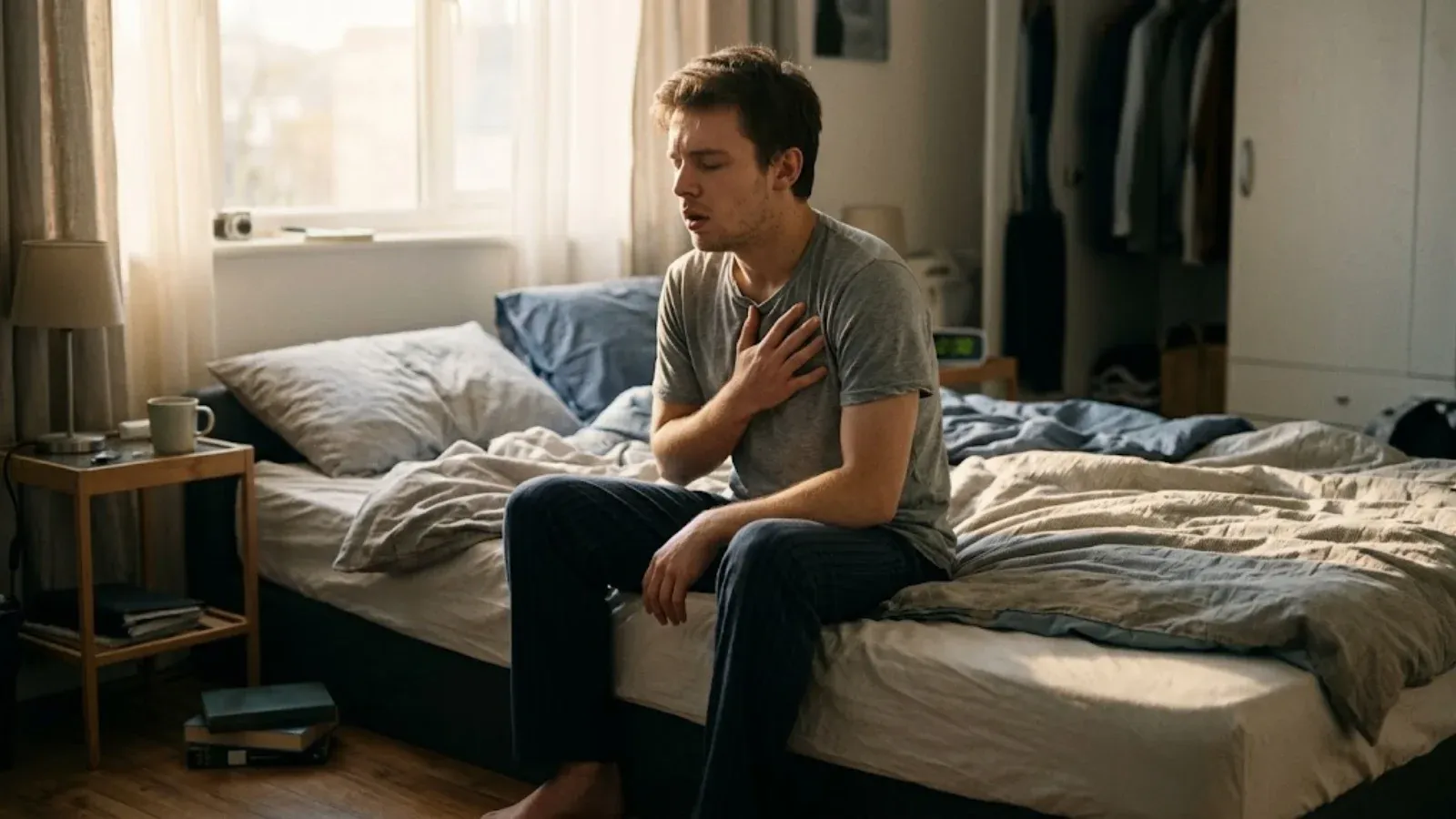
A first anxiety attack is a sudden wave of fear with strong body sensations, such as a pounding heart, fast breathing, shaking or dizziness. It feels alarming, but it is often the body's threat alarm firing after stress has built up. The sensible next steps are a medical check, a look at recent stressors, and a simple plan for the next time.
This article is for adults and older teens who have just had their first episode, or think they did, and for the family members who were there. It explains what was likely happening, why it may have happened now, which signs need urgent care, and what to do over the coming days and weeks.
What happens in your body during a first anxiety attack?
During an anxiety attack, the body acts as if it is in danger even when it is not. Heart rate rises, breathing speeds up, muscles tense and attention narrows to the threat. The National Institute of Mental Health (NIMH) lists common panic attack symptoms as a racing heart, sweating, trembling, trouble breathing, dizziness, chest pain and a sense of doom or loss of control.
Fast, shallow breathing can then cause tingling and light-headedness. Those sensations feel like proof that something is badly wrong, which adds more fear. That loop is why an attack can seem to build on itself before it peaks and fades.
Afterward, many people feel drained, shaky or embarrassed. Some keep scanning their body for the next sign of trouble. These after-effects are common and usually ease over hours to days.
Is an anxiety attack the same as a panic attack?
Not exactly: "panic attack" is a clinical term, while "anxiety attack" is an everyday phrase that people use for several different experiences. A panic attack comes on suddenly and peaks quickly. Other people use "anxiety attack" for a slower build of worry, tension and restlessness that becomes overwhelming.
MedlinePlus explains that anxiety is a normal feeling of fear, dread or uneasiness that can help you cope, and that it becomes a disorder when the fear is not temporary and can be overwhelming. One frightening episode does not automatically mean a disorder.
The label matters less than the details. When you talk to a provider, describe how fast it started, what you felt and how long it lasted. For a closer look at sudden attacks, see why panic attacks happen and what your body is signaling.
Why did it happen now?
A first episode often follows a period when stress has been quietly stacking up, even if the moment itself seemed calm. Common contributors include:
- weeks or months of pressure at work, school or home
- a major change, such as a move, a new baby, a breakup or a loss
- short or broken sleep
- more caffeine than usual, or alcohol the night before
- illness, pain or a recent medical scare
- feelings that have been pushed aside for a long time
- reminders of a past frightening experience
Sometimes no clear trigger is found. That is common, and it does not mean something is being missed. NIMH explains in its fact sheet on stress and anxiety that stress is usually a response to an outside cause, while anxiety can persist even when no clear stressor is present.
When should you get help sooner? Red flags
Get emergency care right away if you are not sure whether your symptoms are anxiety or a medical problem. The Centers for Disease Control and Prevention (CDC) lists major heart attack symptoms as chest pain or discomfort, feeling weak, light-headed or faint, pain in the jaw, neck, back, arm or shoulder, and shortness of breath, and advises calling 911 immediately.
MedlinePlus also notes that a first episode of hyperventilation may be an emergency. Call 911 or go to an emergency department if you have:
- chest pain, pressure or pain spreading to the arm, jaw or back
- trouble breathing that does not settle, or blue lips
- fainting, confusion or new weakness on one side
- symptoms after a new medicine, a substance, or a head injury
- thoughts of suicide or of harming yourself
Being checked is never an overreaction. A normal exam can also be reassuring the next time anxious sensations appear.
What should you do after a first anxiety attack? Step by step
The most useful response is a short, practical plan rather than trying to forget it happened. These steps work for most people:
- Rest and refuel. Drink water, eat something simple, and allow yourself to feel tired.
- Book a medical check. MedlinePlus says diagnosis of panic includes a history, a physical exam and sometimes blood tests to rule out thyroid problems. Your primary care provider is a good place to start.
- Write down what happened. Note the time, place, sensations, how long it lasted and what helped.
- Look at the last few weeks. List any stress, sleep loss, illness or big changes.
- Trim the boosters. Cut back on caffeine and alcohol for a while and see how you feel.
- Protect sleep and movement. Keep regular bed and wake times and take a daily walk.
- Tell one person. Saying it out loud to someone you trust reduces shame and gives you backup.
- Learn one calming skill. Practice slow breathing with a longer exhale while you are calm, so it is familiar later.
What to avoid in the first few weeks
A few common reactions can make the next episode more likely. Try not to search symptoms late at night, which tends to feed worry rather than settle it. Avoid using alcohol or someone else's medicine to calm down. And try not to reorganize your life around avoiding the place where it happened. If a family member was with you, they can help most by staying calm, speaking slowly and asking what you need, rather than rushing to fix it.
For skills you can use in the moment, see how to stop a panic attack.
What can you say to yourself if it starts again? A checklist
Short, true statements work better than trying to argue with fear. Pick two or three and keep them in your phone:
- "This feels like last time. It was frightening, and it passed."
- "My body is sounding an alarm. I can let it ring and wait."
- "I do not have to fight this. I only have to breathe out slowly."
- "I have been checked by a doctor." (Use this only once you have been.)
- "I can stay where I am for a few minutes."
And a quick checklist for the moment:
- Breathe out longer than you breathe in.
- Press your feet into the floor.
- Name five things you can see.
- Loosen your jaw and shoulders.
- If any red flag above appears, call 911.
Will a first anxiety attack happen again?
It might, but many people have only one or a few episodes, especially when the stress behind them eases. What tends to keep attacks going is fear of the next one. MedlinePlus describes how people with panic disorder often worry about future attacks and avoid places where attacks happened.
Example: someone has an attack in a grocery store, then starts shopping only late at night, then stops going at all. Each avoided trip brings short-term relief but teaches the brain that the store is dangerous. Gently returning, with a plan, usually works better than steering clear.
If episodes come back at night, how to calm anxiety at night covers bedtime-specific steps.
When is it time to see a mental health professional?
It is worth talking with a mental health professional if attacks repeat, if you are worrying about the next one most days, or if you are starting to avoid places or activities. NIMH advises seeking help when anxiety symptoms interfere with daily life, cause you to avoid things, or seem always present.
Treatment for recurring panic and anxiety often includes talk therapy, sometimes medication, or both. A first visit is mostly a conversation about your history and goals. What happens at a first psychiatry appointment walks through it.
What should Texans know about getting help?
Texas has local mental health authorities that run 24/7 crisis lines by county. As of October 2026, Texas Health and Human Services lists crisis line numbers for each county, which can help if anxiety turns into a crisis.
For routine care, telehealth can make a first appointment easier to fit in. Telehealth rules depend on where the patient is located during the visit, and they vary by state. In Texas, you generally need to be physically in the state for a Texas-based clinician to see you by video.
Getting support in Texas
Lyte Psychiatry offers therapy, psychiatric evaluation and medication management in Texas. In-person visits are available at Lyte Psychiatry's clinic in Pantego, in the Dallas–Fort Worth area. Lyte Psychiatry offers telehealth visits to patients who are physically located in Texas at the time of the visit, and all Lyte Psychiatry services are available in Spanish.
Most new patients are seen within 1–2 business days. Weekend appointments are limited. Lyte Psychiatry is an outpatient practice and does not provide crisis or after-hours coverage. Availability, insurance and clinician fit require confirmation. Learn more about anxiety care or telehealth in Texas.
If you are in a mental-health crisis in the United States, call or text 988. Call 911 for immediate danger.
Educational information, not a diagnosis or individual treatment plan.
Common Questions
Frequently Asked Questions
Is one anxiety attack enough for a diagnosis?
Usually not. A single episode does not by itself mean you have an anxiety disorder. Clinicians look at patterns over time, such as repeated attacks, ongoing worry about having another one, or avoiding places. A health care provider can also check for medical causes, which is a sensible first step after any new episode.
What is the difference between an anxiety attack and a panic attack?
Panic attack is a recognized clinical term for a sudden surge of intense fear with strong physical symptoms. Anxiety attack is an everyday phrase people use for many experiences, from a panic attack to a slower build of worry and tension. Describing what you felt, and how fast it came on, helps a clinician understand it.
Should I go to the ER after my first anxiety attack?
If you have chest pain, trouble breathing, fainting, or symptoms you have never had before, get emergency care or call 911. MedlinePlus notes that a first episode of hyperventilation may be an emergency. Being checked is the right call even if the cause turns out to be anxiety, because heart and breathing problems can look similar.
Why did my first anxiety attack happen out of nowhere?
Many attacks seem to come from nowhere because the build-up was gradual. Weeks of stress, short sleep, extra caffeine, illness or a recent loss can lower the threshold until a small trigger tips the body into an alarm response. Sometimes no clear cause is found, which is common and does not mean something is being missed.
Will I have another anxiety attack?
Some people never have another one, and some do. The chance of repeat episodes may be higher when the stress that led up to the first one continues, or when fear of another attack leads to avoidance. Learning a few calming skills and talking with a provider early can make a second episode less frightening if it happens.
Can I get help for anxiety attacks by telehealth in Texas?
Telehealth is one option for many people. Lyte Psychiatry offers telehealth visits to patients who are physically located in Texas at the time of the visit, and in-person visits at its clinic in Pantego. Availability, insurance and clinician fit require confirmation when you contact the practice.
What should I tell a provider about my first anxiety attack?
Describe when it happened, what you were doing, how quickly it started, which body sensations you noticed, and how long it lasted. Mention recent stress, sleep, caffeine, alcohol, medicines and any medical conditions. Bringing short written notes helps, because details are easy to forget once you are in the appointment and feeling nervous.
Further Reading
NIMH — Anxiety Disorders
Diagnostic criteria and treatment options
ADAA — Anxiety Statistics
40M Americans affected — prevalence and impact data
APA — Anxiety Overview
Clinical summary from the American Psychological Association
These topic resources supplement the references linked within the article.
Your next steps for anxiety care
Choose the question that fits where you are now. Self-help tools support reflection and preparation; they do not diagnose a condition or replace care.
Who could I meet?
- Toyin Awe, PMHNP-BCPsychiatric Mental Health Nurse Practitioner
- NaTascha Jones, LPCLicensed Professional Counselor
The clinic confirms clinician fit, availability and insurance participation before scheduling.
Meet all Lyte clinicians · Understand provider roles
What will it cost, and how do I book?
Check insurance and benefits · View self-pay prices
Request an appointmentLyte Psychiatry — Texas
Anxiety Treatment — Texas
Evidence-based care for generalized anxiety, social anxiety, panic disorder, and phobias.
Find Care Near You
Lyte Psychiatry serves patients across Texas — in-person in DFW and via telehealth statewide.
Don't see your city? View all Texas locations →
Questions about cost? View insurance and payment information