Wed Oct 28 2026
Horror Movies, Haunted Houses and Anxiety: Fun Scare or Too Much?
A fun scare or too much? A decision checklist for panic, PTSD and intrusive harm thoughts, plus an exit plan, scripts for friends and red flags.
Published by Lyte Psychiatry · Meet our care team
Written by the Lyte Psychiatry clinical team. Clinically reviewed by Ana G., LPC, and medically reviewed by Dr. Akinwande Akintola, MD, supervising physician. Last reviewed: November 4, 2026.
Haunted houses and anxiety can mix well for many people, because a scare you choose, with a clear end, usually turns into relief. It becomes too much when you lose control: surprise you did not agree to, no easy way out, or content that echoes a real trauma or an obsessive fear. Around Halloween, group invitations can make that line easy to cross.
This guide is for adults and older teens who live with anxiety, panic attacks, PTSD or OCD, and for anyone who still feels shaken days after a scary night. It gives you a decision checklist, an exit plan, words to use with friends, and red flags. Parents of younger children can start with our guide to whether a child scared of Halloween has a normal fear or anxiety.
Key takeaways
- Haunted houses and anxiety can mix well when you choose the scare, know roughly what to expect and can leave at any time.
- Losing control is what tips a fun scare into too much: surprises you did not agree to, no easy exit, or content that echoes a real trauma or an obsessive fear.
- People with panic attacks, PTSD or OCD can still enjoy horror with a plan: pick a milder level, agree on a code word and wind down afterward.
- Get help if nightmares, panic, flashbacks or harm thoughts last more than a few days or start changing what you avoid.
Can scary fun actually lower anxiety?
Scary fun can feel calming afterward for some people, but it is not a treatment for anxiety. The good feeling usually comes from fear that rises, peaks and then ends while you are safe.
Researchers who studied visitors walking through a commercial haunted attraction, in a study called "Playing With Fear," published in Psychological Science, reported that enjoyment had an inverted-U relationship with fear. Too little fear was dull, and too much stopped being enjoyable. Most people have a sweet spot, and it can move with stress, sleep and life events.
News stories that say horror "lowers anxiety" are usually describing people who chose the experience and enjoyed it. That is different from someone with panic disorder being talked into a maze. Liking horror and disliking it are both normal.
Why is control the difference between a fun scare and too much?
Control is what separates fear that feels like play from fear that feels like danger. When you pick the movie, know roughly what is coming, can stop it, and are with people you trust, your body gets the message that you are safe underneath the scare.
A haunted house removes much of that control. Actors appear without warning, lights and sound are designed to disorient you, and the line moves you forward. That is the main reason haunted houses and anxiety can clash more than a movie on your couch.
Control also explains why a scare is not therapy. The National Institute of Mental Health (NIMH) describes exposure and response prevention (ERP) as a type of cognitive behavioral therapy that gradually exposes a person to situations that trigger their obsessions. Planned, gradual exposure with a trained therapist is a different thing from a surprise in a dark hallway.
Should I go to a haunted house if I have panic attacks?
You can go if you have panic attacks, but only if you decide it is worth it and you plan a way out first. Skipping it is also a reasonable choice, not a failure.
The NIMH guide to panic disorder lists panic symptoms such as a pounding or racing heart, sweating, trembling, trouble breathing, dizziness, chest pain, and a sense of doom or losing control. A haunted house deliberately produces a racing heart and a startle, which can feel too close to the start of an attack.
MedlinePlus explains that people with panic disorder often worry about the next attack and may avoid places where attacks have happened. If you notice that you would spend the whole week dreading the maze, that worry is useful information. A movie at home, with the lights on and a pause button, may be a better fit while you work on panic.
Are horror movies and haunted houses safe if I have PTSD?
Many people with PTSD enjoy fictional horror, but content that resembles your own trauma is a different matter. The closer a scene is to what happened to you, the more likely it is to feel real rather than pretend.
The VA National Center for PTSD lists common reactions after trauma, including feeling jumpy, getting startled easily at sudden noises, upsetting dreams and memories, and avoiding people, places and things related to the event. Jump scares and sudden loud sounds are built to trigger exactly that startle.
The same organization explains that PTSD can involve reliving the event, avoiding reminders, and feeling on edge, with sleep and concentration problems. If a scene sets off those reactions, stop, ground yourself and get to a quieter place. Our guide to fall and Halloween PTSD triggers has a longer plan.
What if horror content sets off intrusive harm thoughts?
An unwanted violent image or thought after a horror movie is common, and having the thought is not the same as wanting to act on it. If those thoughts stick, cause intense distress, and drive checking, reassurance seeking or avoidance, OCD may be involved.
NIMH lists common obsession themes in OCD that include aggressive thoughts toward others or oneself, and unwanted, forbidden or taboo thoughts involving harm. NIMH also notes that people with OCD might avoid situations that trigger their symptoms.
That creates a real dilemma. Avoiding every scary movie can quietly feed OCD, but using a horror marathon as homemade exposure can backfire. If harm thoughts are part of your OCD, talk with your therapist before Halloween about whether any scary content fits your treatment plan. Our post on whether stress makes OCD worse explains why busy seasons can turn up the volume.
Fun scare or too much? A decision checklist
Use this checklist before you say yes. If most of your answers fall in the second group, choose a milder option this time.
Probably a fun scare if:
- You chose it yourself, not because of pressure.
- You know what kind of scares to expect.
- You can leave or stop it at any time without arguing.
- You are going with people who will leave with you.
- Past scares faded within an hour or two.
Pause and rethink if:
- You have had panic attacks recently, especially in crowds or dark spaces.
- The theme is close to a real trauma, such as a home intrusion, an assault or a medical emergency.
- Violent content tends to leave you with harm thoughts you feel you must check or neutralize.
- Your sleep is already poor or your stress is high this week.
- You would spend days dreading it.
How do I plan a haunted house or horror night with anxiety?
Managing haunted houses and anxiety comes down to planning: decide your limits before, keep an exit during, and give your body a wind-down after.
Before
- Pick your level. Daytime events, family-friendly mazes and movies you can pause give you more control than a late-night haunted house.
- Read reviews or a plot summary so the theme is not a surprise.
- Ask staff, or check the attraction's rules, about how guests can leave partway through.
- Agree on a code word with one friend that means "I'm leaving now, no questions."
During: your exit plan
- Stay in the middle of the group, not at the front or back.
- If your body starts to spiral, use the code word and leave. Do not wait to see if it passes.
- Once out, find light and quiet. Breathe out slowly, name five things you can see, and feel your feet on the ground.
After
- Switch to something light, such as a comedy or a familiar show, before bed.
- Talk through the funny parts with a friend to help your brain file it as fun.
- If fear, images or poor sleep last more than a few days, write down what happened and mention it to a clinician.
What can I say if I don't want to go?
A short, friendly answer works better than a long explanation. You do not owe anyone your medical history.
- "Haunted houses aren't my thing, but I'll meet you after for food."
- "I'm in for the hayride. I'll skip the maze."
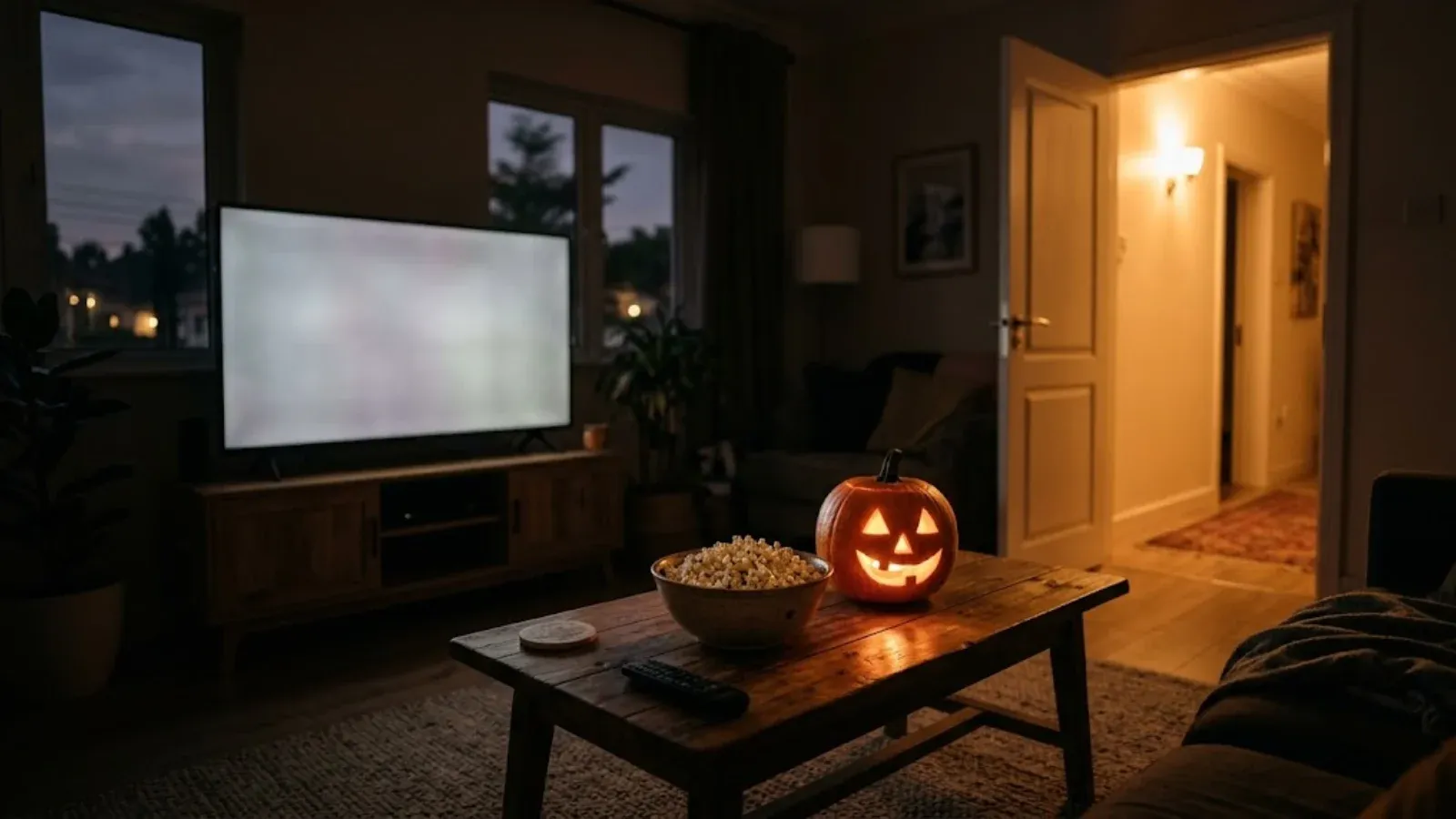
- "Can we do a movie at my place instead? I'll make popcorn."
- "I'm going to step out. I'm fine, I'll text you where I am." (For when you leave partway.)
- "I don't do jump scares right now. Pick anything else and I'm there."
When is it more than a bad scare?
A bad scare fades over a day or two. Get help sooner if your reaction keeps going or starts shaping your life.
- Nightmares, poor sleep or intrusive images that last more than a few days.
- New avoidance of ordinary places, the dark, or being home alone.
- Panic attacks during or after, or constant worry about the next one.
- Flashbacks or feeling as if a real past event is happening again.
- Harm thoughts that drive hours of checking, reassurance seeking or mental rituals.
- Drinking or using substances to calm down after scary content.
Chest pain and trouble breathing can also have medical causes, and the NIMH panic disorder guide advises seeing a health care provider for an exam. If you have thoughts of suicide or of harming someone, call or text 988 to reach the 988 Suicide & Crisis Lifeline, which is free, confidential and available 24/7. Call 911 for immediate danger.
What should Texans know about Halloween scares?
Across Texas, and especially around Dallas–Fort Worth, fall brings haunted attractions, corn mazes, scary-movie nights and costume parties, so the invitations can stack up quickly. Late-night events and long drives home can also shorten sleep, which makes fear harder to shake.
If you are planning haunted houses and anxiety care around the season, keep two things in mind. Lyte Psychiatry offers telehealth visits to patients who are physically located in Texas at the time of the visit, so you can talk with a clinician from home. All Lyte Psychiatry services are available in Spanish.
Parents planning for younger children can use our Halloween parent plan for costumes, crowds and scary decorations. Whether Lyte sees a specific age group requires confirmation.
Getting support in Texas
If scary content keeps setting off panic, trauma memories or harm thoughts, a clinician can help you understand the pattern and build a plan. Lyte Psychiatry offers therapy, psychiatric evaluation and medication management in Texas.
- Learn about anxiety and panic care or PTSD and trauma care.
- Read why you might have just had a panic attack.
- See how telepsychiatry in Texas works.
In-person visits are available at Lyte Psychiatry's clinic in Pantego, in the Dallas–Fort Worth area. Most new patients are seen within 1–2 business days. Weekend appointments are limited. Availability, insurance and clinician fit require confirmation.
Lyte Psychiatry is an outpatient practice. It does not provide inpatient care, crisis or after-hours coverage, medically supervised detox, or intensive outpatient or partial hospitalization programs.
If you are in a mental-health crisis in the United States, call or text 988. Call 911 for immediate danger.
Educational information, not a diagnosis or individual treatment plan.
Common Questions
Frequently Asked Questions
Are haunted houses bad for anxiety?
Not for everyone. Many people with anxiety enjoy a scare they chose, with a clear end and a way out. Haunted houses tend to be harder than movies because they remove control through surprise, darkness and crowds. If you have panic attacks, PTSD or OCD, use a checklist, plan an exit, or pick a milder option.
Can horror movies help with anxiety?
Some people feel relaxed after a horror movie because the fear ends while they are safe, and research on haunted attractions suggests most people have a fear sweet spot. That is not treatment. If anxiety affects daily life, therapies such as cognitive behavioral therapy, guided by a trained clinician, are a better path than horror marathons.
Why do I feel anxious for days after a scary movie?
Lingering fear can happen when content hits something personal, when sleep is short, or when stress is already high. Nightmares, checking locks or replaying scenes for a night or two is common. If it lasts more than a few days, keeps returning, or you start avoiding ordinary things, it is worth talking with a clinician.
Should I go to a haunted house if I have PTSD?
It depends on how close the theme is to your trauma and how much control you will have. Sudden noises and jump scares are designed to trigger startle, a common trauma reaction. Many people with PTSD prefer horror they can pause at home. If you do go, plan an exit and a grounding routine first.
Can scary movies trigger intrusive thoughts?
Yes. Violent images can leave unwanted thoughts behind, and that is common. With OCD, harm thoughts can feel sticky and lead to checking, reassurance seeking or avoidance. Having a thought is not the same as wanting to act on it. Talk with your therapist before deciding whether scary content fits your treatment plan.
What should I do if I panic inside a haunted house?
Use your code word or tell the nearest staff member you need to leave, and get to light and quiet. Breathe out slowly, name what you can see, and feel your feet on the ground. If chest pain or trouble breathing does not ease, or you are unsure it is panic, seek medical care.
Is it normal for Halloween to make anxiety worse?
It can be. Around Halloween, scary decorations, crowds, late nights and social pressure stack up at once, which can raise anxiety for people who already live with it. Planning your limits ahead of time, keeping sleep steady, and choosing which events to skip can help you enjoy the parts of the season you like.
When should I get help for fear after a scary movie?
Get help if nightmares, intrusive images or avoidance last more than a few days, if you have panic attacks or flashbacks, or if harm thoughts drive hours of rituals. Lyte Psychiatry offers telehealth to patients located in Texas. If you are in crisis, call or text 988, or call 911 for immediate danger.
Further Reading
NIMH — Anxiety Disorders
Diagnostic criteria and treatment options
ADAA — Anxiety Statistics
40M Americans affected — prevalence and impact data
APA — Anxiety Overview
Clinical summary from the American Psychological Association
These topic resources supplement the references linked within the article.
Your next steps for anxiety care
Choose the question that fits where you are now. Self-help tools support reflection and preparation; they do not diagnose a condition or replace care.
Who could I meet?
- Toyin Awe, PMHNP-BCPsychiatric Mental Health Nurse Practitioner
- NaTascha Jones, LPCLicensed Professional Counselor
The clinic confirms clinician fit, availability and insurance participation before scheduling.
Meet all Lyte clinicians · Understand provider roles
What will it cost, and how do I book?
Check insurance and benefits · View self-pay prices
Request an appointmentLyte Psychiatry — Texas
Anxiety Treatment — Texas
Evidence-based care for generalized anxiety, social anxiety, panic disorder, and phobias.
Find Care Near You
Lyte Psychiatry serves patients across Texas — in-person in DFW and via telehealth statewide.
Don't see your city? View all Texas locations →
Questions about cost? View insurance and payment information