Wed Jul 08 2026
How to Find a Psychiatrist in Texas Without Waiting Months
Explore in-person and telehealth psychiatry in Texas, insurance options, costs, and what to expect from your first visit with Lyte Psychiatry.
Published by Lyte Psychiatry · Meet our care team
How to Find a Psychiatrist in Texas Without Waiting Months
Intro
Finding the right psychiatrist in Texas can feel harder than it should be. Many patients are trying to balance three questions at once: Can I use my insurance, can I be seen quickly, and do I need in-person care or will telehealth work? Those questions are reasonable, especially when mental health symptoms are already affecting sleep, focus, work, school, or relationships. National data from NIMH shows that more than one in five U.S. adults live with a mental illness, and anxiety disorders alone affect an estimated 19.1% of adults in a given year.
If you are searching in Dallas–Fort Worth, Plano, Arlington, Fort Worth, Houston, Austin, San Antonio, or elsewhere in Texas, the good news is that you no longer have to choose between speed and quality. Lyte Psychiatry publicly offers both in-person and telehealth psychiatric care, depending on location and clinical need, and the site says most new patients are seen within 1–2 business days. Lyte also states that most insured patients pay $0–$30 per visit and that benefits are verified before the first appointment.
What to look for in a psychiatrist in Texas
A good psychiatry search should go beyond “who has the soonest opening.” You want to know whether the practice treats your condition, whether medication management is available, whether therapy is available too, whether the clinician is licensed in Texas, and whether your insurance is accepted. Lyte’s site is strong on these basics: it publicly lists psychiatry, therapy, medication management, anxiety, depression, ADHD, PTSD, bipolar disorder, OCD, sleep concerns, and child and adolescent care, and it repeatedly emphasizes the same provider every visit with one coordinated team.
That coordinated model matters. AHRQ’s integrated behavioral health guidance emphasizes that better care often comes from reducing fragmentation and supporting whole-person care, while peer-reviewed research has found that combined psychotherapy and pharmacotherapy can have a superior enduring effect versus antidepressants alone in major depression. In plain terms, if you may need both therapy and medication, a practice built to coordinate both can reduce friction.
In-person versus telehealth psychiatry in Texas
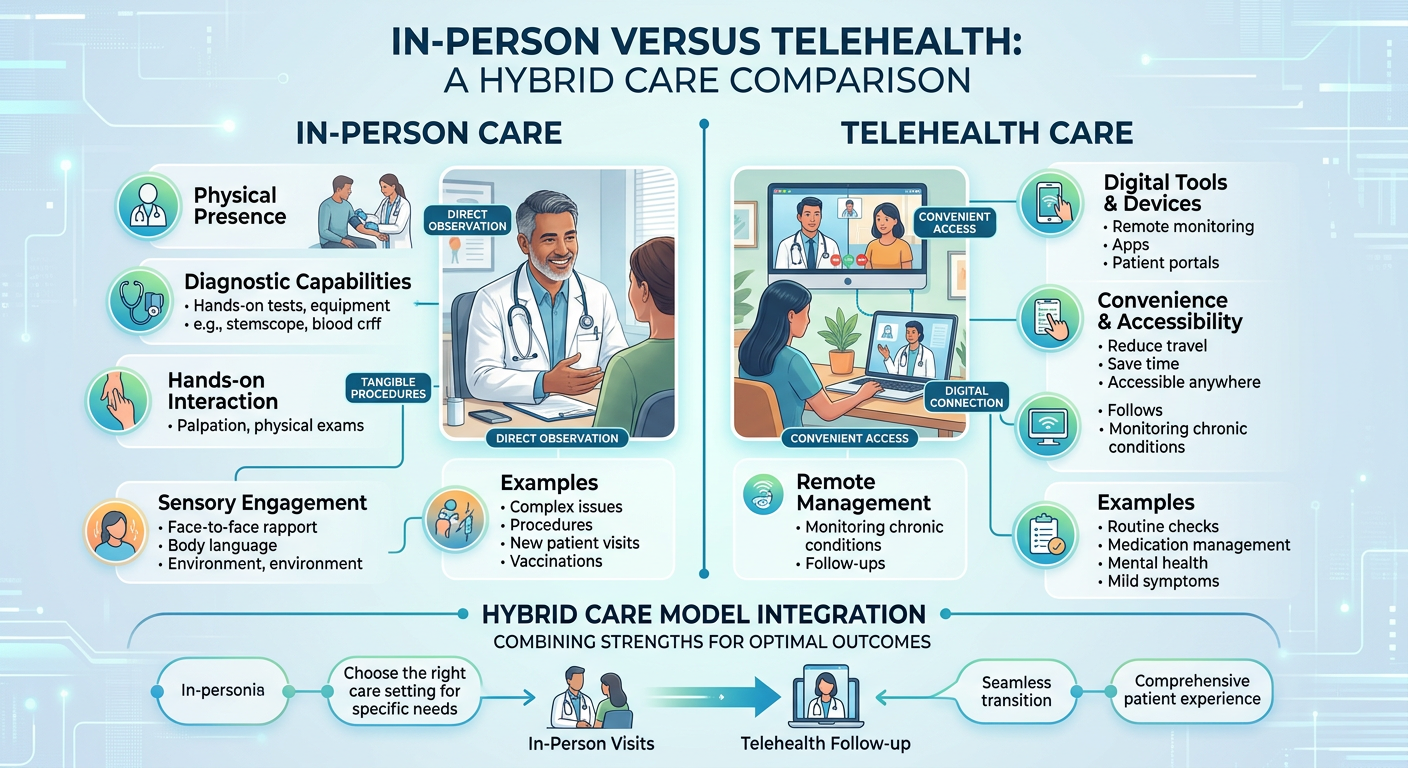
For many Texans, telehealth is the most practical starting point. The APA and ATA have published telemental-health best practices, and Lyte’s Texas telepsychiatry page states that psychiatric evaluation, diagnosis, therapy, and medication management can be delivered through secure video appointments anywhere in Texas at the same standard of care as an in-person visit. That makes telehealth especially useful for busy professionals, parents, college students, and people who live far from a clinic.
At the same time, some people prefer or need an in-person visit. Lyte’s public pages say in-person care is available in the DFW area, including the Pantego clinic near Arlington and a Plano page that references in-person availability. That hybrid option is a real differentiator compared with online-only psychiatry platforms. Talkiatry publicly says all visits are virtual and that it does not provide in-person care, while Rula’s psychiatry support documentation says psychiatric services are currently available only via telehealth.
Does insurance cover psychiatry in Texas
Insurance is often the deciding factor for whether someone seeks care now or delays it. Federal parity rules matter here. CMS explains that the Mental Health Parity and Addiction Equity Act generally prevents health plans that offer mental health benefits from imposing less favorable financial requirements and treatment limitations on those benefits than on medical and surgical benefits. Lyte’s site aligns its pricing and insurance messaging with that reality, stating that most insured patients pay $0–$30 and that the practice is in network with major plans, including Blue Cross Blue Shield, UnitedHealthcare, Cigna, Aetna, Ambetter, Humana, Medicare, and other plans listed on the site.
That cost clarity also helps Lyte stand out competitively. Rula publicly says patients typically pay about $15 per session with insurance and offers self-pay psychiatry at $225 for an initial session and $175 for follow-ups. Talkiatry publicly says most patients pay around $30 with insurance, but it also states that it does not currently offer a self-pay option. For patients comparing platforms, that means Lyte can win trust by being explicit about both insured costs and what uninsured patients should expect before they book.
Special note for ADHD evaluations in Texas
ADHD is one of the most competitive psychiatry topics online, but it is also one of Lyte’s biggest SEO opportunities because the site already has a detailed Texas-focused service page. Lyte’s ADHD page says it offers full ADHD evaluations, stimulant and non-stimulant medication management, and that follow-up care can be done via telehealth after the required in-person step for new stimulant prescribing under Texas law. That kind of state-specific, operationally useful content is more actionable than generic national copy.
It also matches real demand. NIMH estimates that current adult ADHD prevalence is about 4.4%, and newer peer-reviewed literature continues to show substantial adult ADHD prevalence and underdiagnosis. Patients are not just searching for “ADHD symptoms”; they are searching for “ADHD evaluation Texas,” “can a telepsychiatrist prescribe medication,” and “what happens at the first appointment.” Lyte should answer those questions directly and locally.
What your first psychiatry appointment should feel like
A strong first-visit page should reduce uncertainty. Lyte already has FAQ and first-visit content that explains booking, insurance verification, follow-up, and referral guidance. That is exactly the kind of people-first, expectation-setting content Google says it wants to reward. The practical goal is not only ranking. It is reducing drop-off between search, click, and booking.
Patients should leave the page understanding four things: whether they need a referral, whether care is in person or virtual, what conditions the practice treats, and how much they are likely to pay. Lyte can answer all four from existing public content today. Usually, no referral is needed unless your plan requires one. Care can be in person in DFW/Plano or virtual across Texas and New Mexico. The practice treats common conditions such as anxiety, depression, ADHD, PTSD, OCD, bipolar disorder, and sleep concerns. And most insured visits are publicly described as $0–$30.
Why local, hybrid psychiatry can be better than a generic platform
National brands can be helpful, but a local or regional practice can offer something different: geographic relevance, local insurance familiarity, and the option of hybrid care instead of one-size-fits-all virtual care. Lyte’s site specifically markets same-provider continuity, one care team, in-network insurance, and Texas-and-New-Mexico licensure. Those are not just features. They are booking reasons.
If you are looking for a psychiatrist in Texas, start with the basics: check whether the practice serves your city, takes your insurance, treats your condition, and offers the format of care you want. Then look for a page that answers your questions clearly before you ever submit a form. That is what trustworthy mental health content should do, and it is exactly the type of helpful, people-first content that Google’s guidance encourages site owners to create.
Check your insurance, review available locations, and book your first appointment online.
FAQ
Do I need a referral to see a psychiatrist in Texas?
Usually not. Lyte’s FAQ says many patients can schedule directly, although some insurance plans, especially some HMOs, may require a referral for coverage.
Can I choose telehealth or in-person psychiatry with Lyte?
Yes. Lyte publicly offers telehealth across Texas and New Mexico, and its site also describes in-person availability in the DFW area, including Pantego and a Plano location page.
How fast can I get an appointment?
Lyte’s homepage says most new patients are seen within 1–2 business days, and city and telepsychiatry pages repeatedly describe same-week access.
How much does a psychiatrist cost with insurance?
Lyte publicly states that most insured patients pay $0–$30 per visit. CMS also explains that parity rules generally prevent less favorable financial requirements for covered mental health benefits than for medical benefits.
What if I do not have insurance?
Lyte’s site says self-pay options are available, and blog content reviewed here says self-pay and sliding-scale options may be available, but exact current self-pay house rates were not specified on the core pages reviewed for this report.
Can a telepsychiatrist prescribe medication in Texas?
Yes. Lyte’s telepsychiatry Texas page says psychiatrists and psychiatric NPs can prescribe most psychiatric medications via telehealth, with controlled substances prescribed according to Texas and DEA rules. Lyte’s ADHD page adds that Texas requires an in-person visit before prescribing stimulants to a new patient.
What conditions does Lyte treat?
Lyte publicly lists depression, anxiety, ADHD, PTSD, bipolar disorder, OCD, sleep concerns, stress and burnout, grief, women’s mental health, and child and adolescent care, among others.
Can I get therapy and medication management from the same practice?
Yes. Lyte’s homepage explicitly markets medication, therapy, or combined care with one chart and one team, and evidence reviewed through PubMed and AHRQ supports integrated and coordinated behavioral-health models
Further Reading
NIMH — Mental Health Topics
Evidence-based information on all major mental health conditions
SAMHSA National Helpline
Free, confidential 24/7 treatment referral service: 1-800-662-4357
CDC — Mental Health
Public health data and resources on mental health in the U.S.
These topic resources supplement the references linked within the article.
Find Care Near You
Lyte Psychiatry serves patients across Texas — in-person in DFW and via telehealth statewide.
Don't see your city? View all Texas locations →
Questions about cost? View insurance and payment information
Ready to get help?
Lyte Psychiatry serves patients across Texas — in-person in the DFW area and virtually statewide.
Book an Appointment →